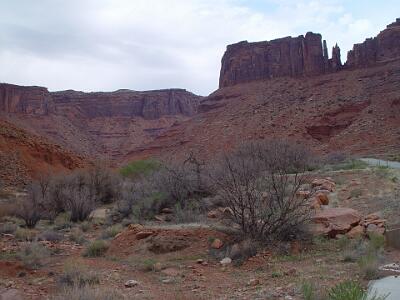
Thursday 2004-03-18 Titan Missile Museum Jenni and I visit the Titan Missile Museum off I19 on the way to Nogales. |
 Thursday 2004-03-18 Titan Missile Museum The rocket engine belonging to the first stage of the missile |
 Thursday 2004-03-18 Titan Missile Museum The rocket engine belonging to the second (final) stage of the missile |
 Thursday 2004-03-18 Titan Missile Museum The Titan Missile II re-entry vehicle houses the 9 megaton warhead. |
 Thursday 2004-03-18 Titan Missile Museum The above-ground fueling facility. Level 8, at 140 feet underground, houses the propellant pumps. |
 Thursday 2004-03-18 Titan Missile Museum The 103 foot Titan II missile inside the silo has neither warhead nor fuel. The dummy reentry vehicle on the missile has a prominent hole cut in it to prove it is inert. All of the support facilities at the site remain intact, complete with all of their original equipment |
 Thursday 2004-03-18 Titan Missile Museum In accordance with a US/USSR agreement, the silo doors are permanently blocked from opening more than half way. |
 Thursday 2004-03-18 Titan Missile Museum The silo became operational in 1963 and was deactivated in 1982 as part of President Reagan's policy (announced in 1981) of decommissioning the Titan II missiles. |
 Thursday 2004-03-18 Titan Missile Museum The underground portion of the missile site is accessed by a flight of 55 steps in the Access Portal. |
 Thursday 2004-03-18 Titan Missile Museum The hardened underground silo has eight levels protected by 3 ton blast doors and 8 foot thick concrete walls. |
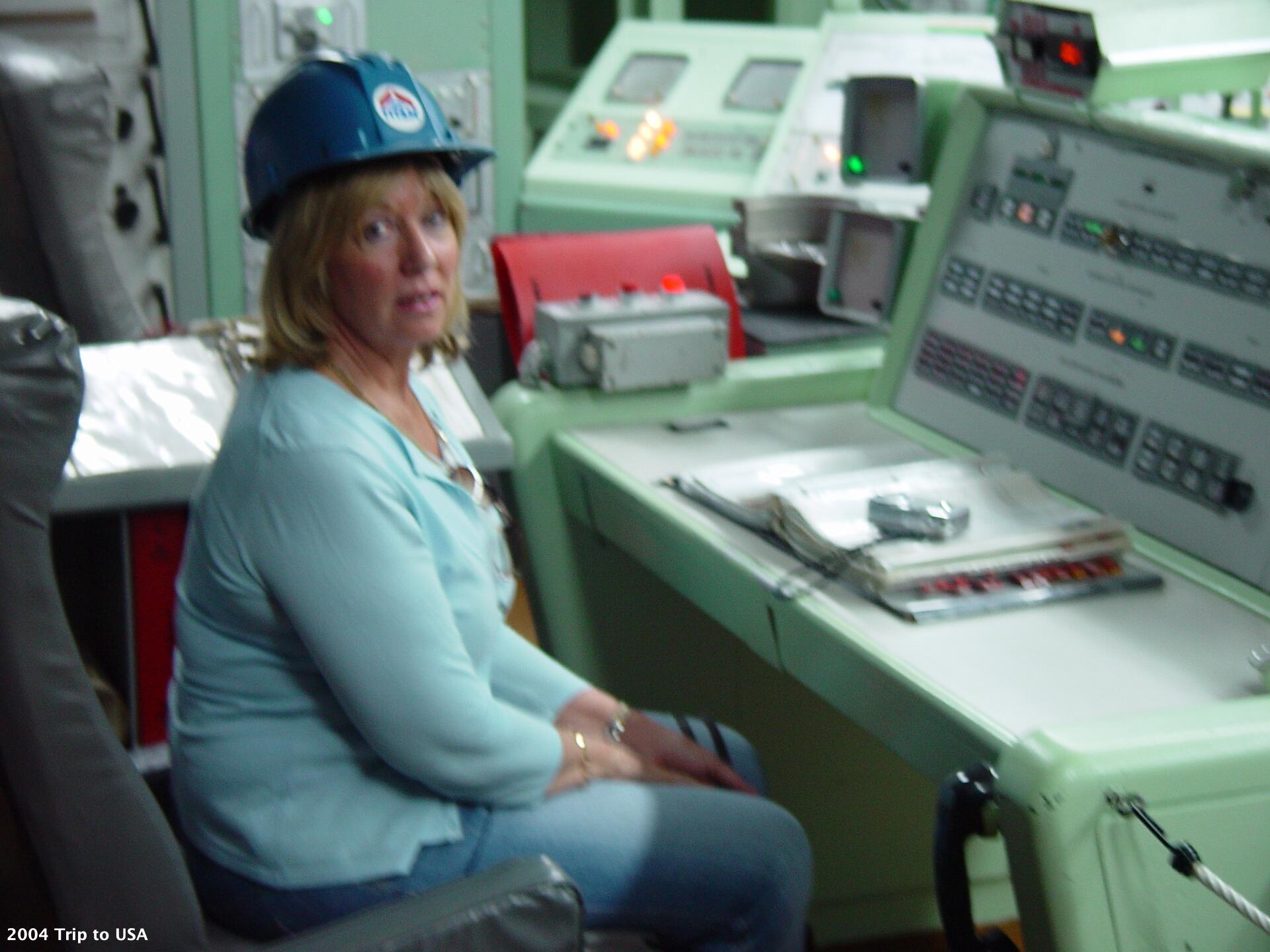 Thursday 2004-03-18 Titan Missile Museum The facility's highest state of alert was November 22, 1963, when President Kennedy was shot. The keys used to launch the missile were ordered to be placed on the tables at the launch consoles in readiness for a possible launch. |
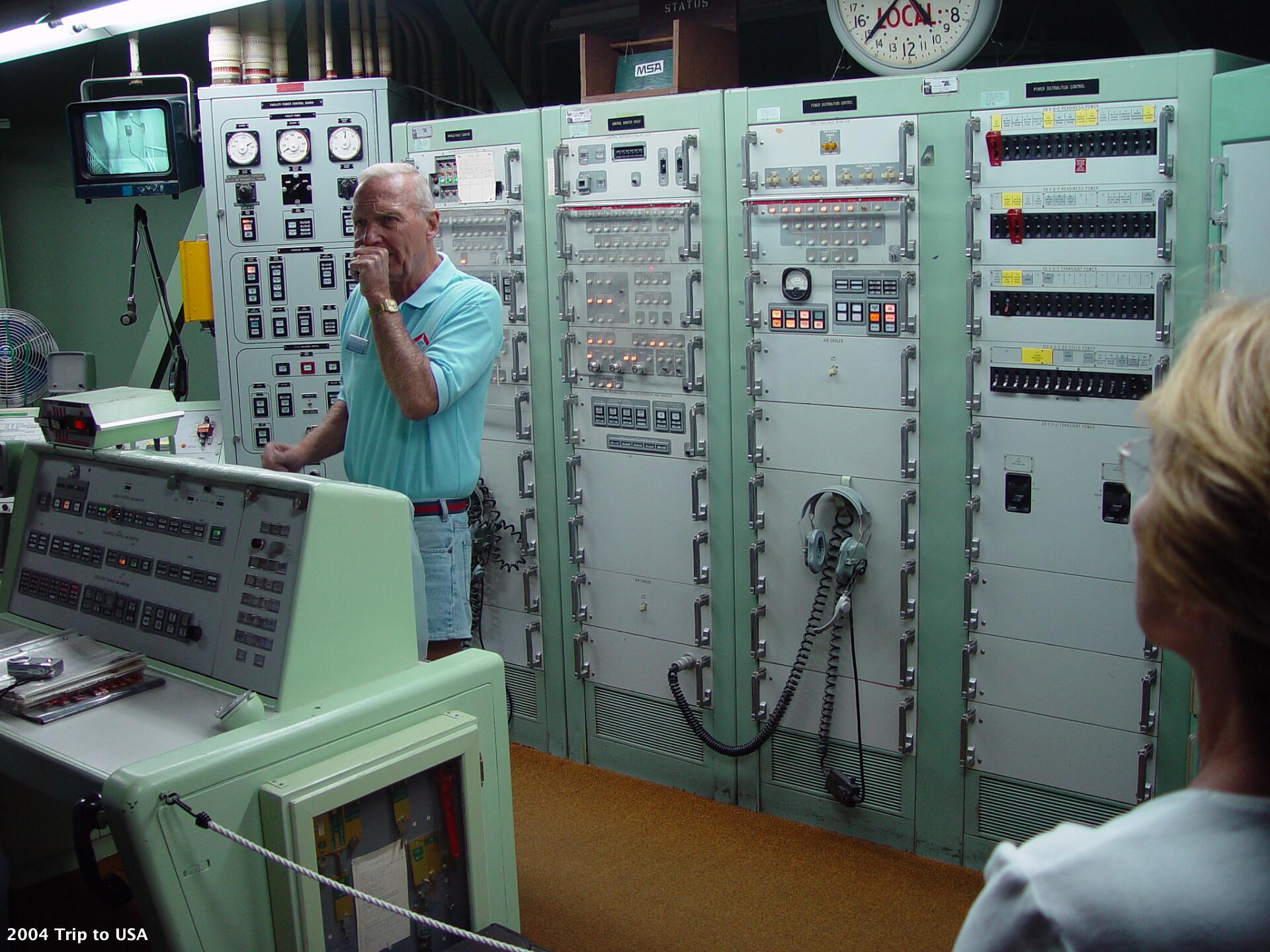 Thursday 2004-03-18 Titan Missile Museum The Pentagon did not yet know whether the Soviet Union had committed an act of war. The keys were not, however, placed in their switches. It's a sickening thought that this much destructive power is in the hands of a few Dr Strangeloves. |
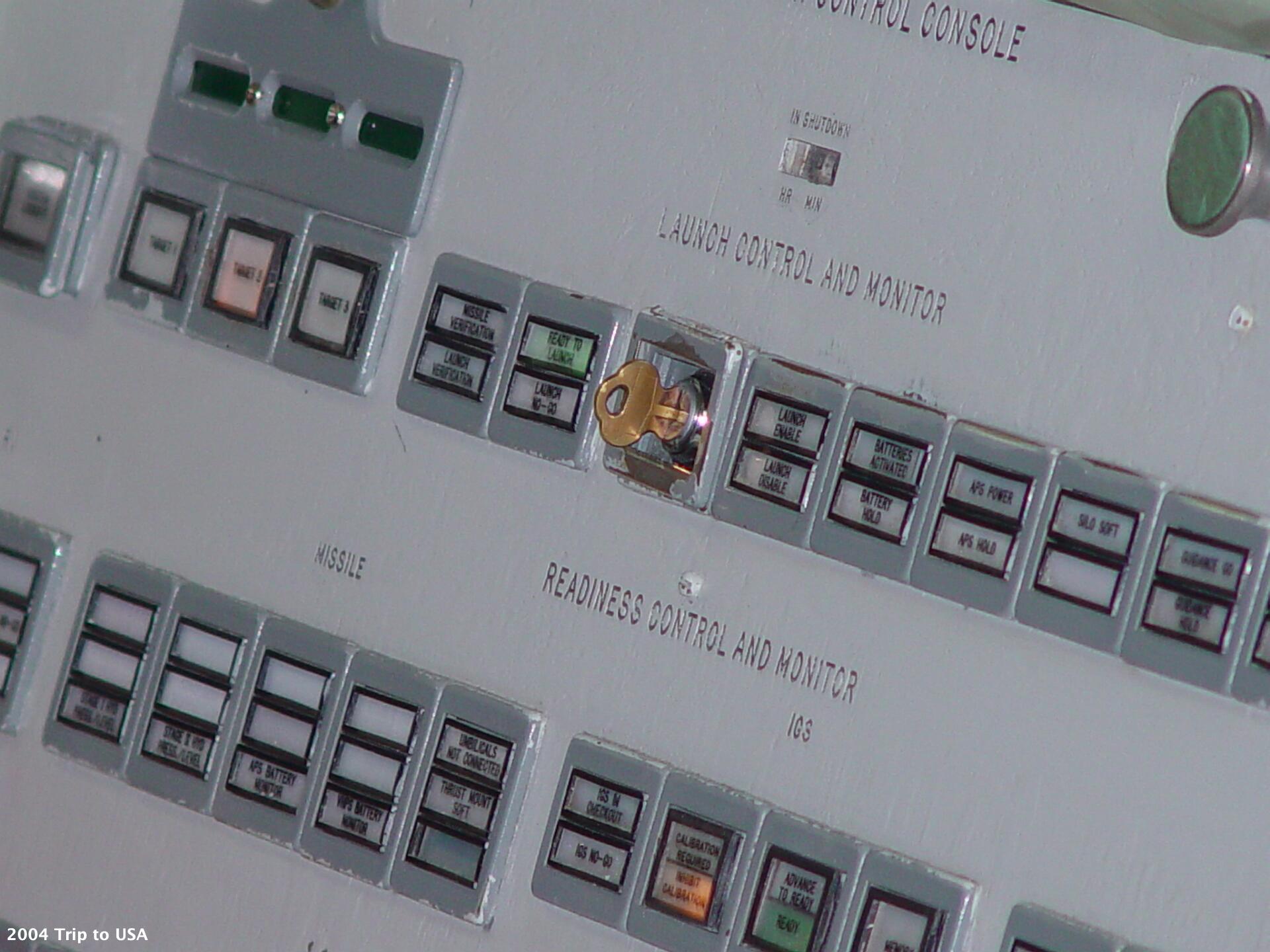 Thursday 2004-03-18 Titan Missile Museum Orders from the National Command Authority would have specified one of three pre-programmed targets which, for security reasons, were unknown to the crew. As our tour guide said, if the button had been pressed, none of us would be here today. |
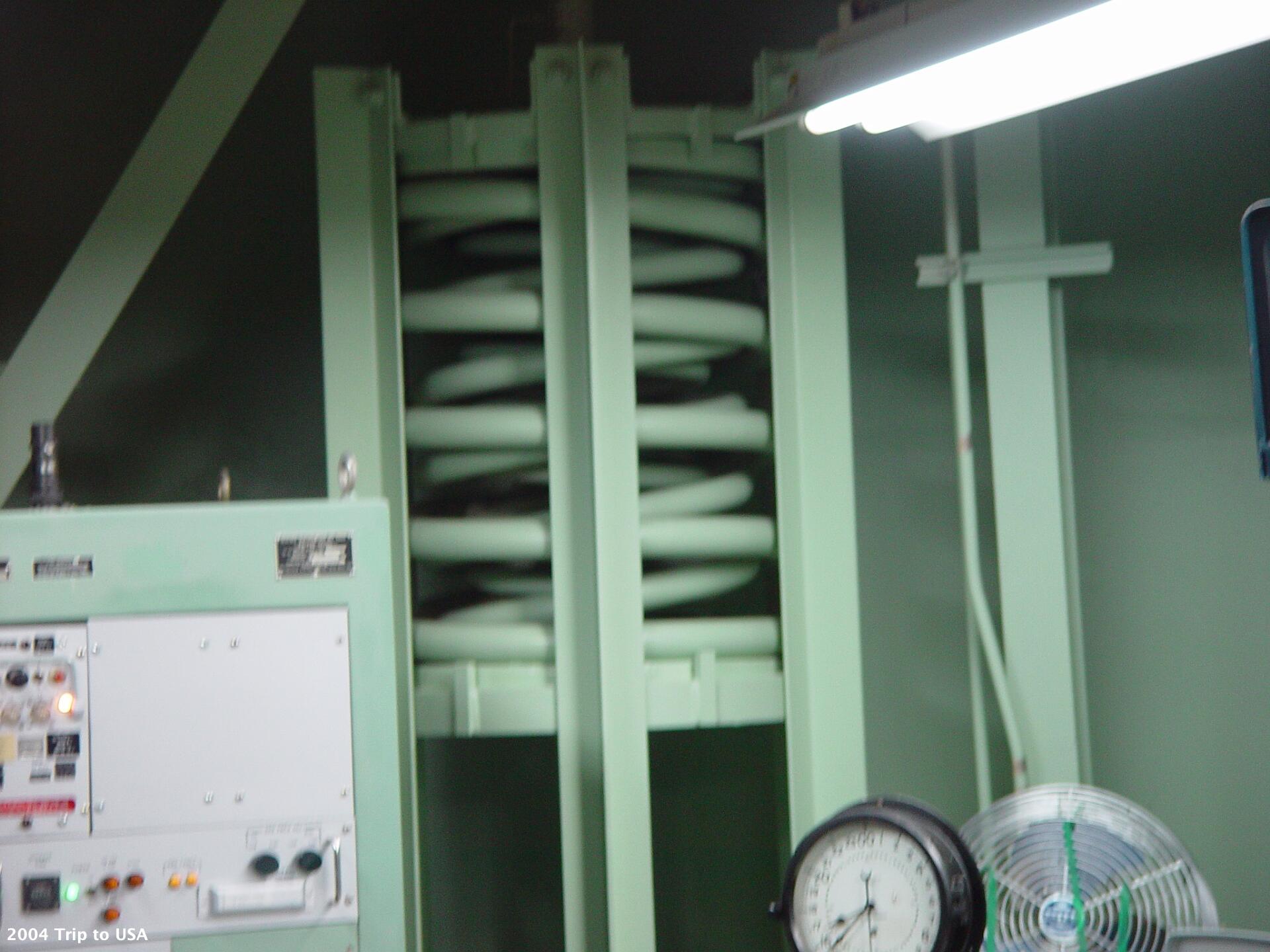 Thursday 2004-03-18 Titan Missile Museum The control room is suspended on huge springs to isolate it from the rocket's launch. |
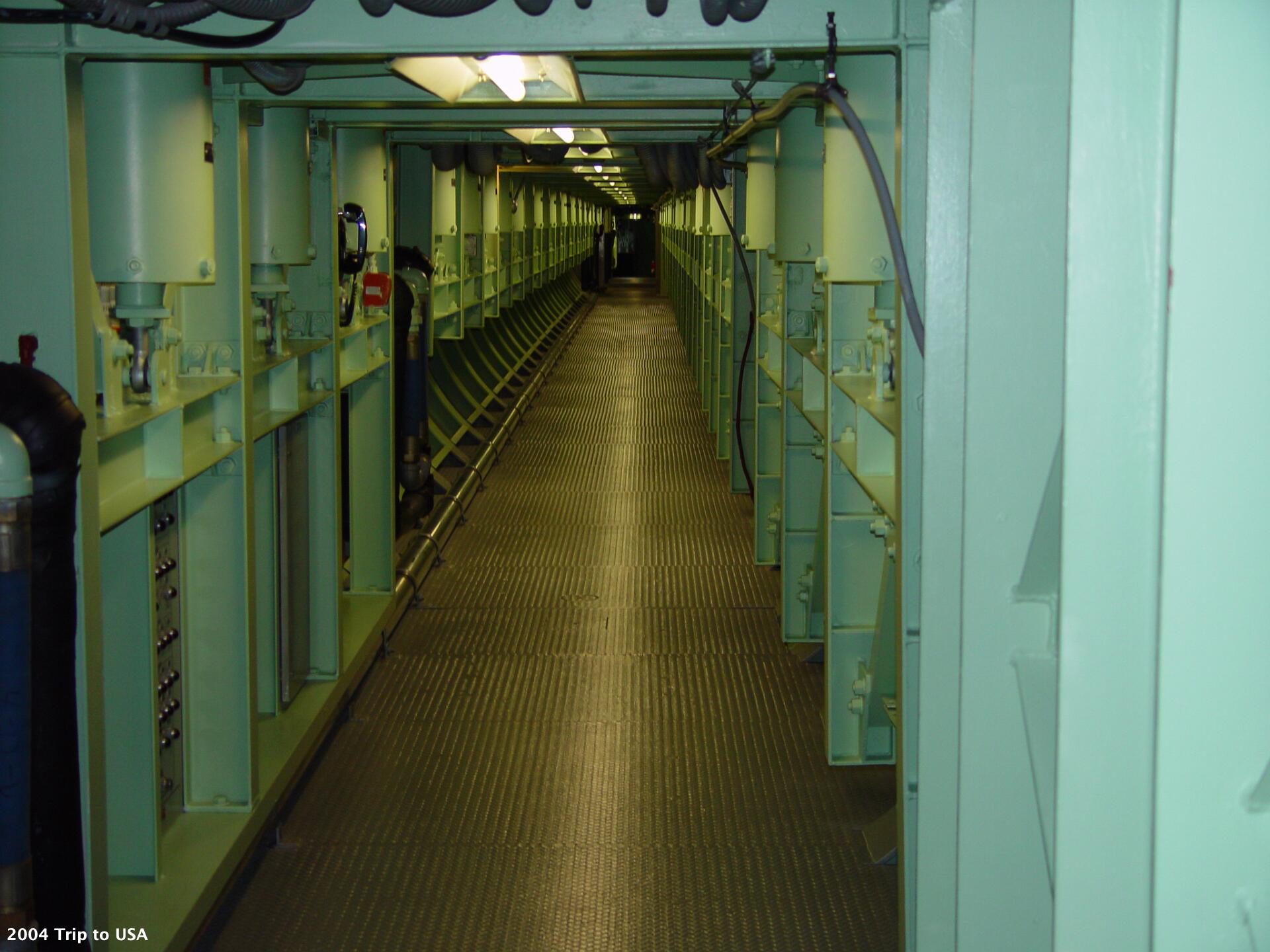 Thursday 2004-03-18 Titan Missile Museum The Titan Missile sites dismantled are: 18 sites around McConnell AFB in Wichita, Kansas; 17 sites around Little Rock AFB, Arkansas; and 17 other sites around Davis-Monthan AFB and Tucson except for this one. |
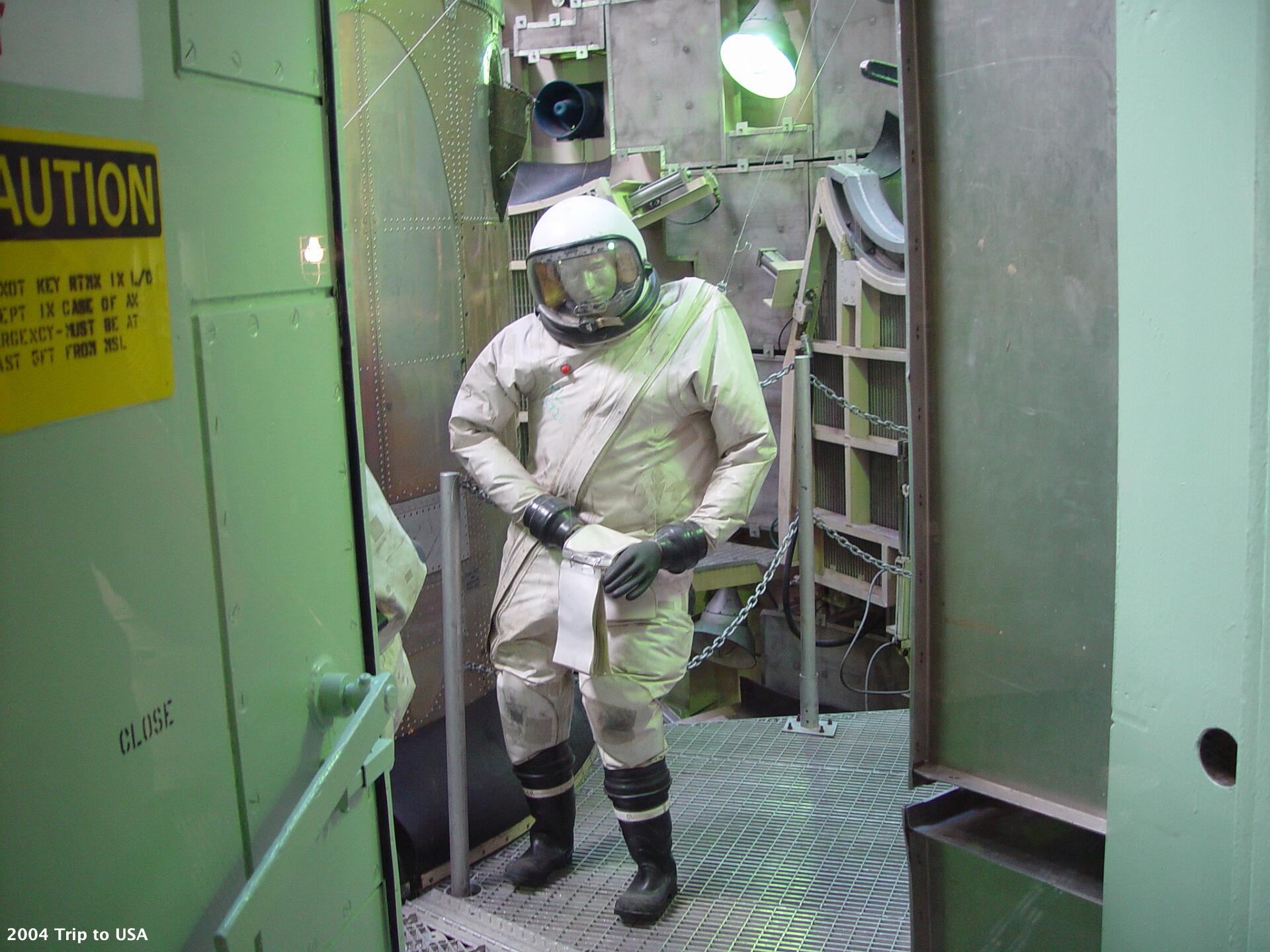 Thursday 2004-03-18 Titan Missile Museum Nuclear missiles are highly toxic even at rest. An inactive warhead is relatively harmless compared to the propellant used to launch the missile into space. |
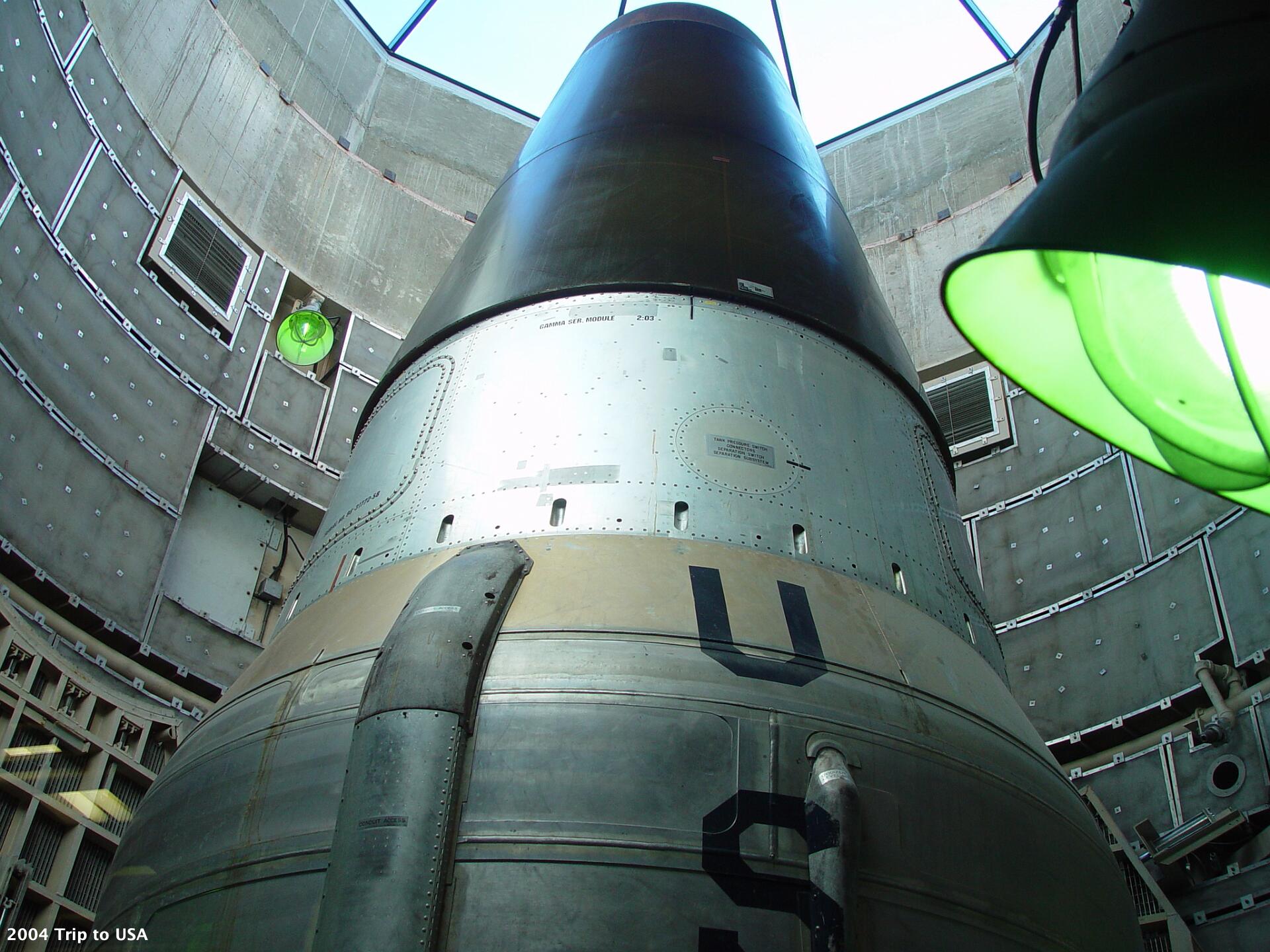 Thursday 2004-03-18 Titan Missile Museum The Titan II was the largest operational land based nuclear missile ever used by the United States. The missile had one W53 warhead with a yield of 9 Megatons. |
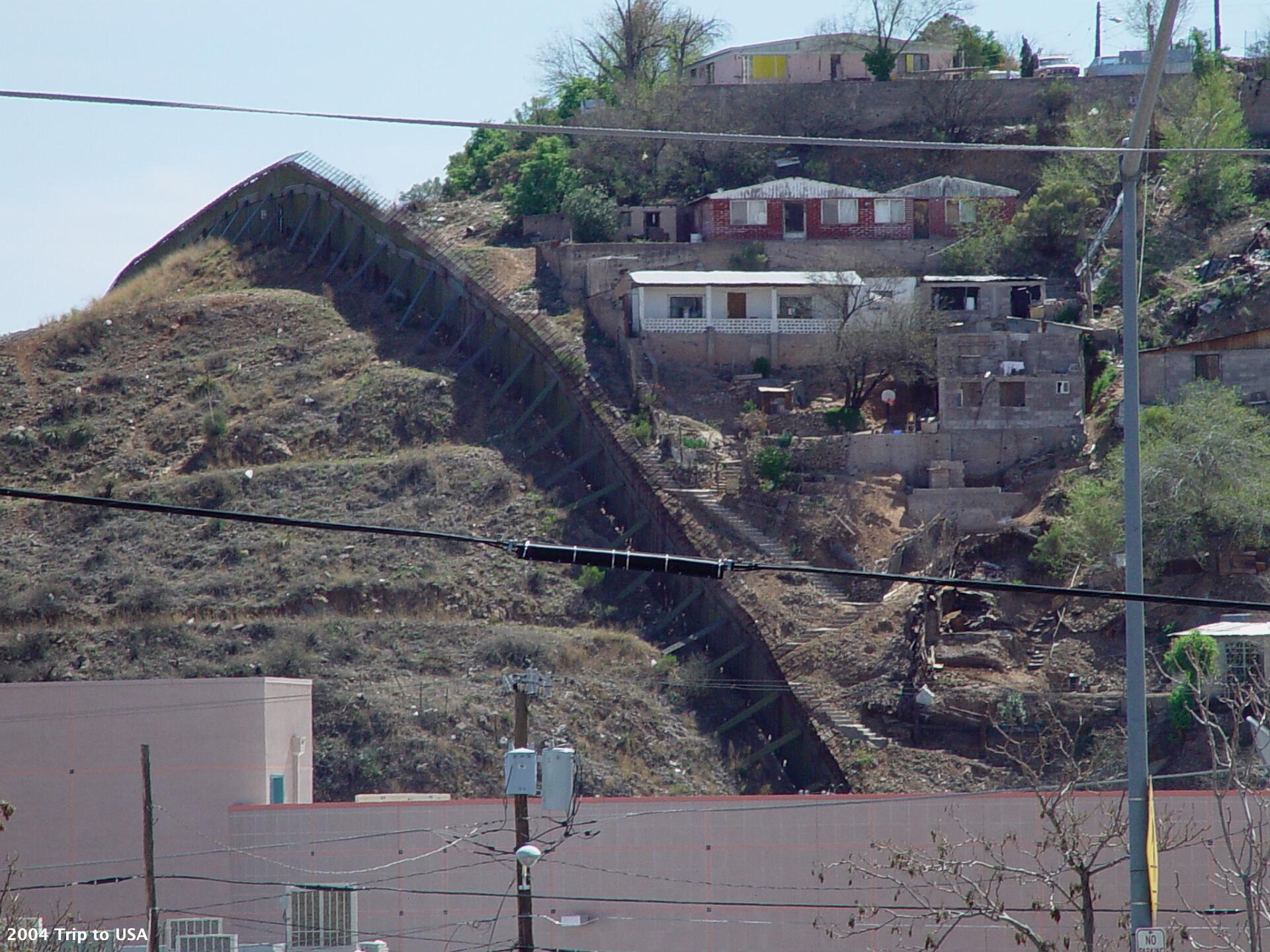 Thursday 2004-03-18 Nogales on the US Mexico border That's the actual US Mexico border. One side of the fence, Arizona, is wealthy and the other side, Sonora, is poor. |
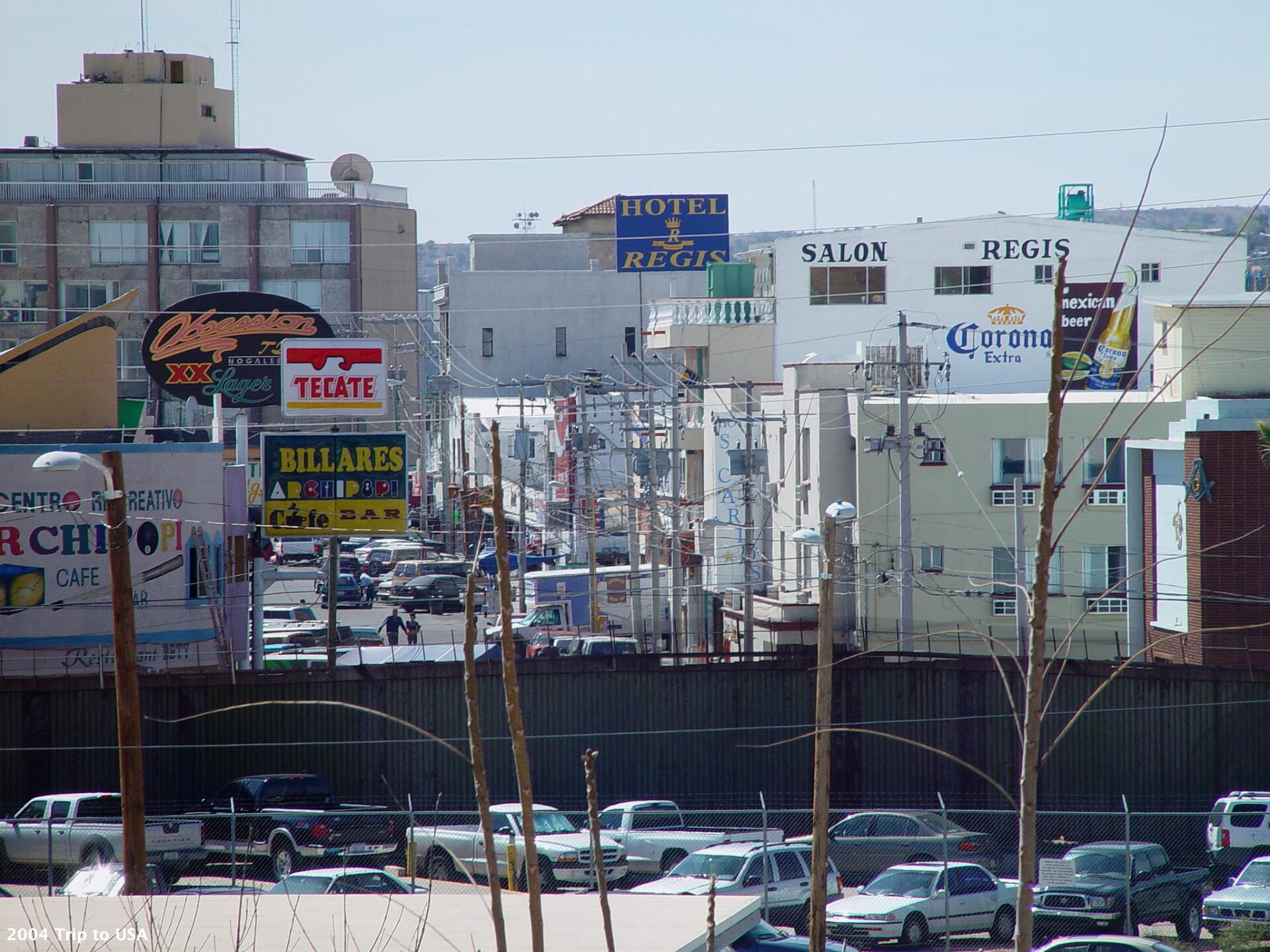 Thursday 2004-03-18 Nogales on the US Mexico border Looking into Nogales, Sonora, Mexico. Nogales is a Spanish word meaning "walnut trees" and it refers to the large stands of walnut trees that once stood in the mountain pass where Nogales is located. |
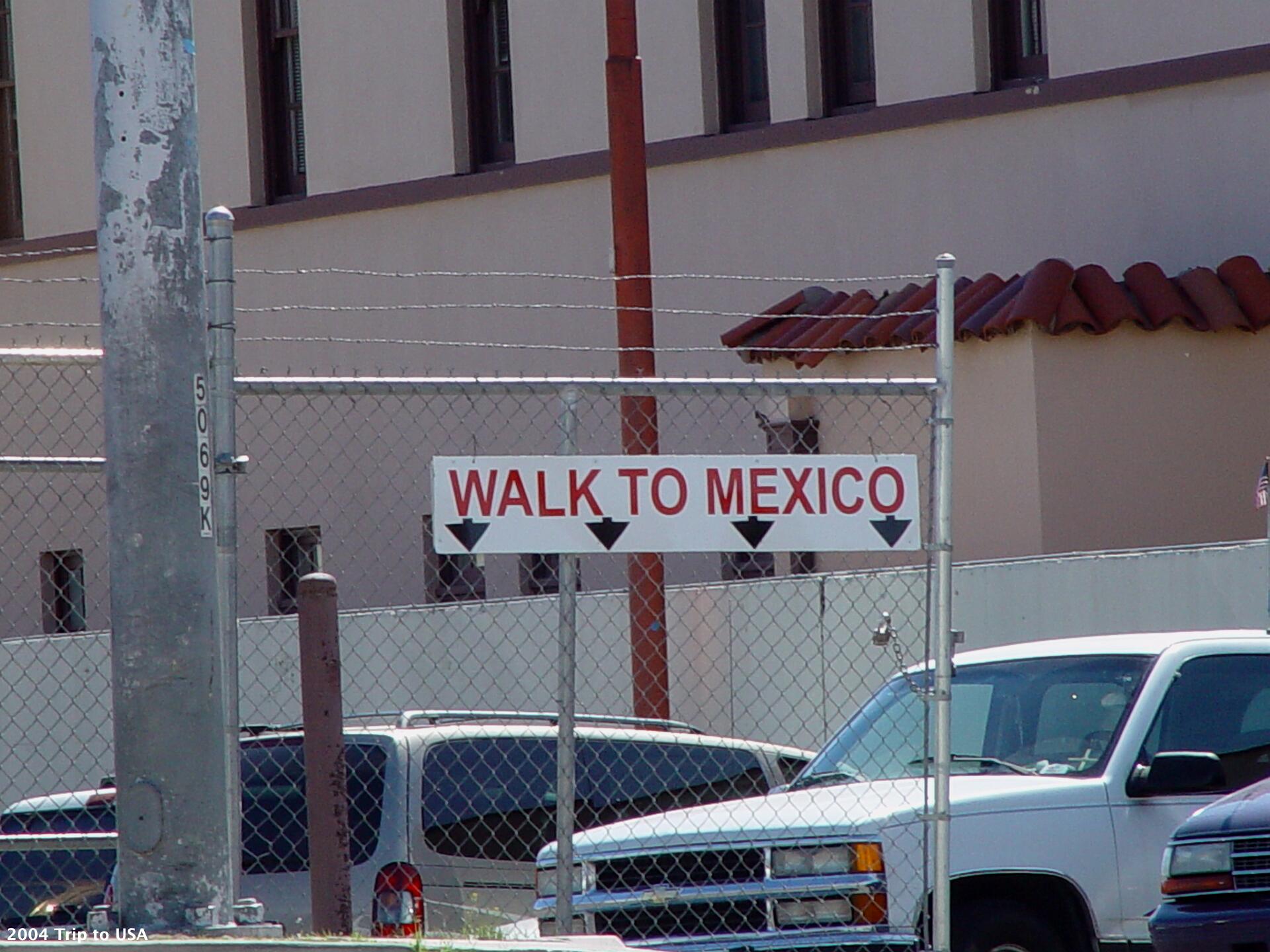 Thursday 2004-03-18 Nogales on the US Mexico border We weren't even slightly tempted to do so. |
 Thursday 2004-03-18 Nogales on the US Mexico border |
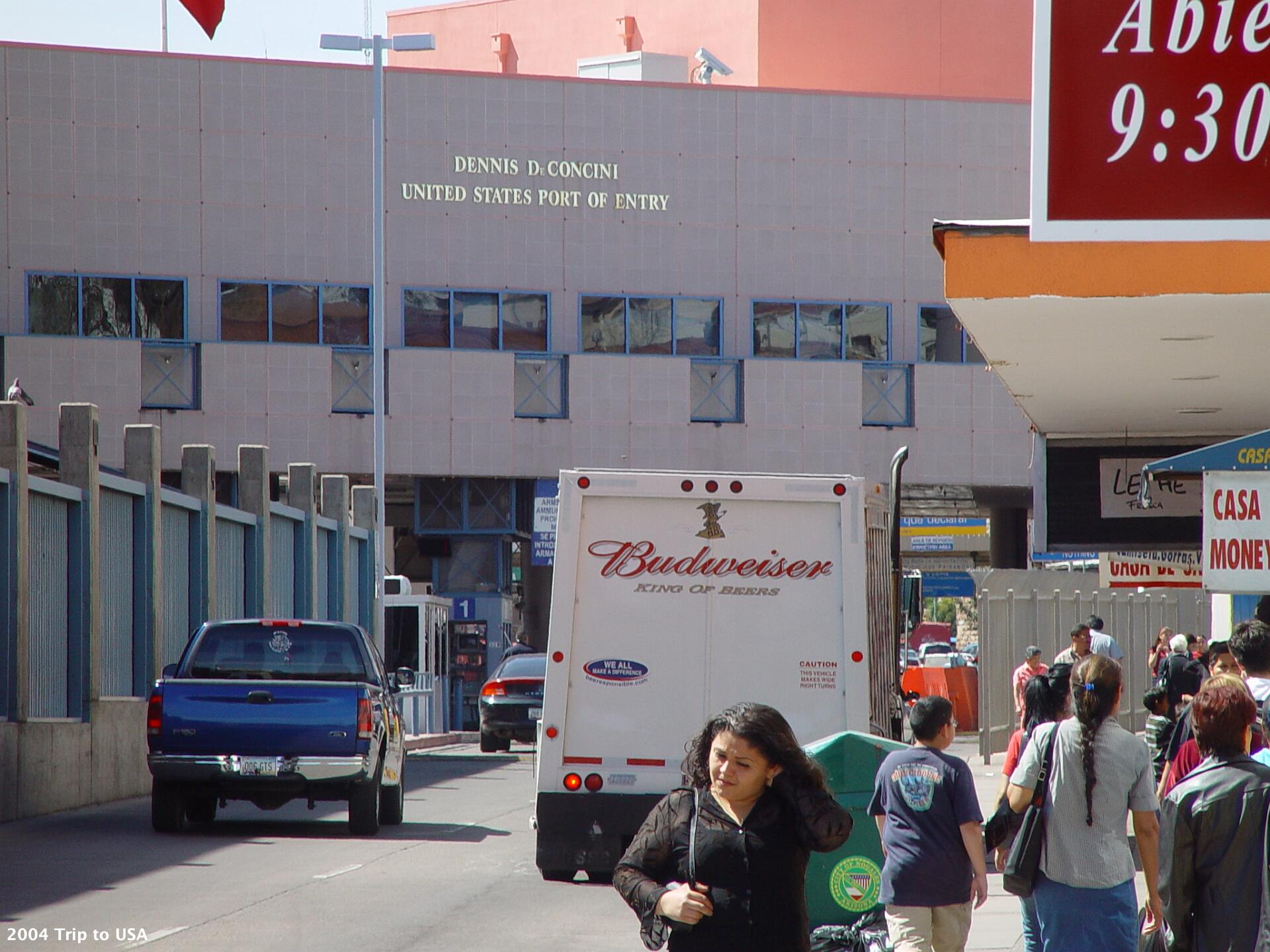 Thursday 2004-03-18 Nogales on the US Mexico border The busy border. |
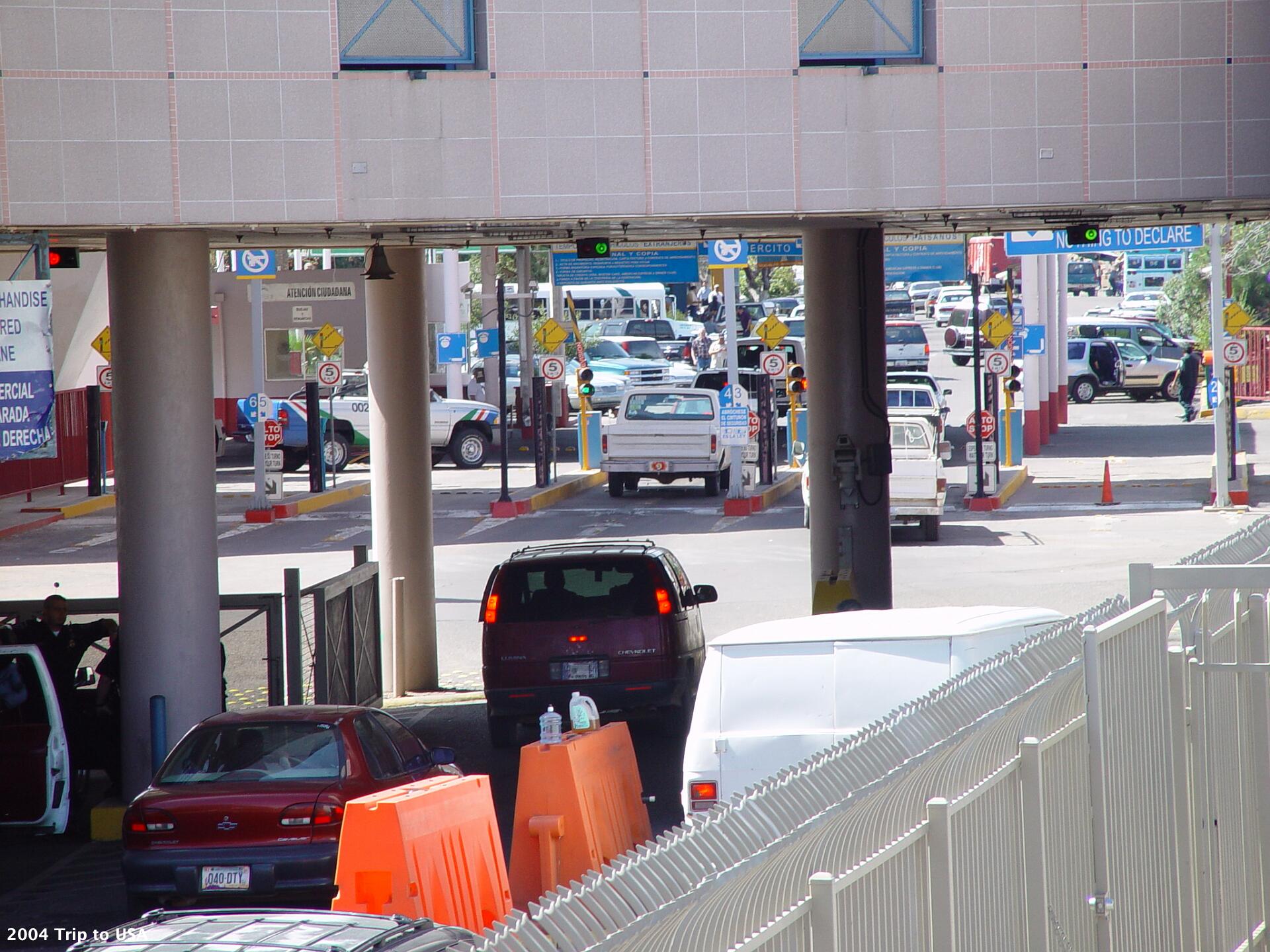 Thursday 2004-03-18 Nogales on the US Mexico border |
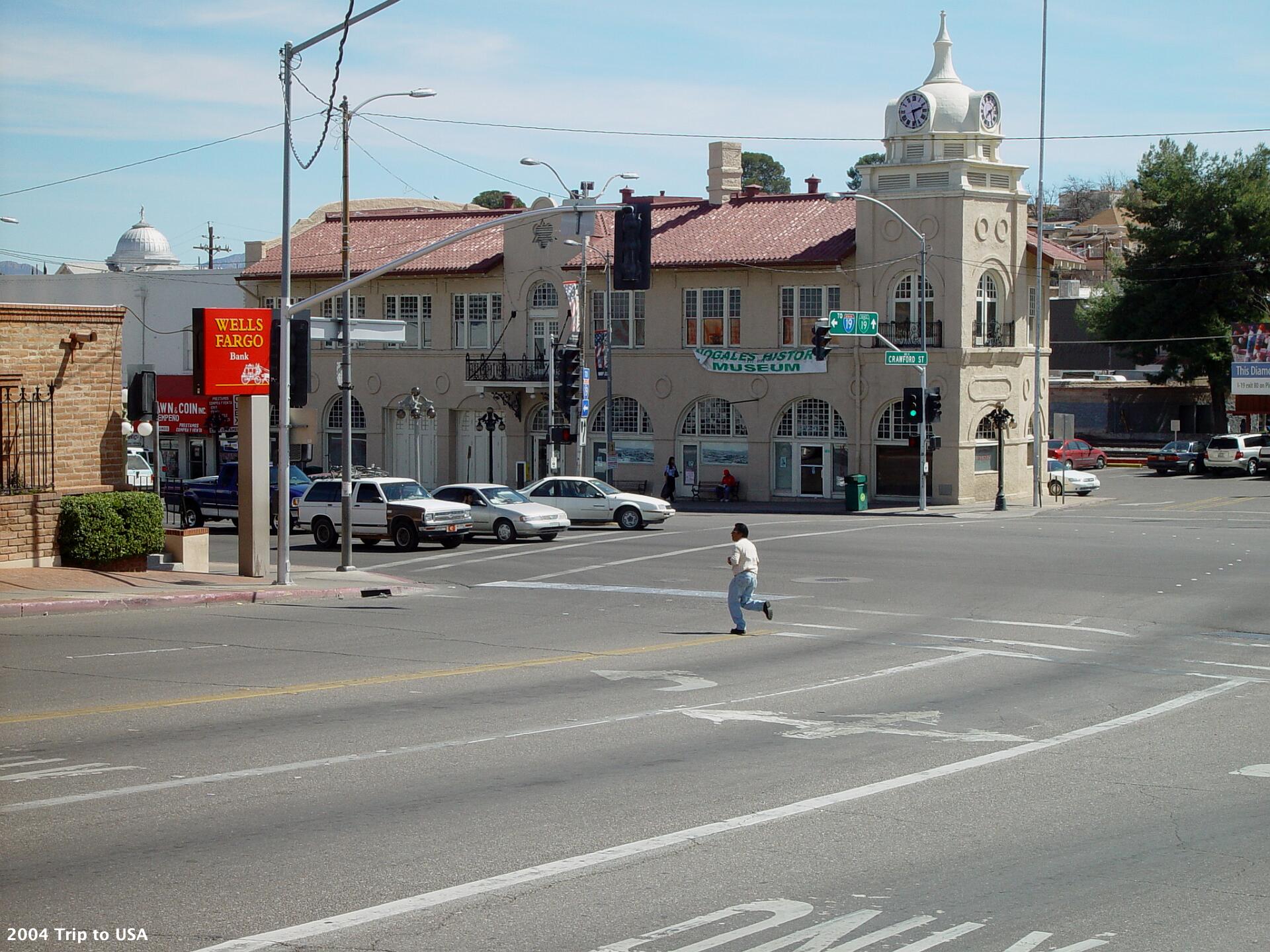 Thursday 2004-03-18 Nogales on the US Mexico border Nogales, Arizona and Nogales, Sonora are home to a large maquiladora cluster. This enables American manufacturing plants on both sides of the border to take advantage of Mexican wage and operating costs. |
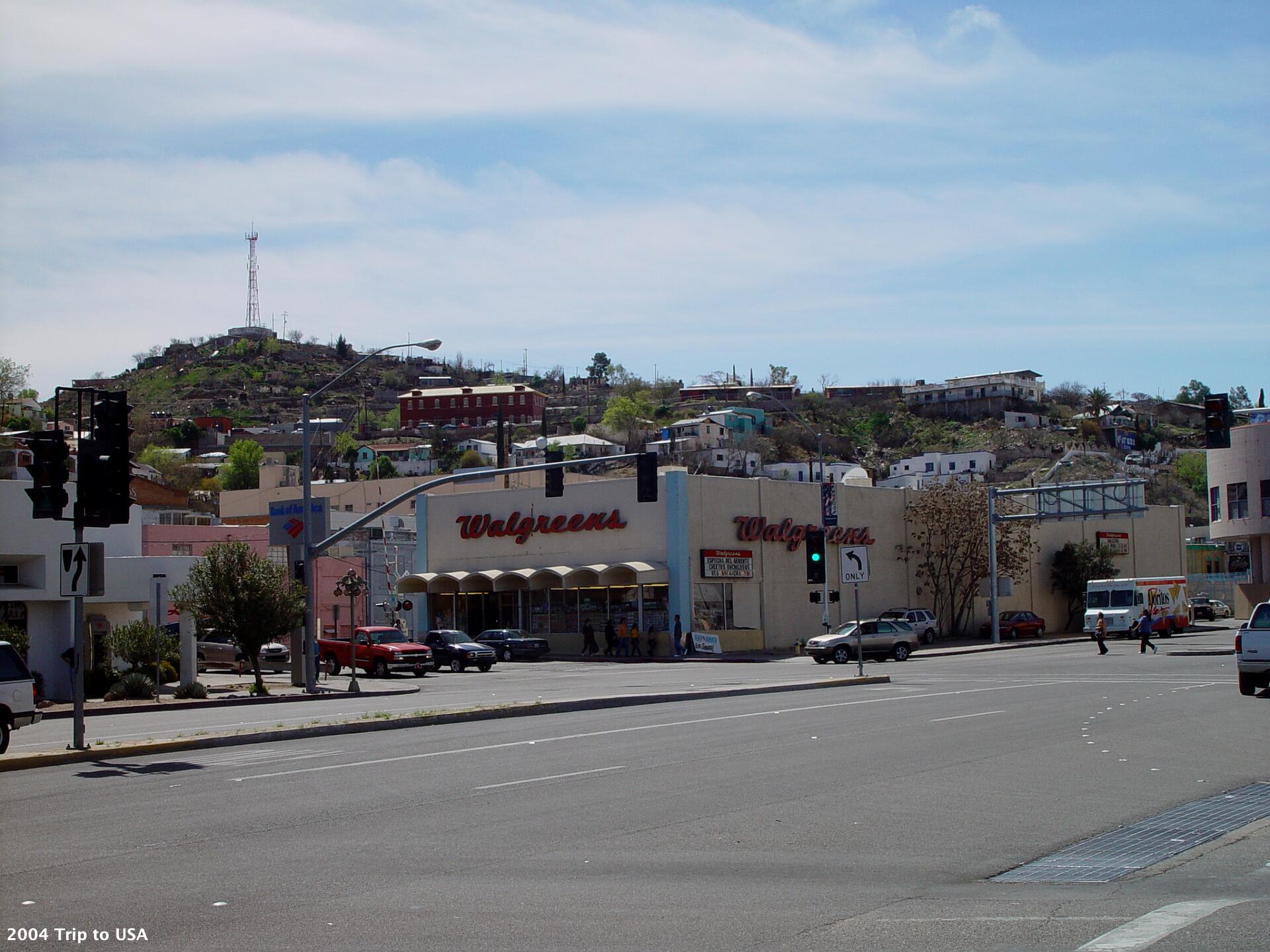 Thursday 2004-03-18 Nogales on the US Mexico border This is the main road to the border crossing. The tower in the background is in US territory and is probably used to spot illegal immigrants. |
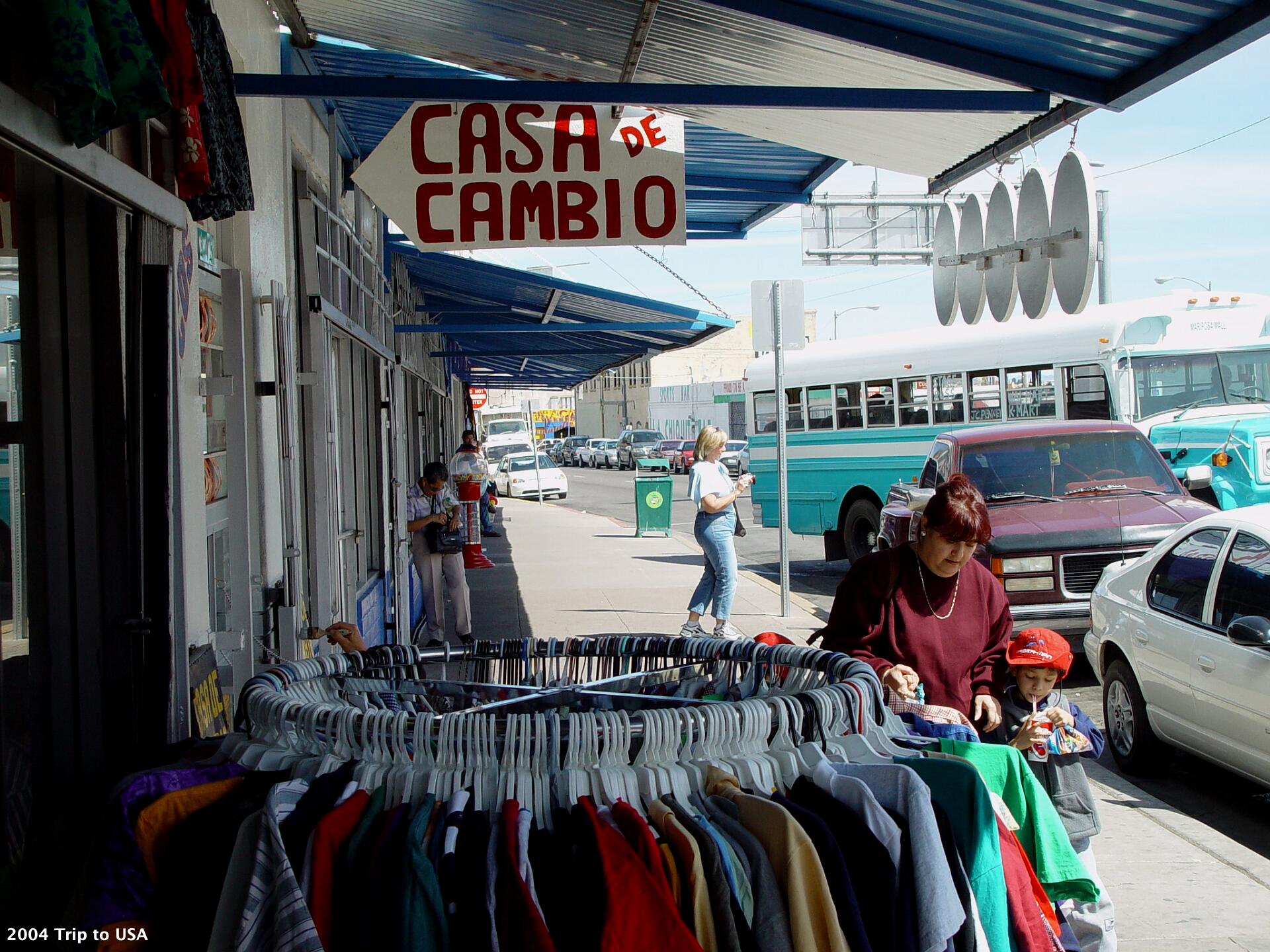 Thursday 2004-03-18 Nogales on the US Mexico border International commerce is a big part of Nogales AZ's economy. More than 60 percent of Nogales’ sales tax comes from Mexican shoppers crossing the border daily. |
 Thursday 2004-03-18 Nogales on the US Mexico border |
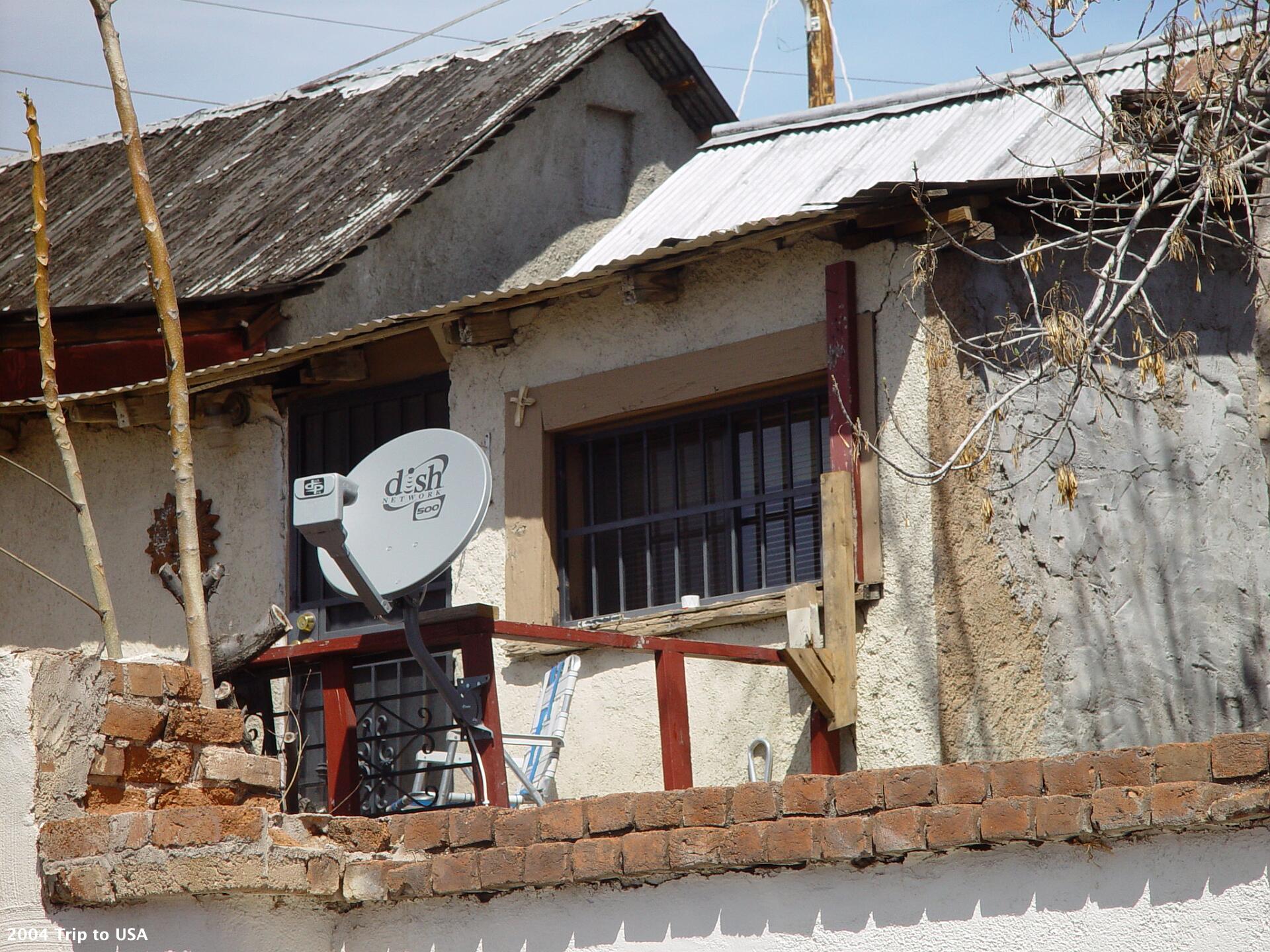 Thursday 2004-03-18 Nogales on the US Mexico border Amazing that a house this "rustic" should have a modern dish antenna. The city is very poor with a per capita income for the city of $10,178 in year 2000. |
 Thursday 2004-03-18 Nogales on the US Mexico border On January 10, 1918 Nogales was the site of the last engagement of the Indian Wars. At the Battle of Bear Valley, US forces engaged a band of Yaquis and after a brief firefight captured them. |
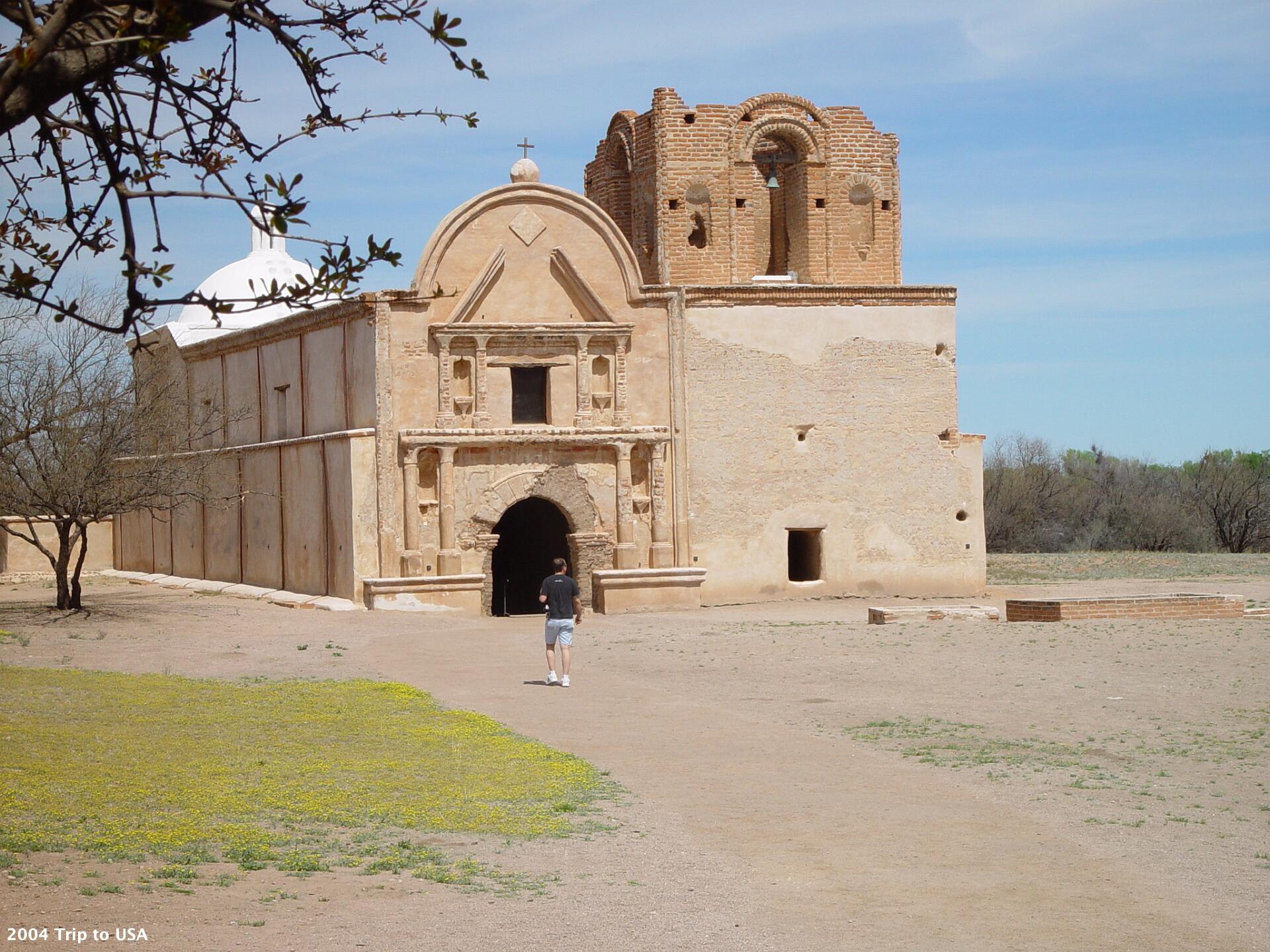 Thursday 2004-03-18 Tumacácori We head north again and visit the ruins of the Franciscan church at Mission San José de Tumacácori. |
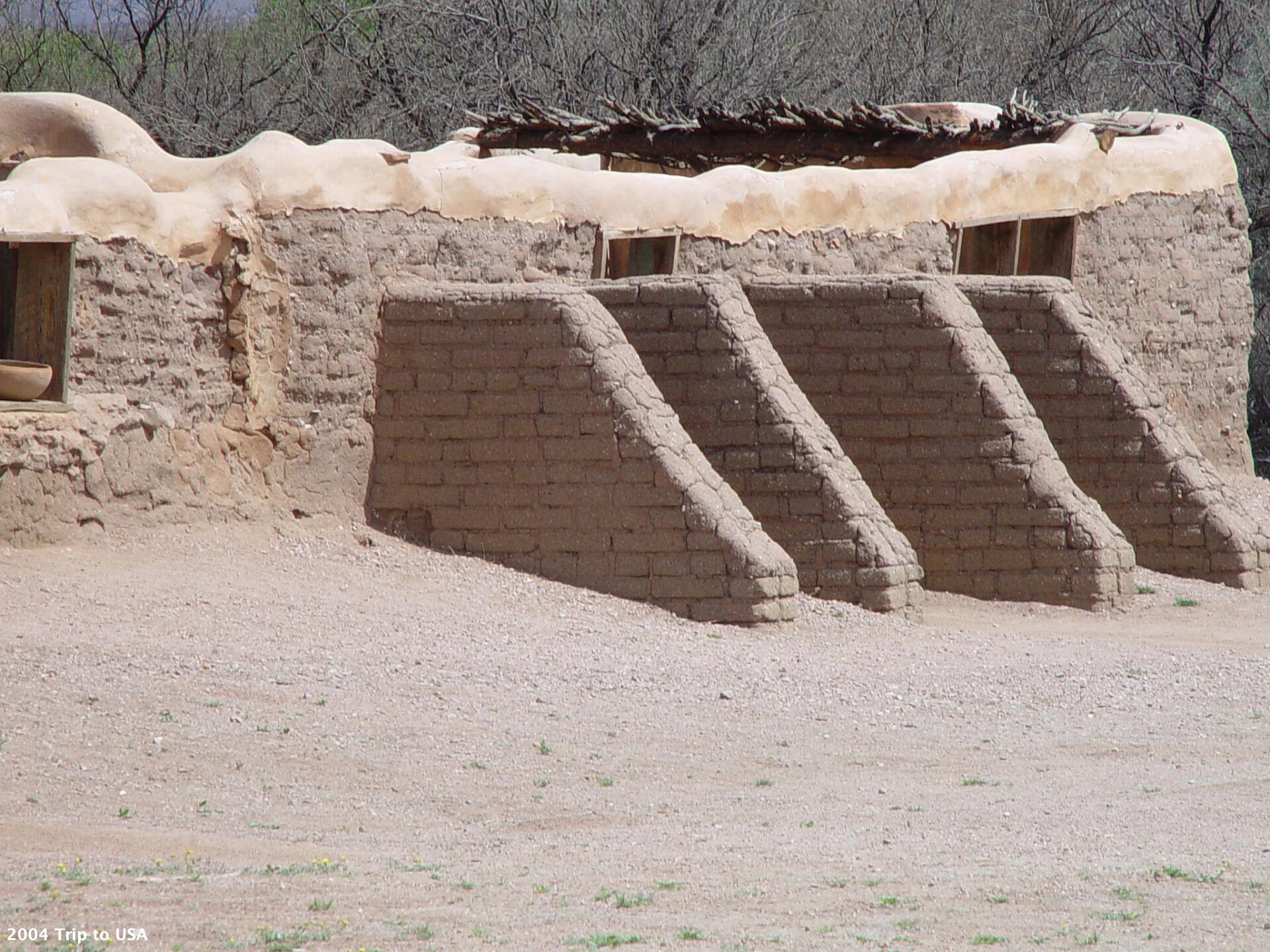
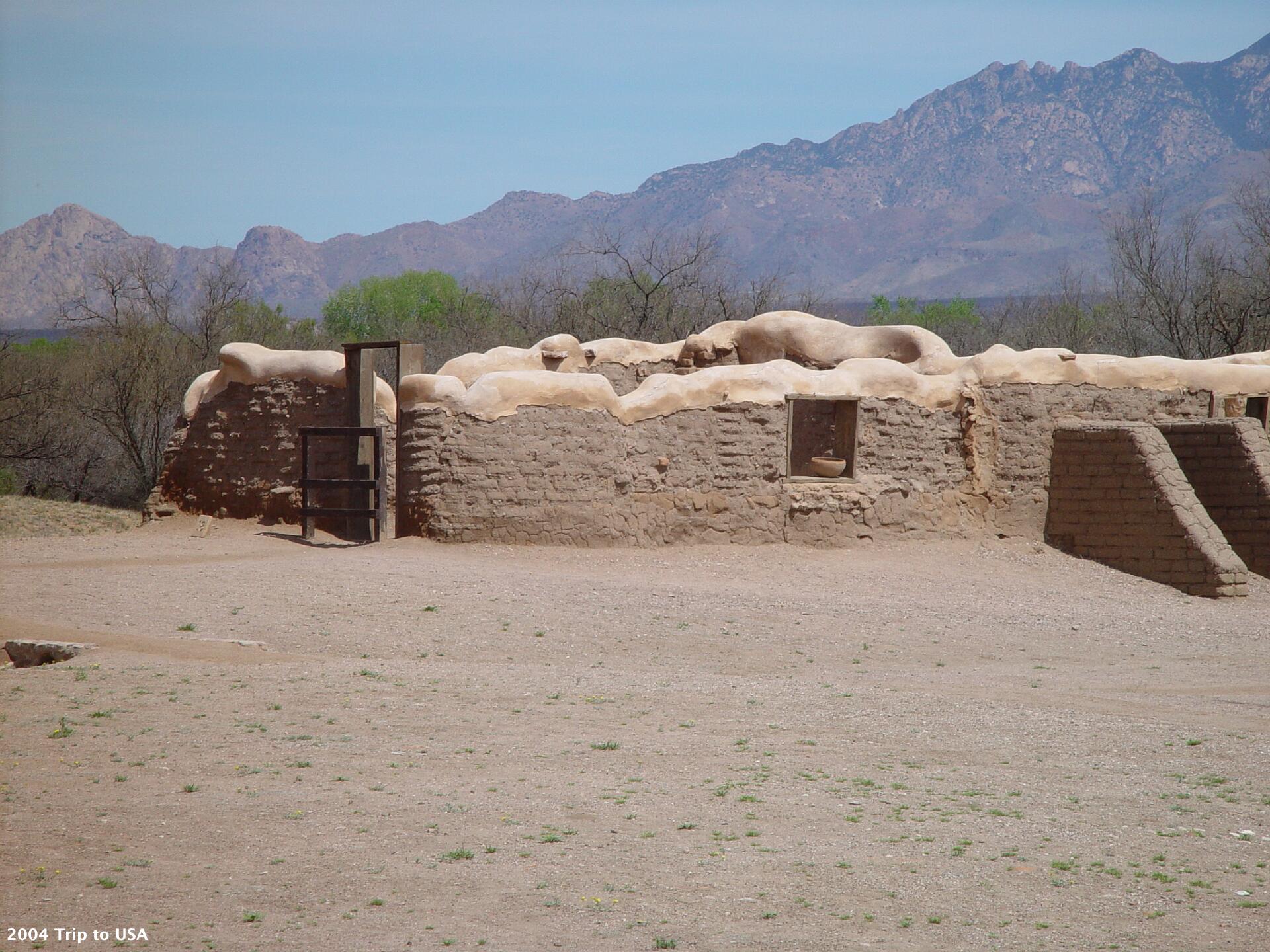 Thursday 2004-03-18 Tumacácori For many years Tumacácori was a visiting station of the mission at Guevavi and was located on the east side of the Santa Cruz River. Services were held in a small adobe structure built by the Pima inhabitants of the village. |
 Thursday 2004-03-18 Tumacácori Father Kino established Tumacácori in January 1691 making it the oldest mission site in Arizona. He was born in Italy and attended the Jesuit college at Hall near Innsbruck, Austria. He came to the New World in 1681 and died at Magdalena de Kino, Mexico in 1711. |
 Thursday 2004-03-18 Tumacácori After the Pima rebellion of 1751, the mission was moved to the present site on the west side of the river and renamed San José de Tumacácori. The first actual church edifice was built here 40 years after Kino's death. |
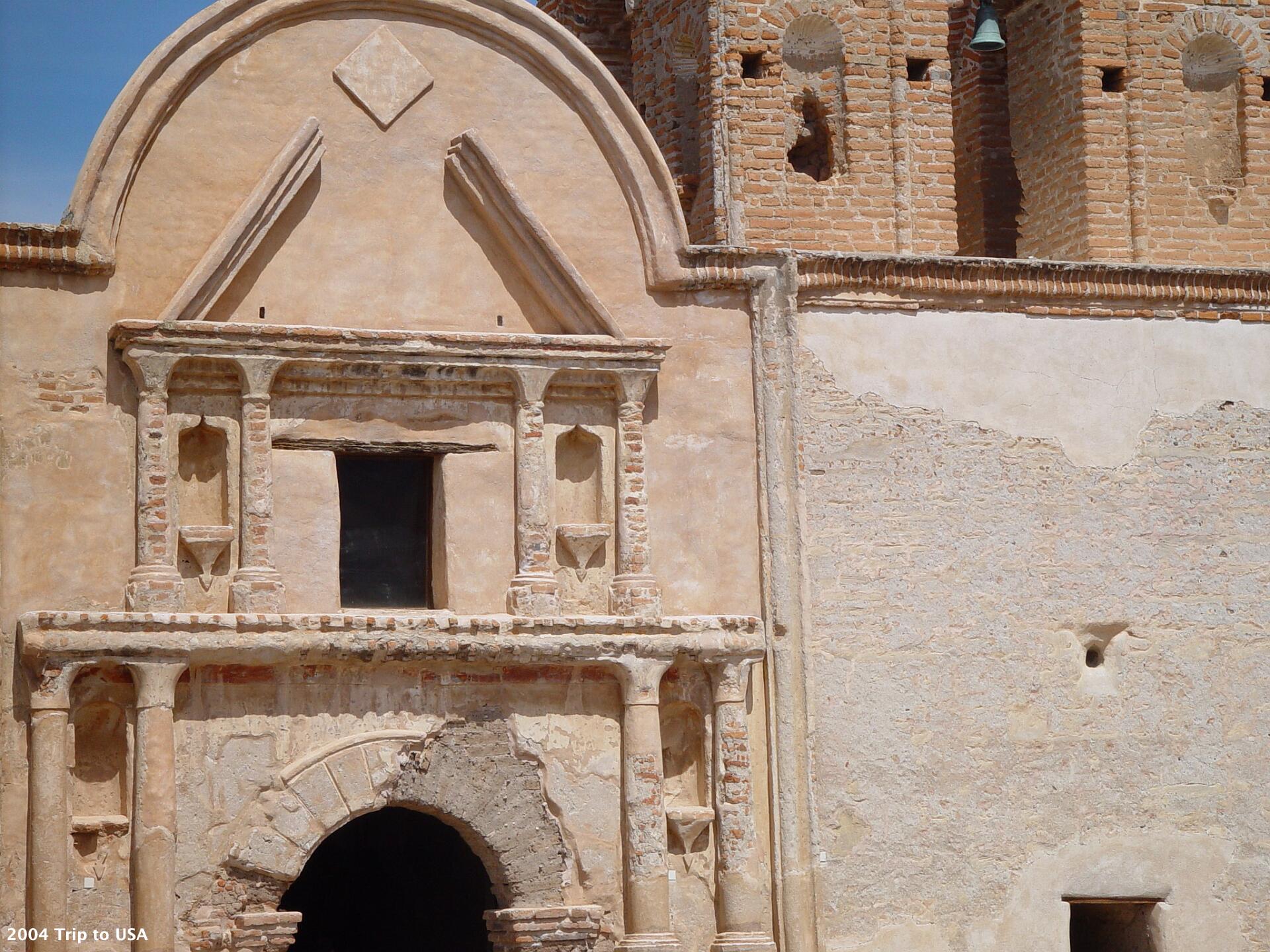
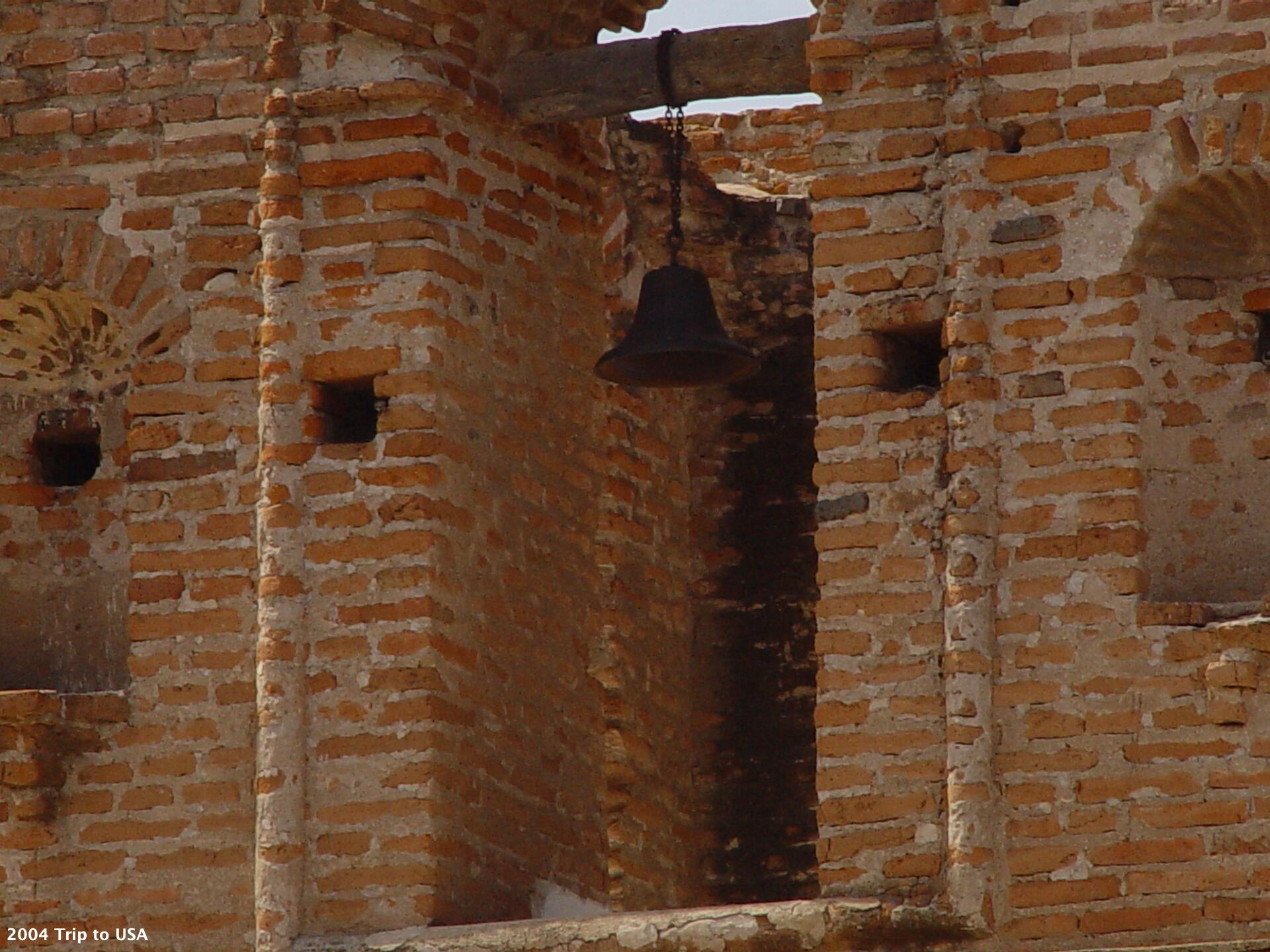 Thursday 2004-03-18 Tumacácori The Franciscans began work in 1800 on an ambitious undertaking - a church that would match the frontier baroque glory of the celebrated Mission San Xavier del Bac (which we visit) not far to the north. |
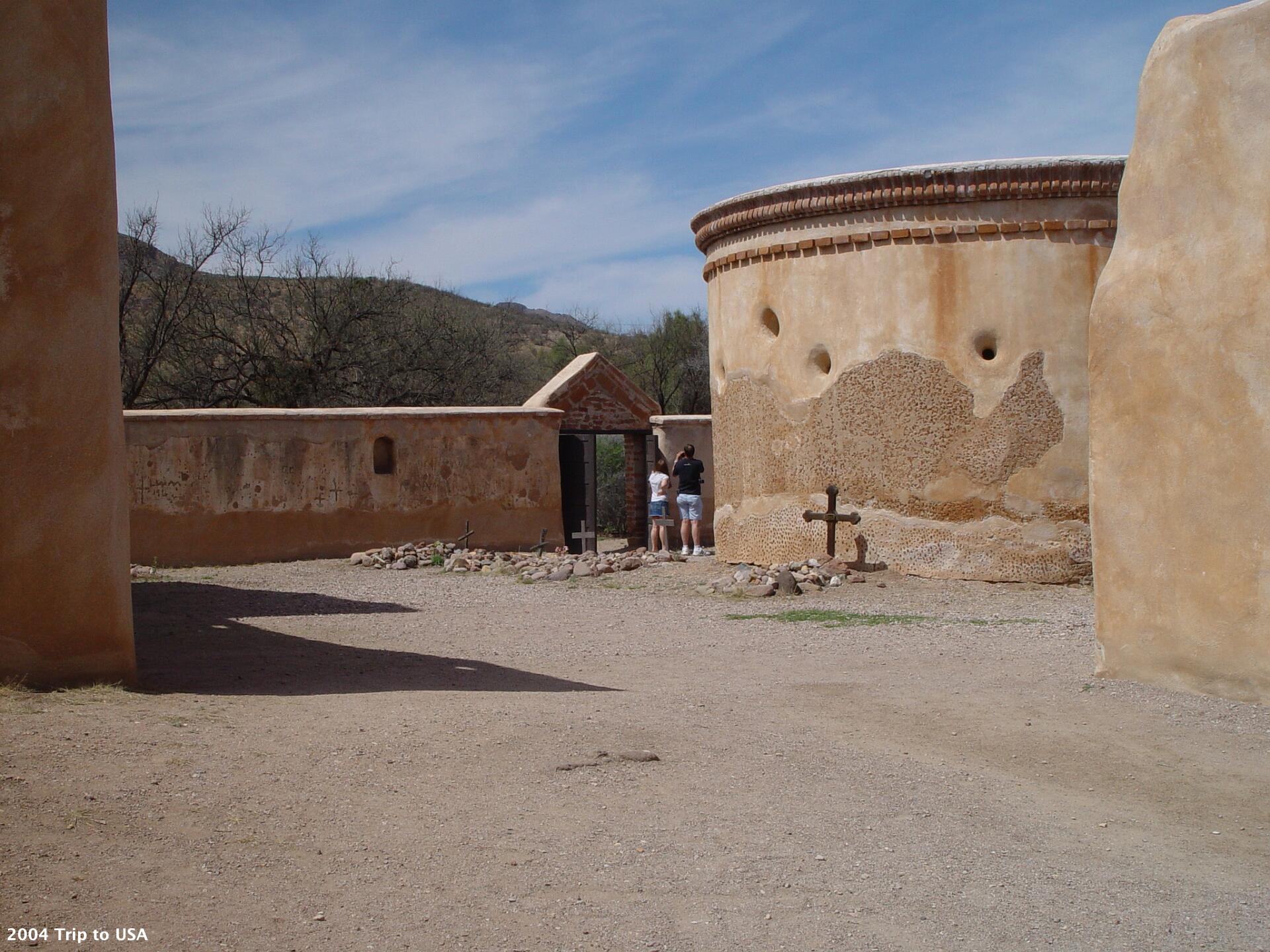 Thursday 2004-03-18 Tumacácori The original construction between 1800 and 1822 required more than 90,000 adobe blocks. This is the mortuary chapel to the rear of the church. |
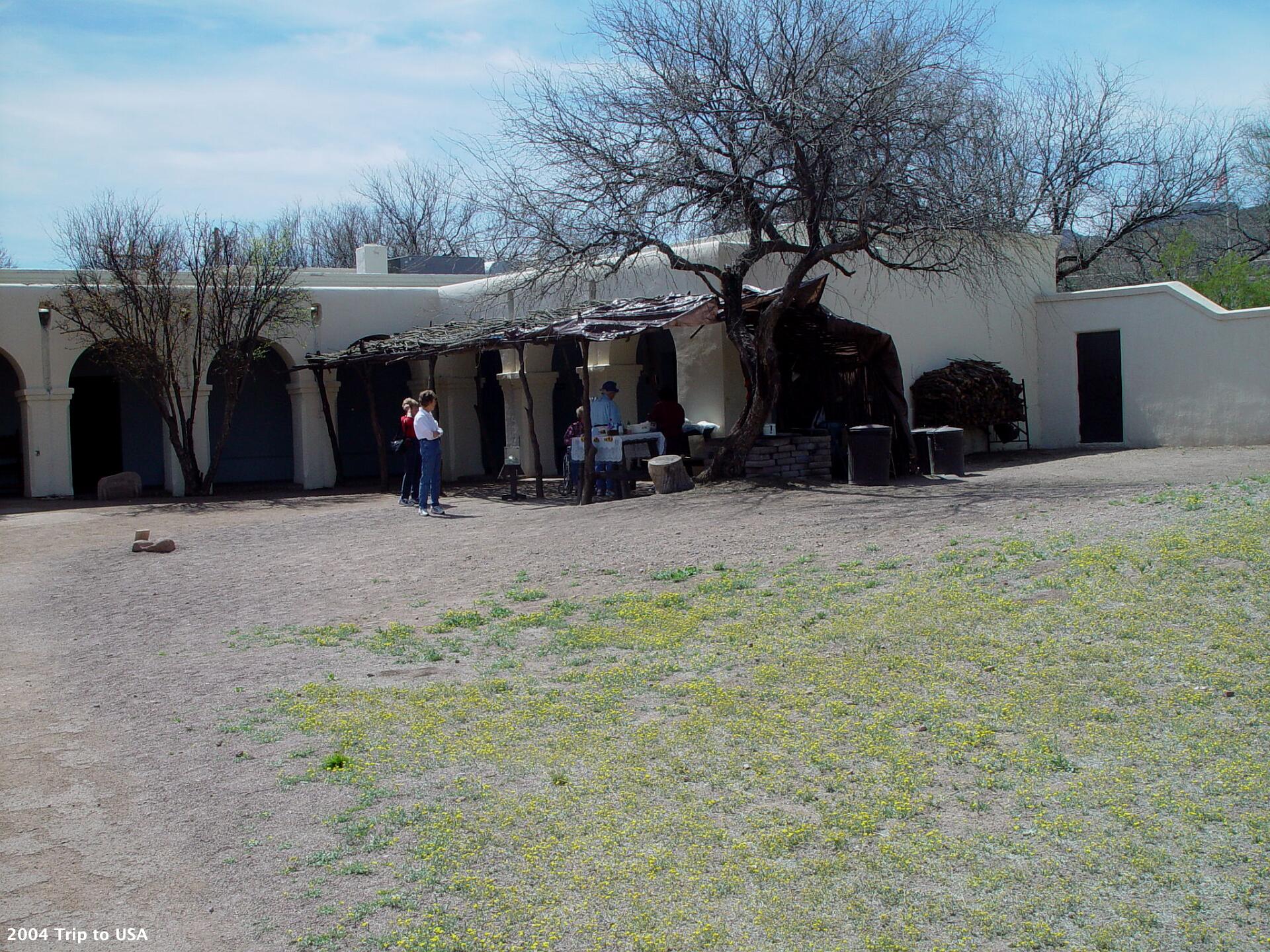 Thursday 2004-03-18 Tumacácori An Indian woman is cooking tortillas on a hot plate under an awning attached to the museum building. |
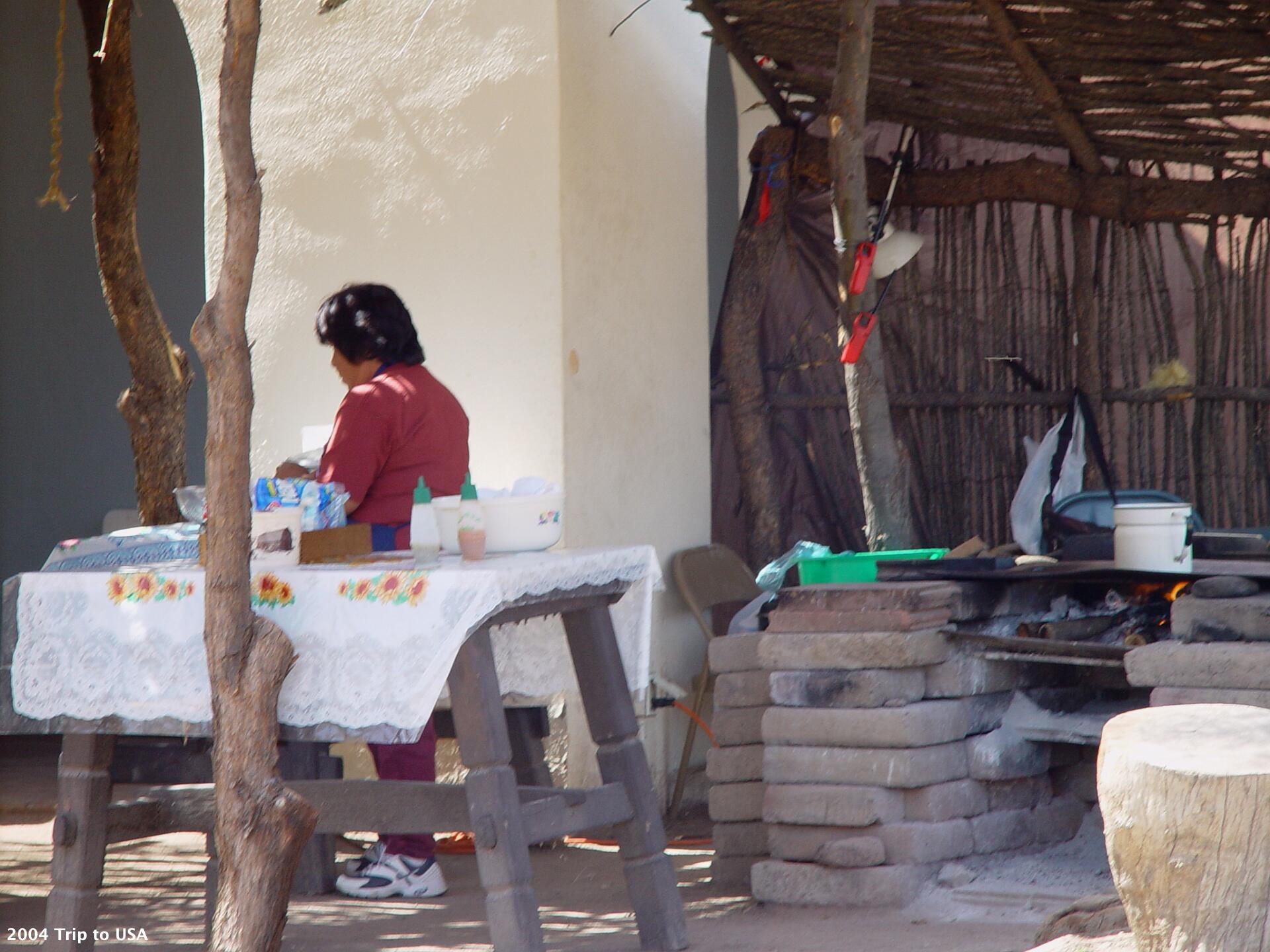 Thursday 2004-03-18 Tumacácori The Tortilla Sonorense is made of wheat flour. It is patted and stretched until it is an arm's length in diameter before being cooked. We have a taste. Yes. Good. |
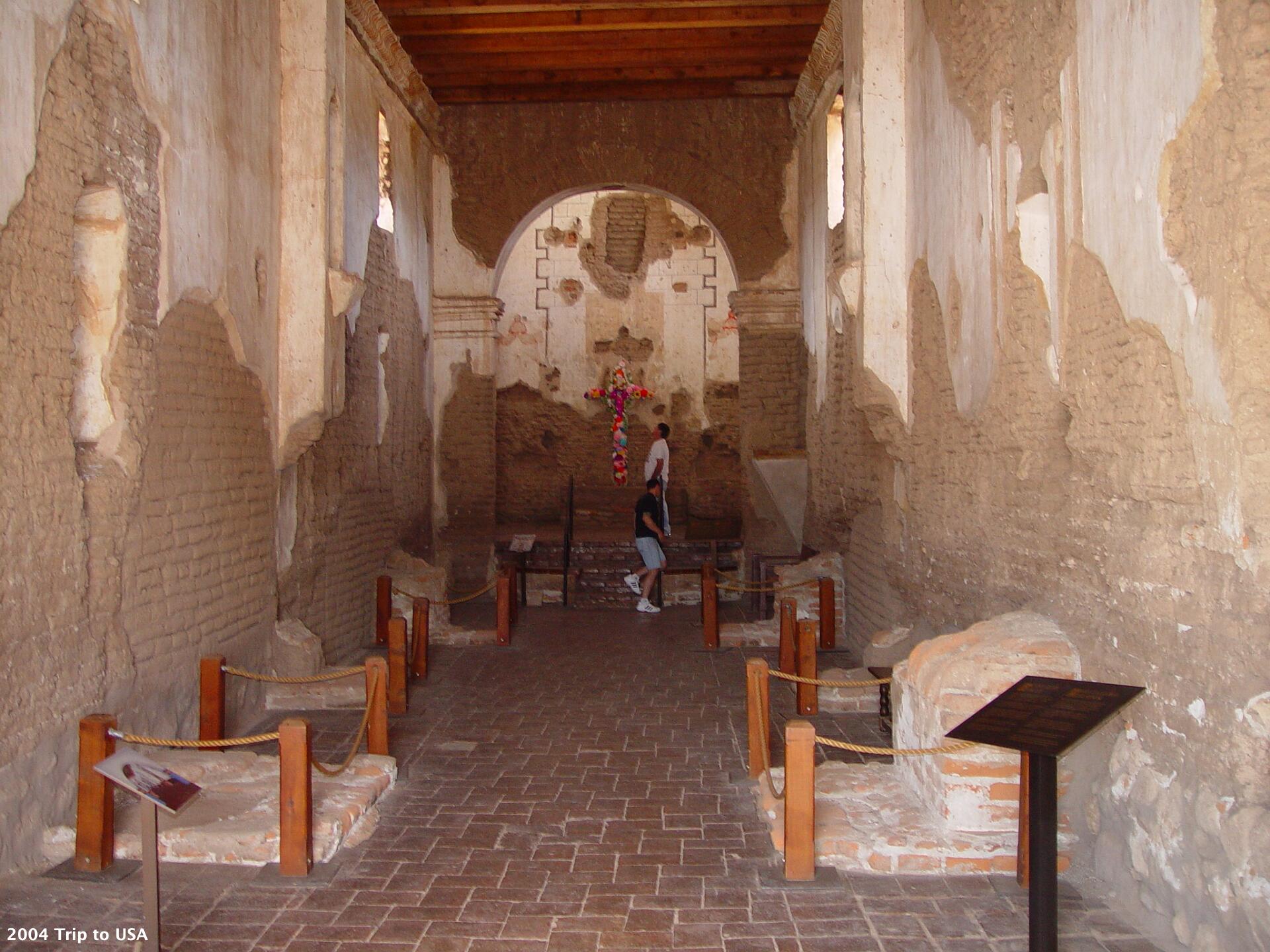 Thursday 2004-03-18 Tumacácori It was rumored that the Jesuit priests had amassed a fortune and were becoming very powerful. On February 3, 1768 King Carlos III ordered the Jesuits forcibly expelled from "New Spain" and returned to the home country. |
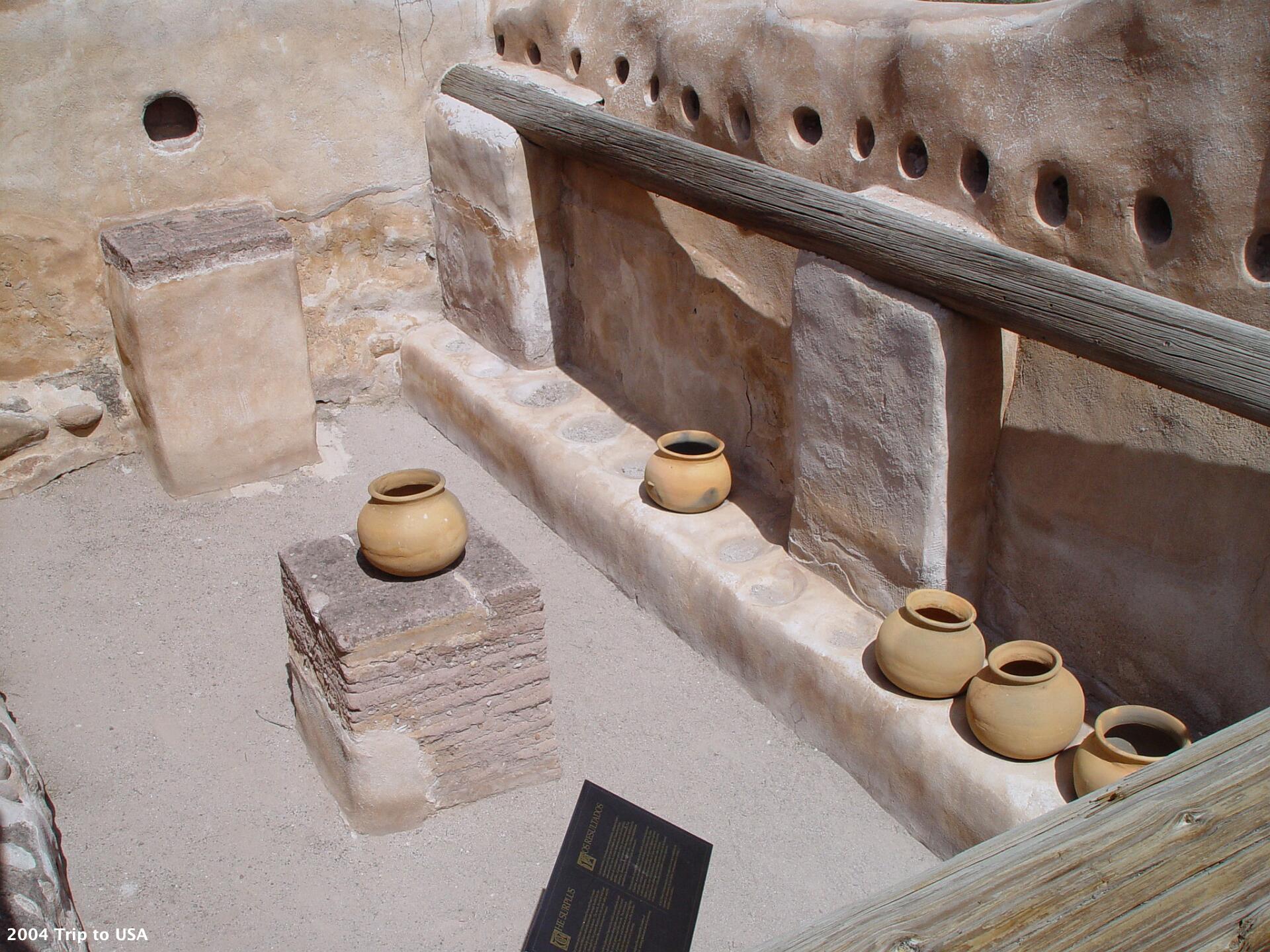 Thursday 2004-03-18 New Spain, which is now in Arizona and the Mexican state of Sonora, was a Spanish colony at the time. The Tumacácori mission grew, stored its own grain and produced its own bread. |
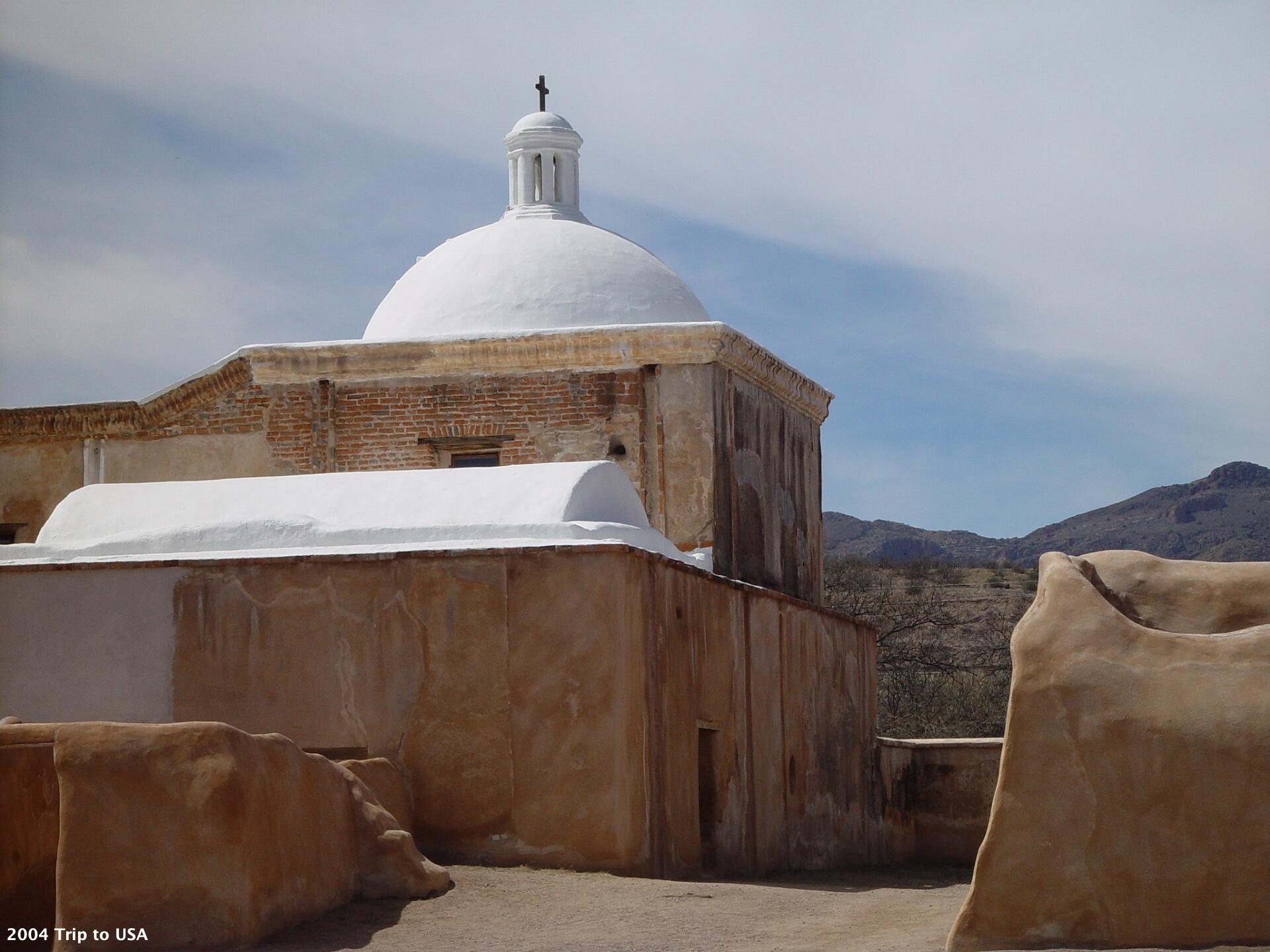 Thursday 2004-03-18 Tumacácori The Spanish missions in the Sonoran Desert were a series of religious outposts established by Spanish Catholic Jesuits and other orders to spread the Christian doctrine among the local Native Americans. |
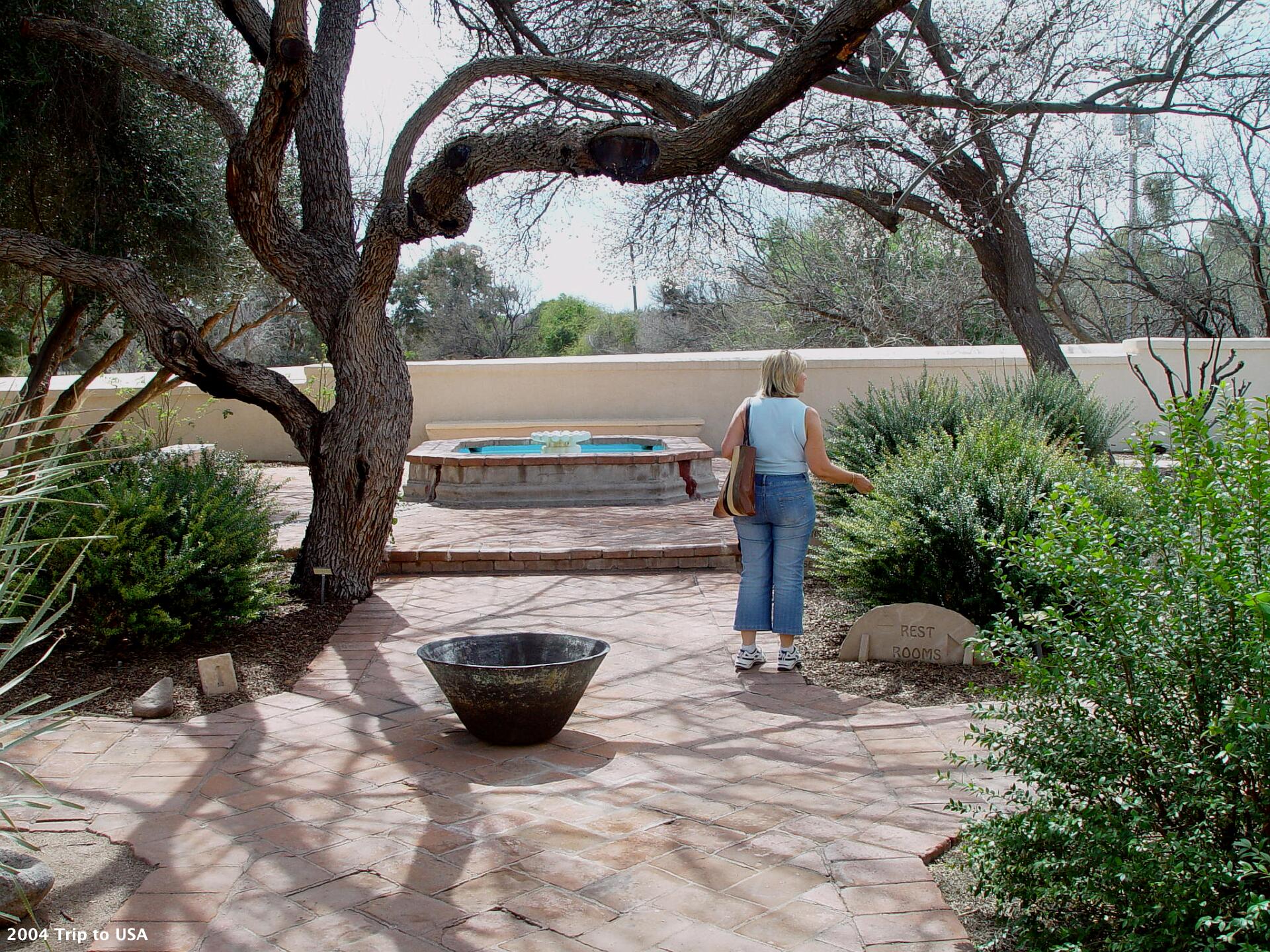 Thursday 2004-03-18 Tumacácori The missions had the added benefit of giving Spain a toehold in the frontier lands of its colony. These are the very tranquil gardens of the mission. |
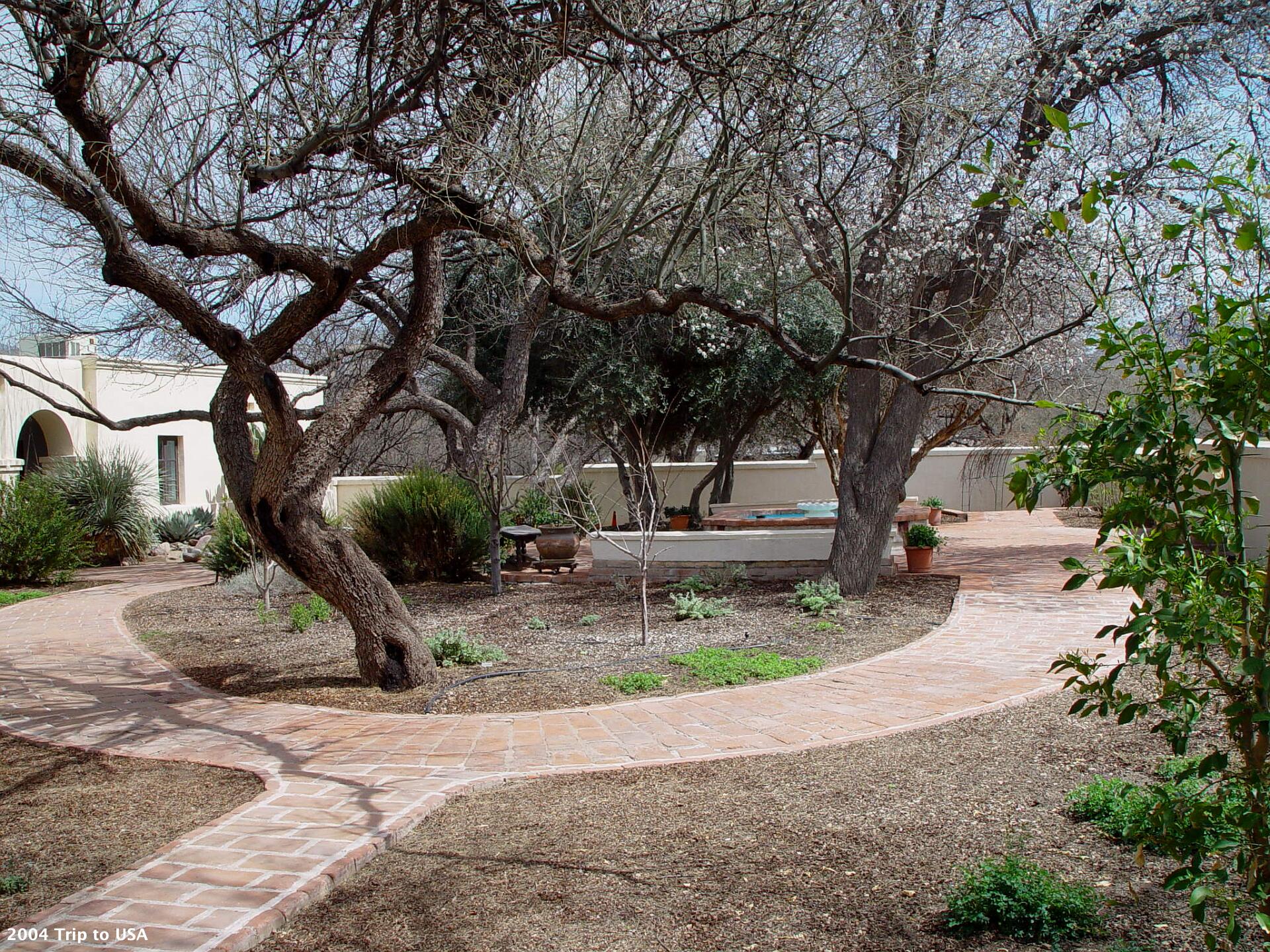 Thursday 2004-03-18 Tumacácori The Tumacácori mission is run by the US National Park Service as a National Historic Park. |
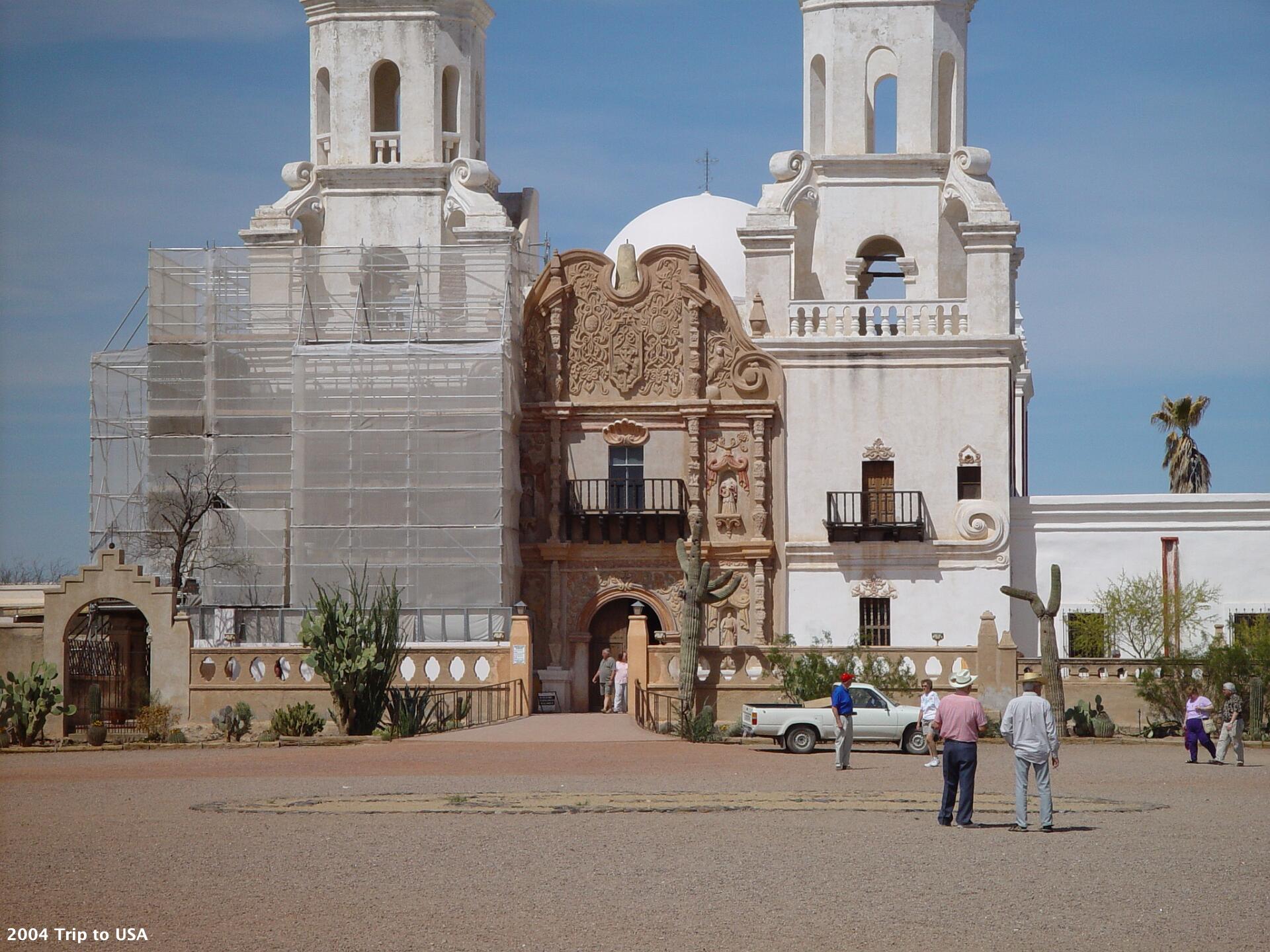 Thursday 2004-03-18 San Xavier del Bac Mission San Xavier del Bac is a historic Spanish Catholic mission located about 16 km south of downtown Tucson in the centre of the Tohono O'odham San Xavier Indian Reservation. It is located along the banks of the Santa Cruz River |
 Thursday 2004-03-18 San Xavier del Bac The original mission church 3 km away was vulnerable to attacks by the Apaches who destroyed it in about 1770. |
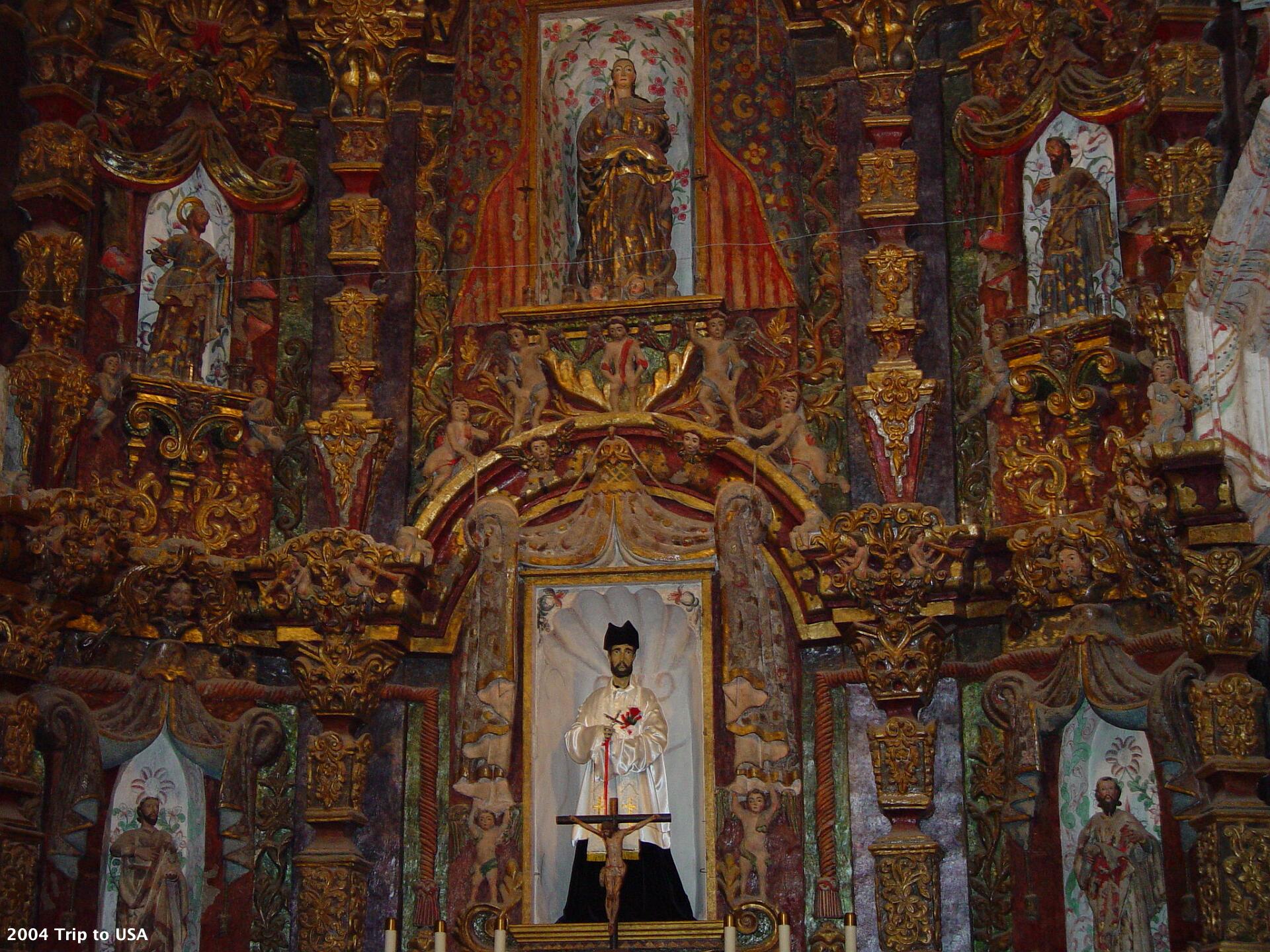 Thursday 2004-03-18 San Xavier del Bac Charles III of Spain banned all Jesuits from Spanish lands in the Americas in 1767 because of his distrust of them. From this time on, San Xavier mission was led by the more pliable and "reliable" Franciscans. |
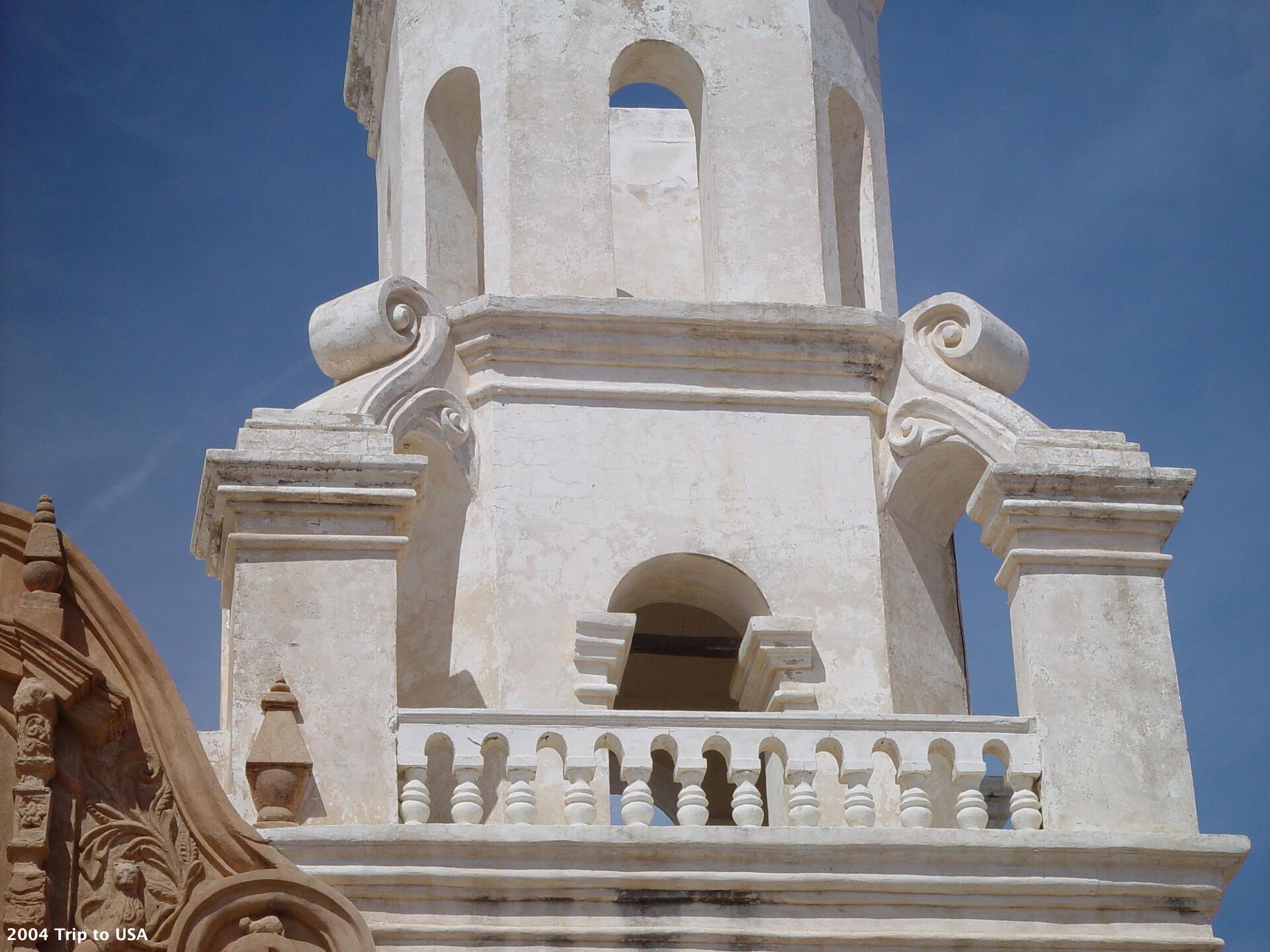
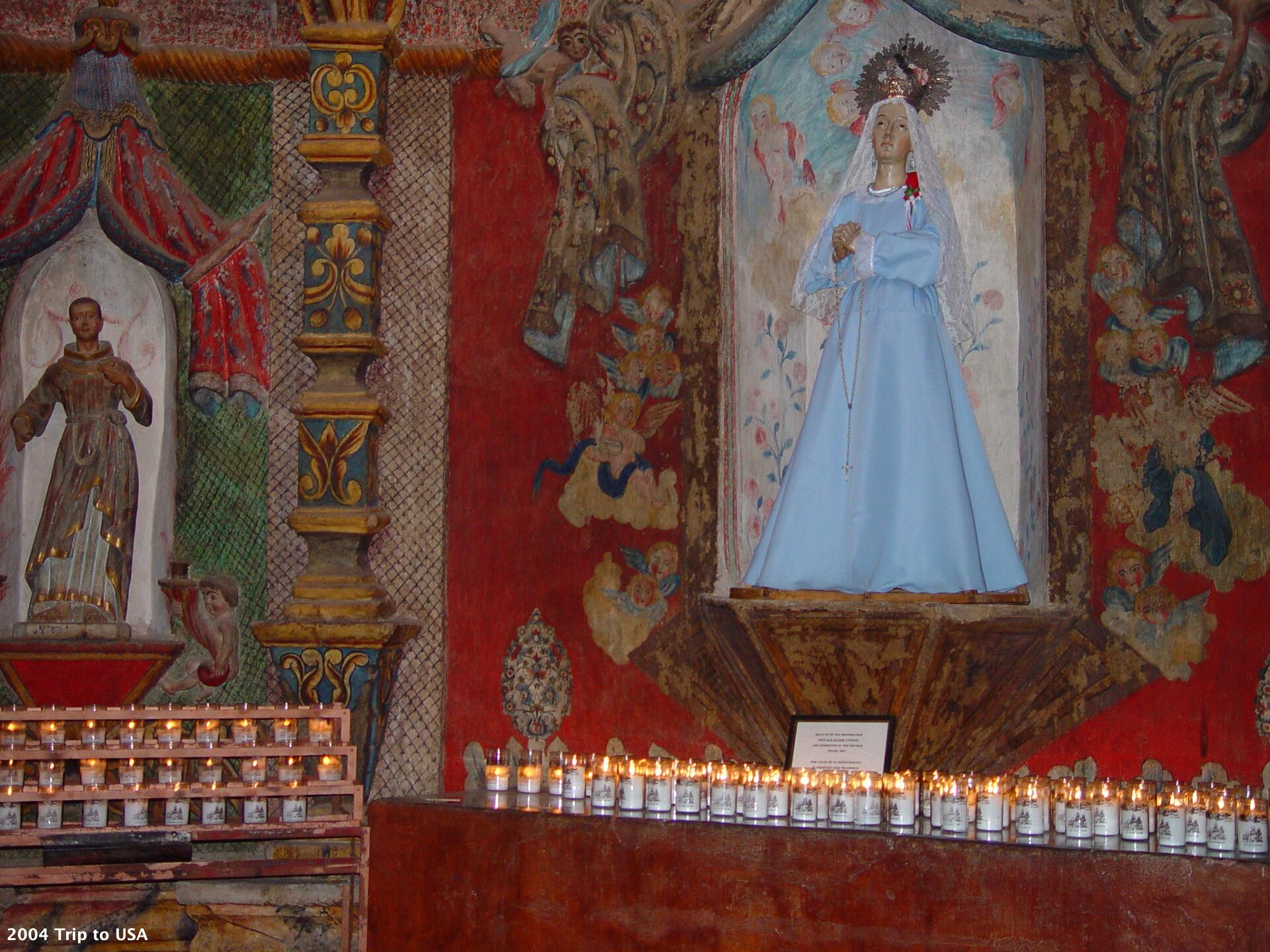 Thursday 2004-03-18 San Xavier del Bac The present building was constructed with native labor from 1783-1797 with a loan of 7,000 pesos and serves the Catholics of the San Xavier District of the Tohono O'odham Nation. |
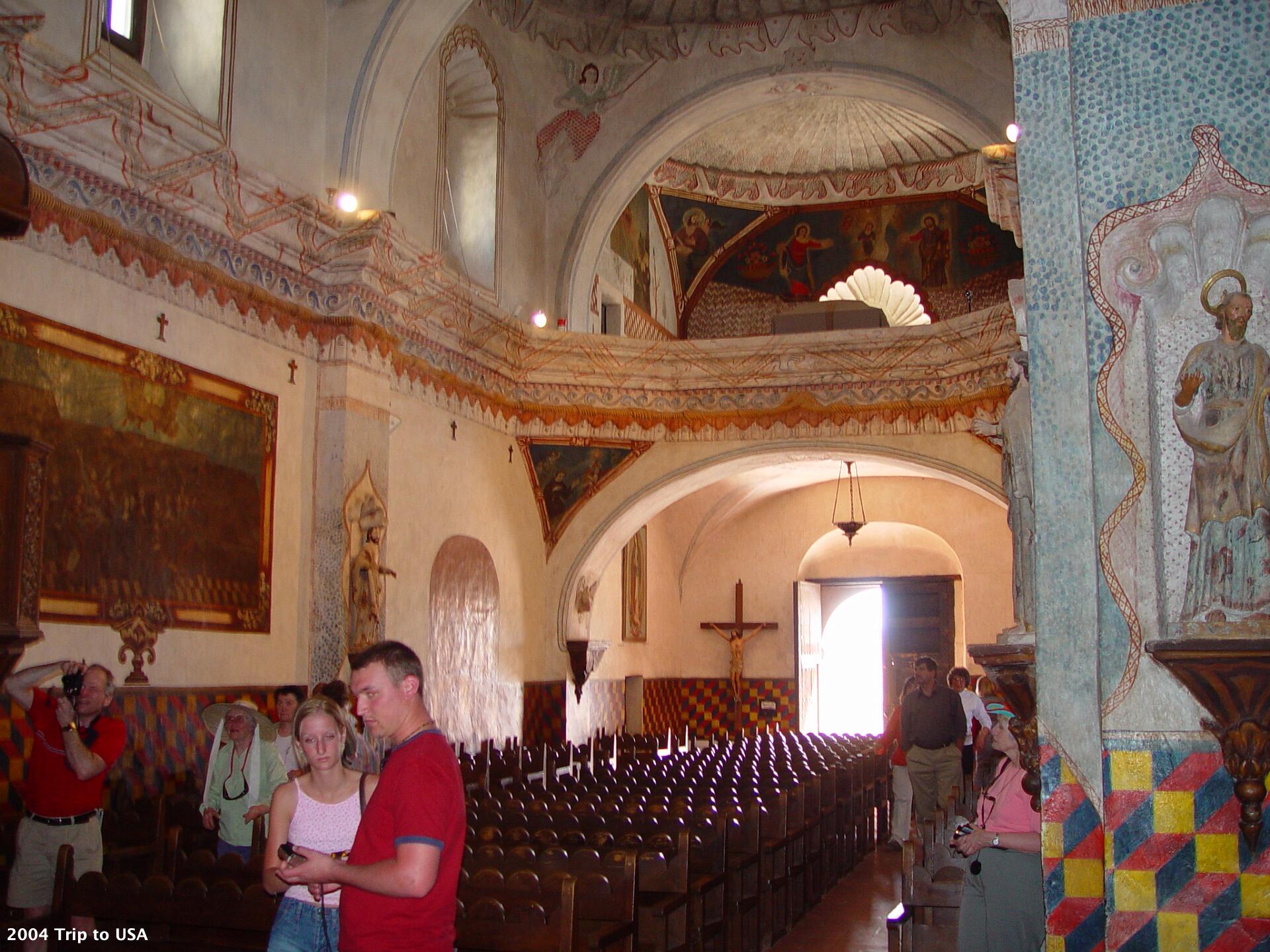 Thursday 2004-03-18 San Xavier del Bac San Xavier is still actively served by Franciscans and it still serves the Native community who built it. The San Xavier church and its Indian converts were protected from Apache raids by the presidio of Tucson, established in 1775. Next folder: After a few more days in Tucson, we travel to Washington State |