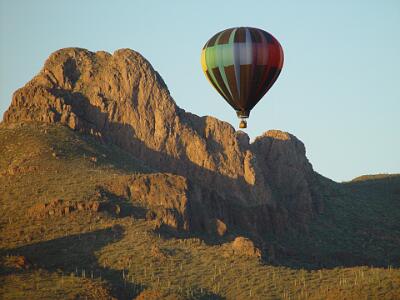
Tuesday 2004-03-16 Pima Air & Space Museum The museum is one of the largest air and space museums in the world and the largest non-government funded aviation museum. It contains more than 275 aircraft and spacecraft many of which are historically significant. |
 Tuesday 2004-03-16 Pima Air & Space Museum The Lockheed SR-71A Blackbird. The design of what eventually became the Blackbird began in 1958 with a request from the CIA for an aircraft to replace the Lockheed U-2. The aircraft the CIA got was a single seat, twin engine, delta-winged design called the A-12. |
 Tuesday 2004-03-16 Pima Air & Space Museum The first SR-71 Blackbird flew in December 1964. Lockheed built 50 aircraft in the Blackbird Family with 32 of them being SR-71s, all of which were twin-seaters. Twelve of the 32 aircraft were destroyed in accidents, though none were lost to enemy action. |
 Tuesday 2004-03-16 Pima Air & Space Museum Some of the SR71 Blackbird's records: September 1974 New York to London 1 hour 55 minutes 42 seconds; July 1976, World absolute speed record of 2,193 mph and World absolute record for sustained altitude of 85,069 feet. |
 Tuesday 2004-03-16 Pima Air & Space Museum The D-21 drone was carried by a special version of the Blackbird called the M-21. The D-21 was designed to carry a single high-resolution photographic camera over a pre-programmed location, then drop the camera module into the ocean, where it could be retrieved. |
 Tuesday 2004-03-16 Pima Air & Space Museum The General Dynamics BGM-109G GLCM is a mobile Ground Launched Cruise Missile (GLCM) designed to serve as a tactical nuclear weapon in Europe. It is virtually identical to the non-nuclear Tomahawk cruise missiles used by the US in several Middle East conflicts. |
 Tuesday 2004-03-16 Pima Air & Space Museum The Lockheed Neptune is a long-range anti-submarine patrol aircraft that entered service in 1947 and remained in production untill 1962. The AP-2H designation was applied to four heavily modified Neptunes for a special program during the Vietnam War. |
 Tuesday 2004-03-16 Pima Air & Space Museum The Douglas EA-1F Skyraider was a dive-bomber/torpedo bomber that entered service in 1946 with 3,180 being built. A small number was modified into a four-seat electronic-countermeasures aircraft designated the EA-1F. Some remained in service until 1979. |
 Tuesday 2004-03-16 Pima Air & Space Museum The Grumman F-14A Tomcat is the last of Grumman's Cat series of Naval fighters. The F14 entered service on the USS Enterprise in 1974 and flew some of the last combat missions over Vietnam . It was retired from the active U.S. Navy fleet on 22 September 2006. |
 Tuesday 2004-03-16 Pima Air & Space Museum The Grumman A-6E Intruder was the definitive attack version of the Intruder, introduced in 1970 with upgraded nav/attack systems. The Vought A-7E Corsair II first entered combat in Vietnam in December 1967. |
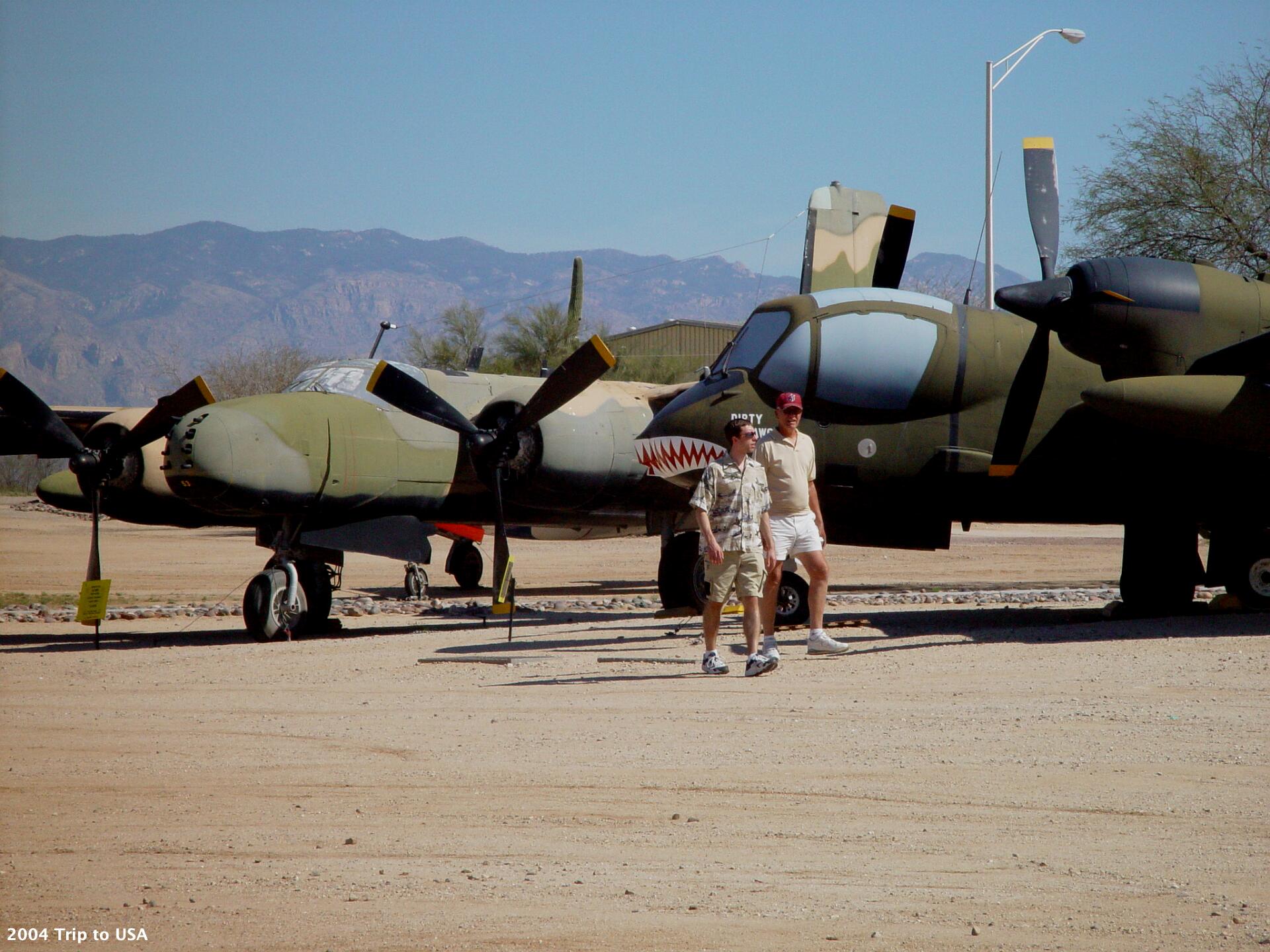 Tuesday 2004-03-16 Pima Air & Space Museum The Grumman OV-1C Mohawk is an army reconnaissance aircraft that carried cameras and infrared sensors. Retired in 1996. The Douglas B-26K Invader is a remanufactured A-26B, originally built during World War II, that served in the Vietnam war. |
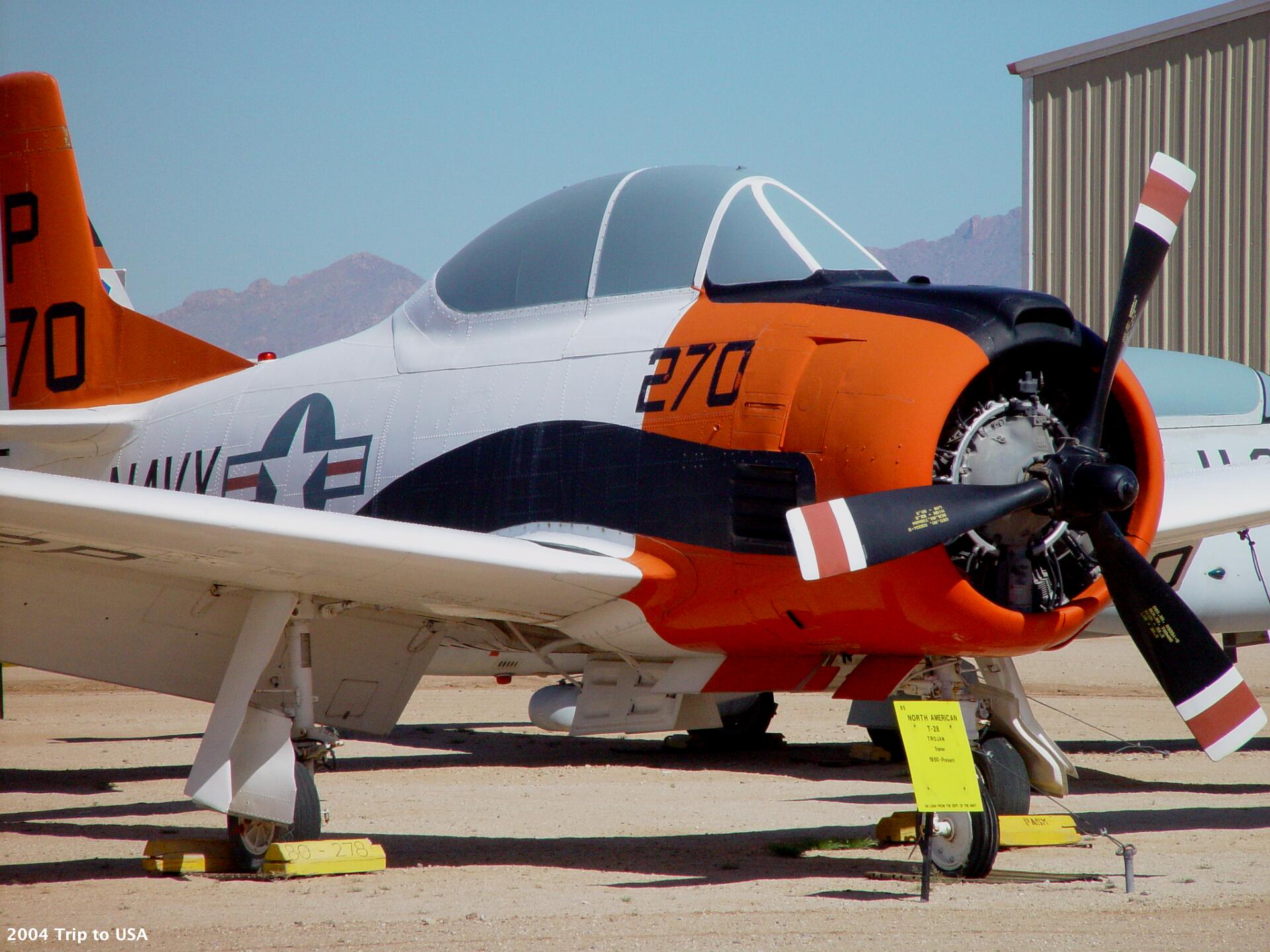 Tuesday 2004-03-16 Pima Air & Space Museum The North American T-28C Trojan entered service with the Navy in 1953, three years after it entered service with the Air Force. The Navy's version differed from the Air Force version in having a larger engine and a three-blade propeller instead of a two-blade prop. |
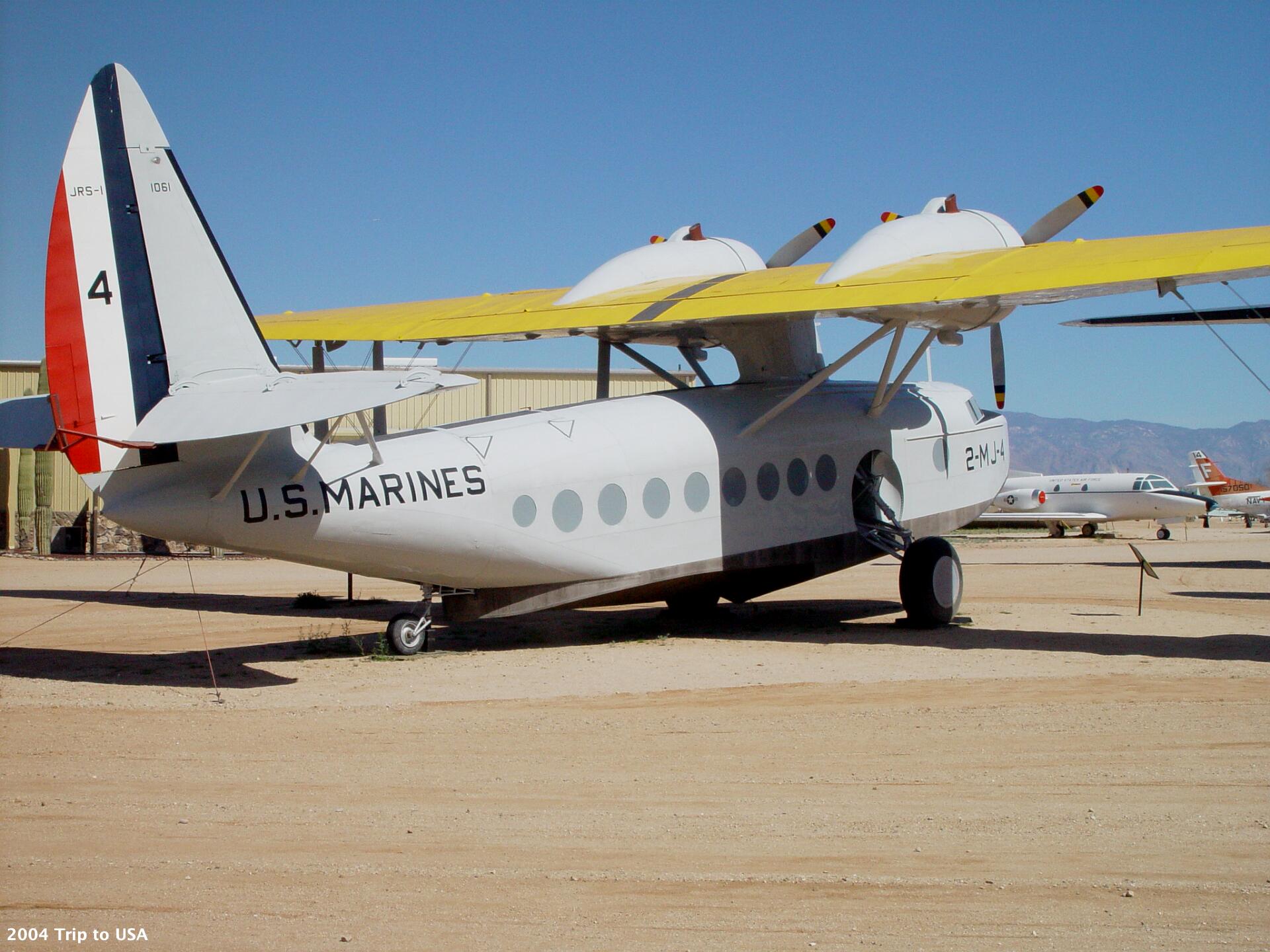 Tuesday 2004-03-16 Pima Air & Space Museum The Sikorsky S-43 Baby Clipper. Fifty-three were built between 1937 and 1941 for civilian customers and the US Navy; three survive today. The "Baby Clipper" served with Pan American Airlines on shorter routes for which its larger flying boats were unsuitable. |
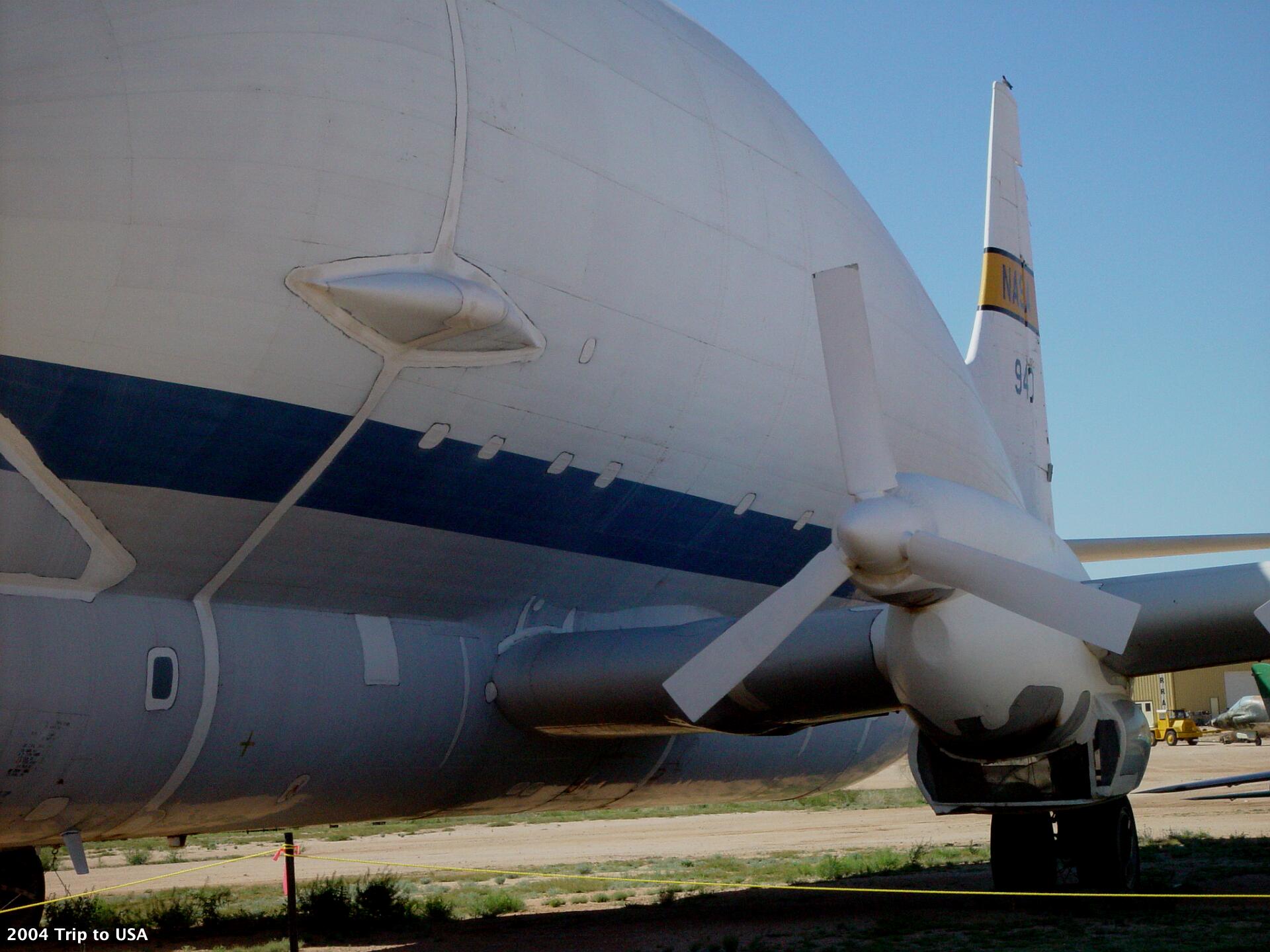 Tuesday 2004-03-16 Pima Air & Space Museum The Super Guppy was built from parts of retired U.S. Air Force C-97 Stratofreighters and airline 377 Stratocruisers. The planes carried segments of rockets during the Saturn and Apollo programs. |
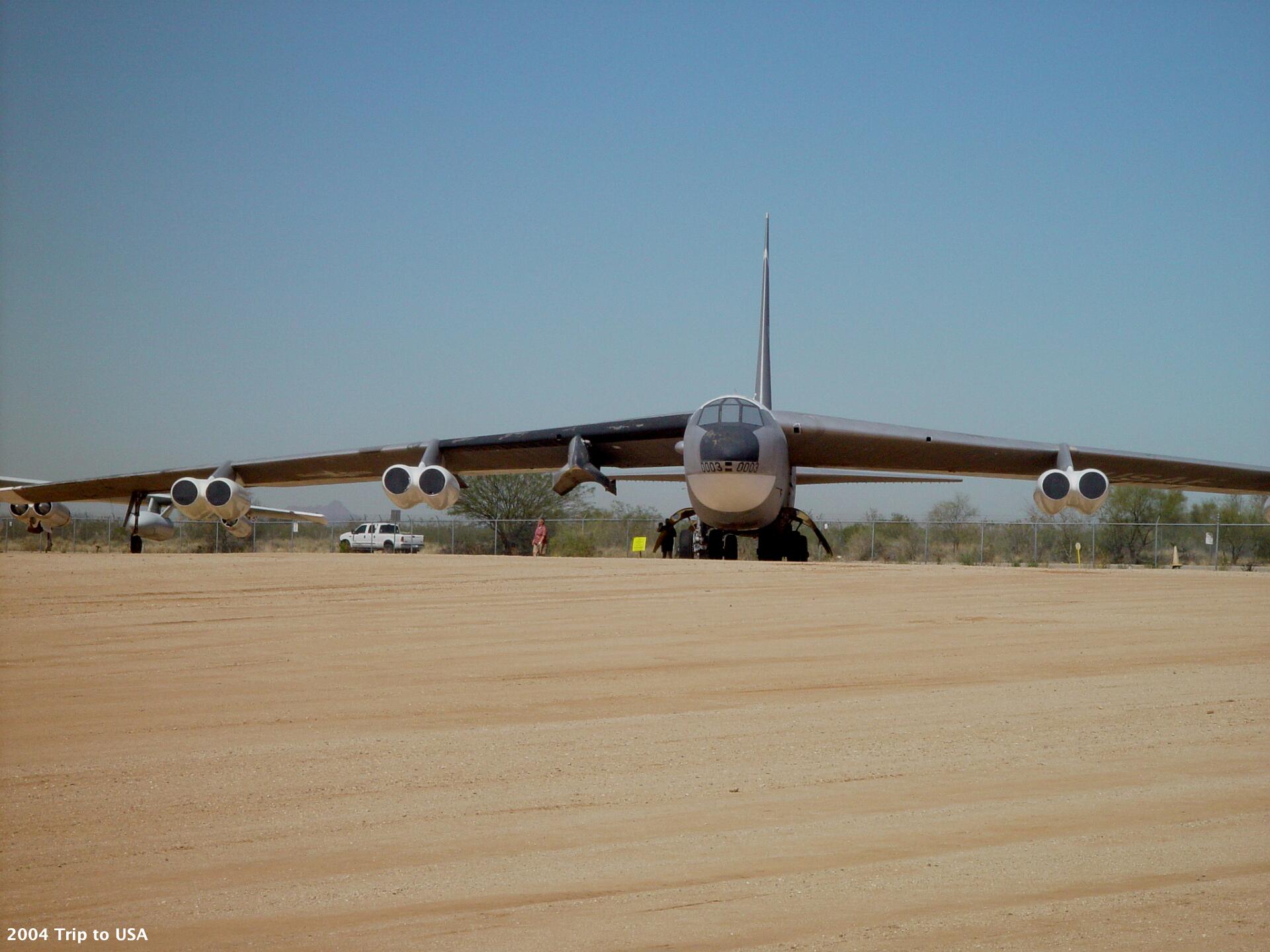 Tuesday 2004-03-16 Pima Air & Space Museum The Boeing NB-52A Stratofortress, NB for nuclear bomber. Only three of the "A" models were built and all served solely as test aircraft. This is the oldest B-52 in existence and is the third "A" model built. |
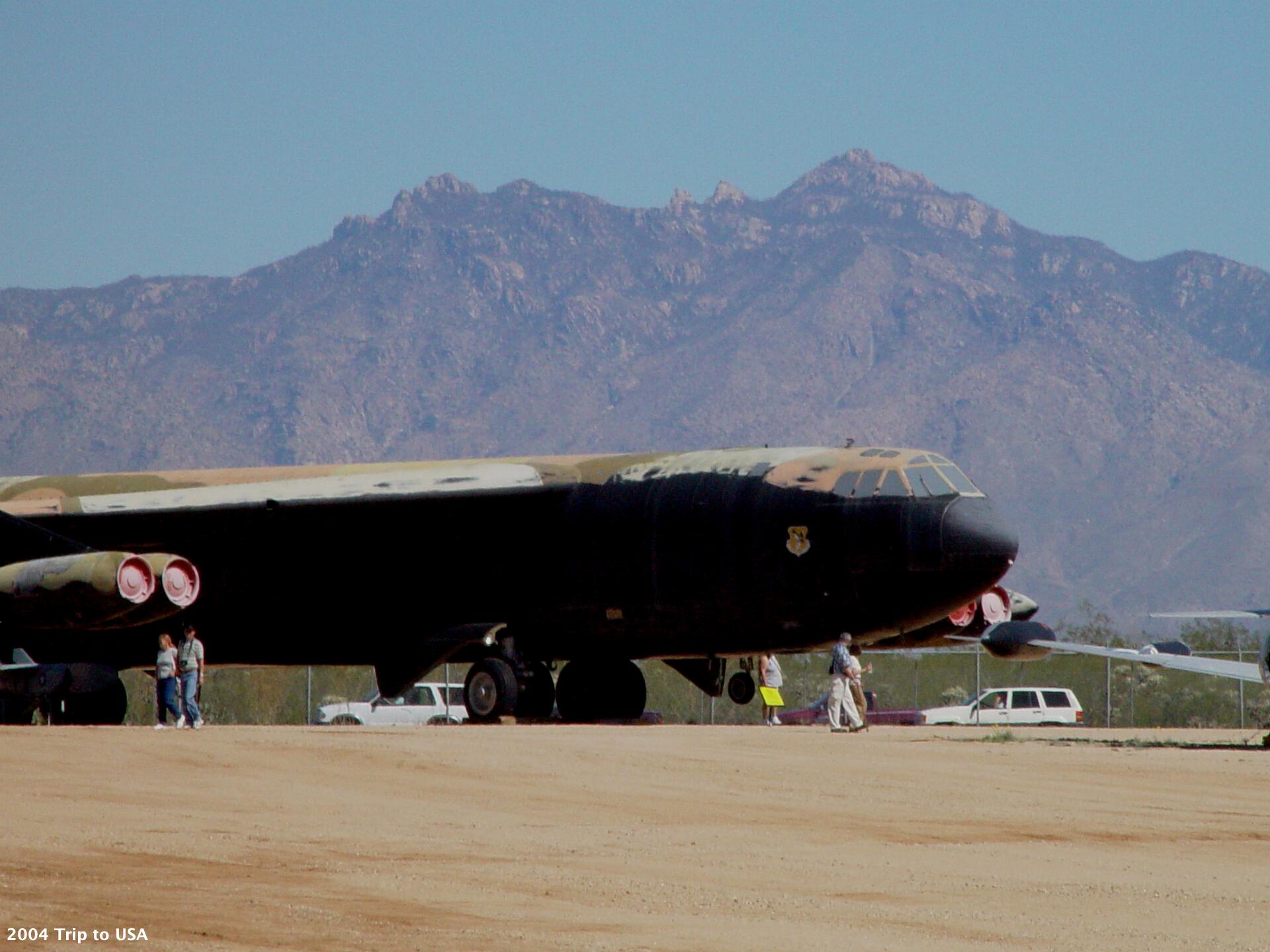 Tuesday 2004-03-16 Pima Air & Space Museum The B-52D was the second most produced version of the B52. Modifications from 1965 increased their carrying capacity to 108 conventional bombs which meant that one aircraft could carry 54,000 pounds of bombs, roughly the equivalent of three WWII B-17s. |
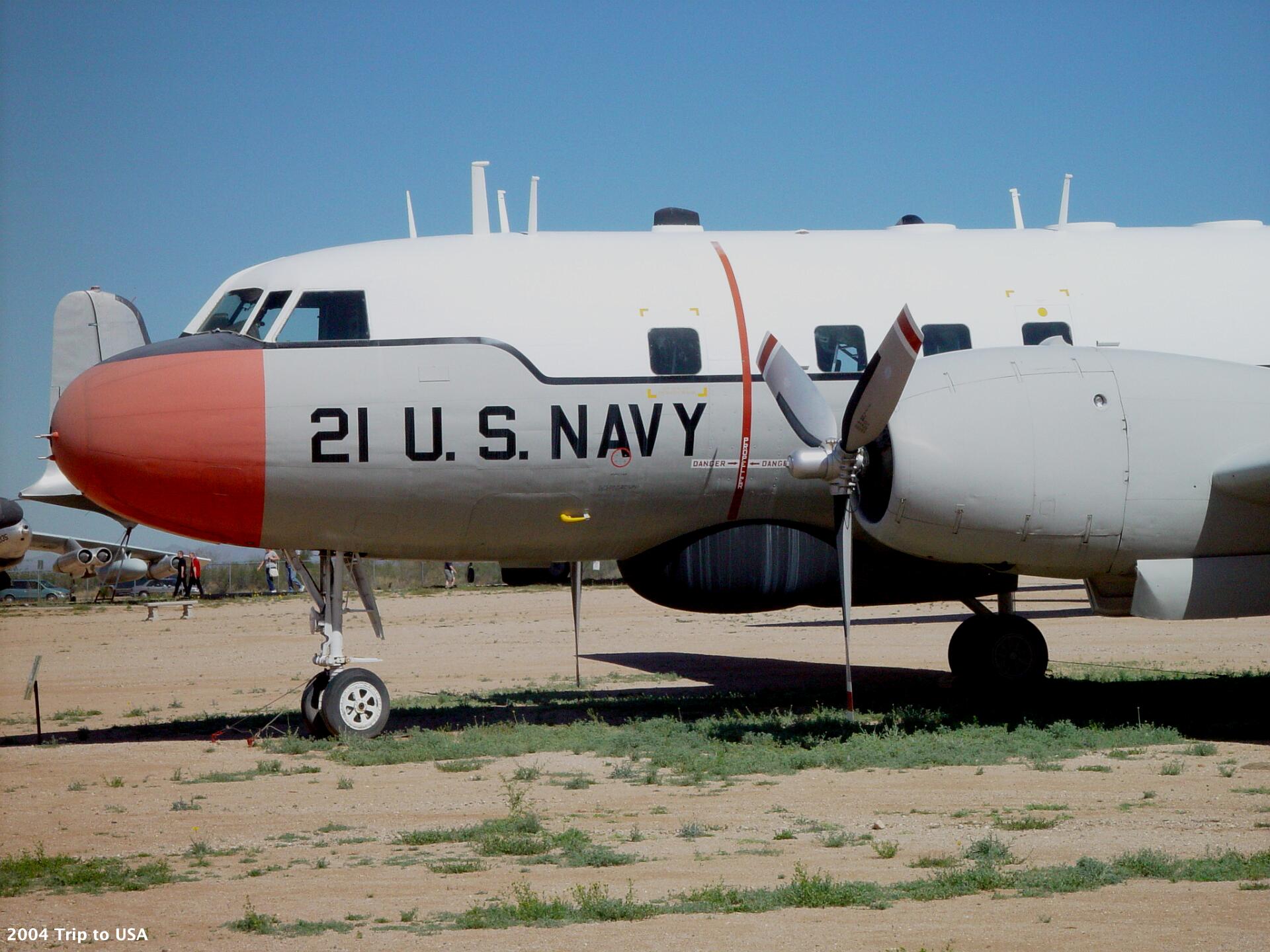 Tuesday 2004-03-16 Pima Air & Space Museum The Convair T-29B Flying Classroom entered service in 1950 as a navigation and radar trainer. The T-29B had a pressurised cabin with accommodation for ten navigation students and four student radar operators. The T-29 remained in service until the mid 1970s. |
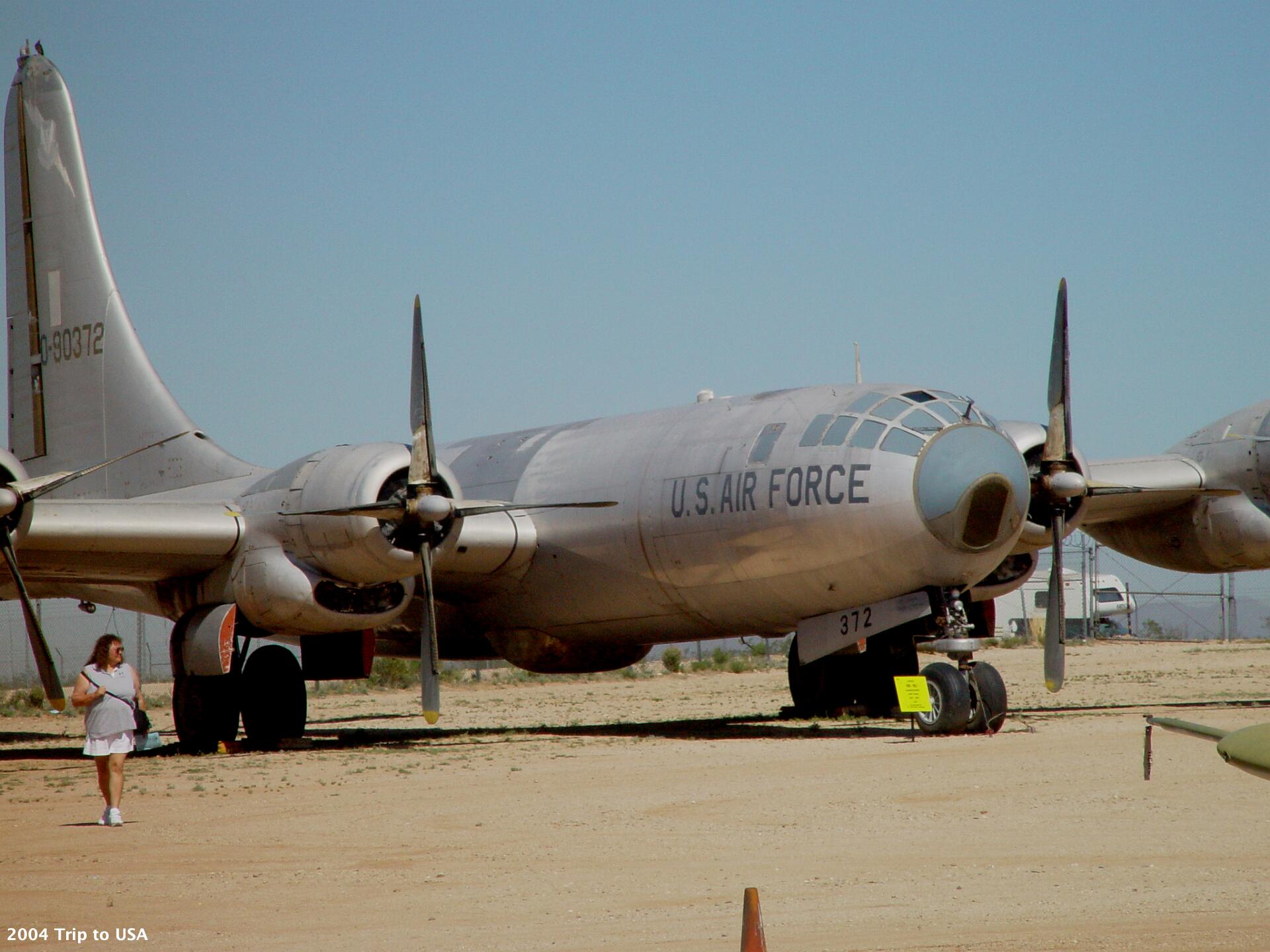 Tuesday 2004-03-16 Pima Air & Space Museum The Boeing KB-50J Superfortress was a redesign of the WWII B29. The first aircraft entered service in 1947 and 370 were built. Greater speed was needed and two J-47 turbojet engines were installed and, in this form, they served into the 1960s. |
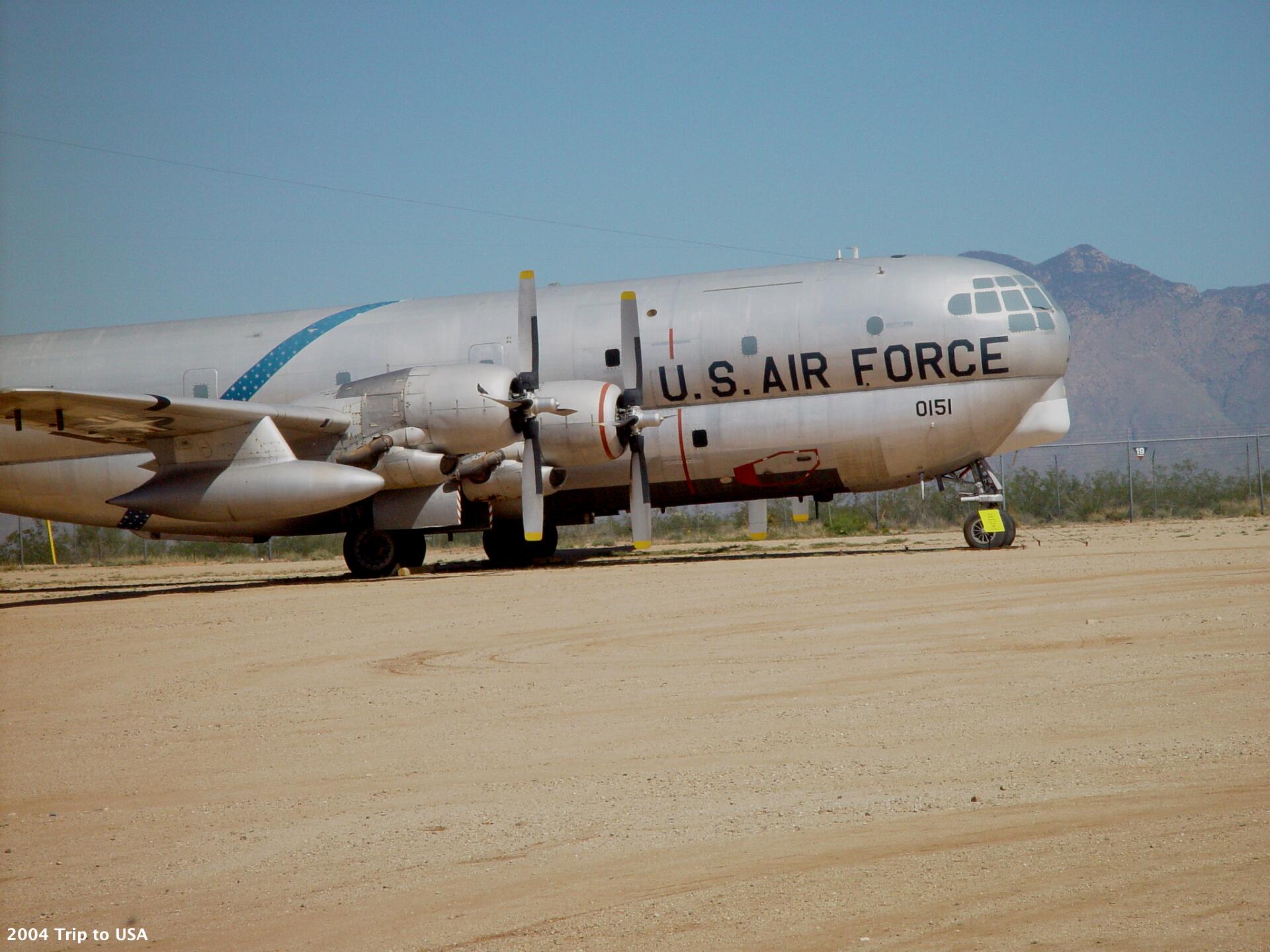 Tuesday 2004-03-16 Pima Air & Space Museum The Boeing KC-97G Stratofreighter was also based on the B-29 adapting the landing gear, wings and tail from the B-29 . Boeing modified the design slightly to create their first post-war airliner, the Boeing 377. The KC-97G is ta tanker version of the Stratofreighter. |
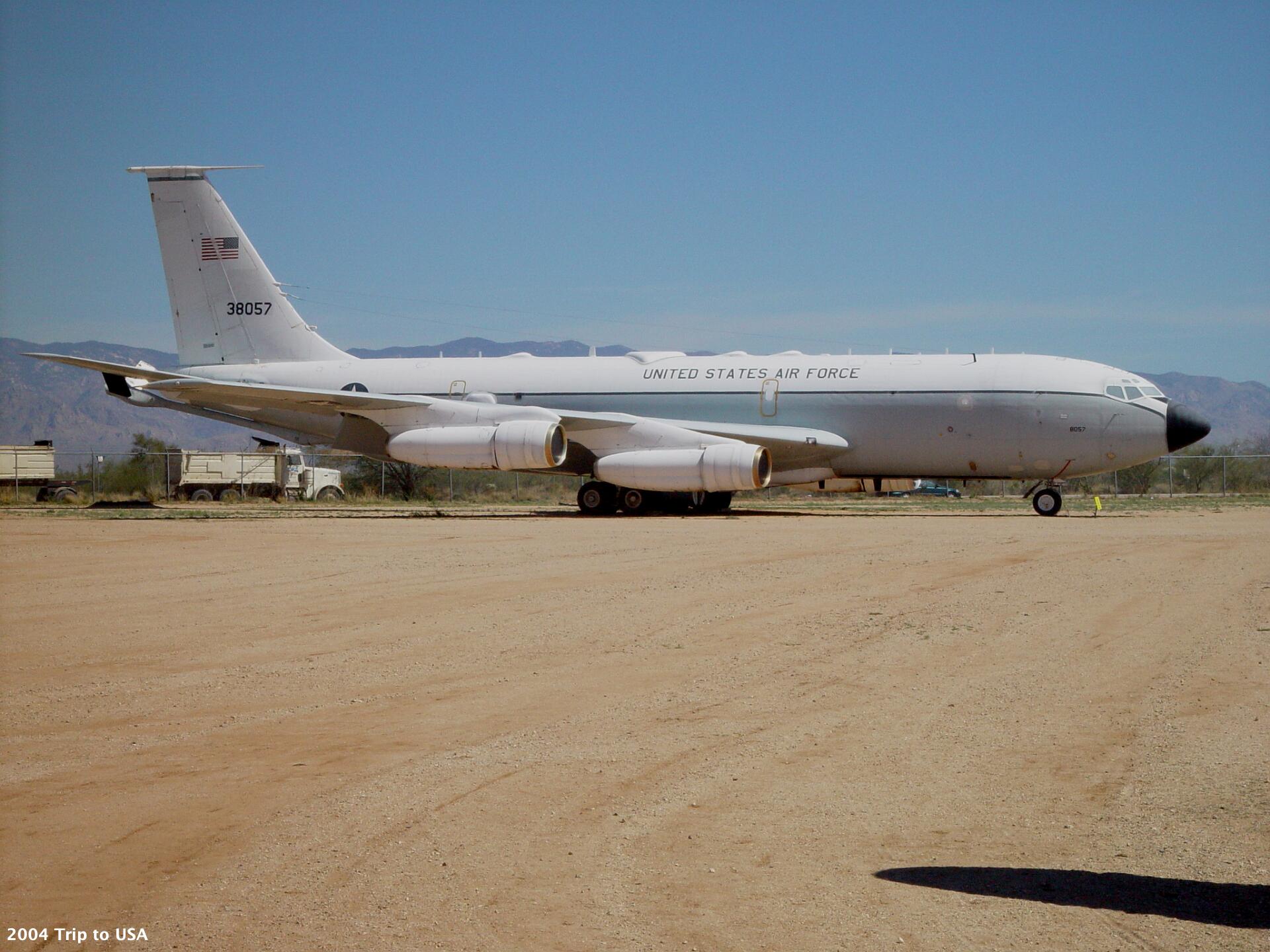 Tuesday 2004-03-16 Pima Air & Space Museum The Boeing EC-135J Stratotanker. In the mid-1960s this aircraft and two others were modified to EC-135J standards and were intended for use by the US President as his airborne command post in the event of nuclear war. |
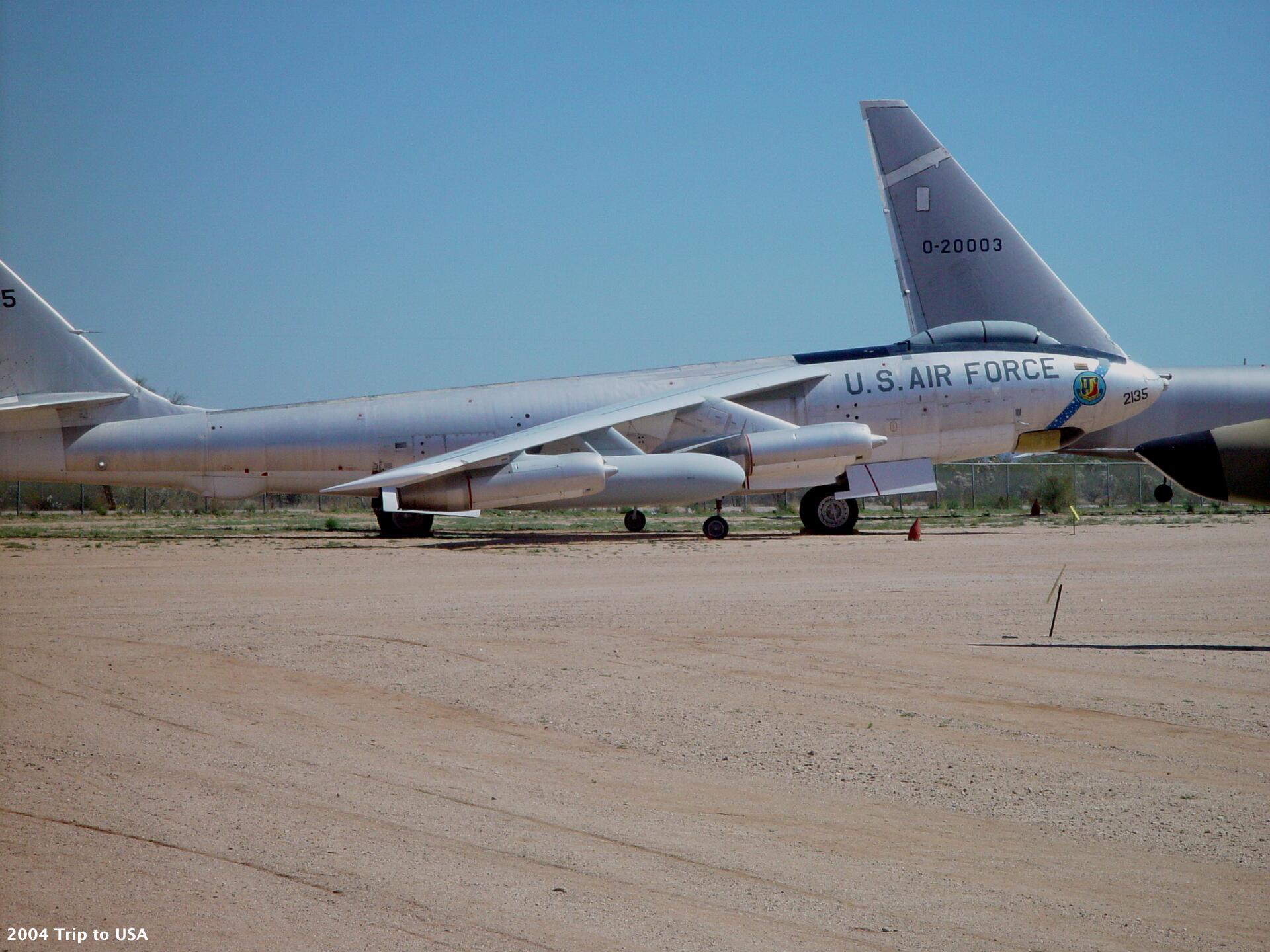 Tuesday 2004-03-16 Pima Air & Space Museum The Boeing EB-47E Stratojet was the first all-jet bomber produced anywhere in the world and over two thousand were built between 1947 and 1957. During the early 1960s a number of B-47E models were converted for use as electronic intelligence gathering aircraft. |
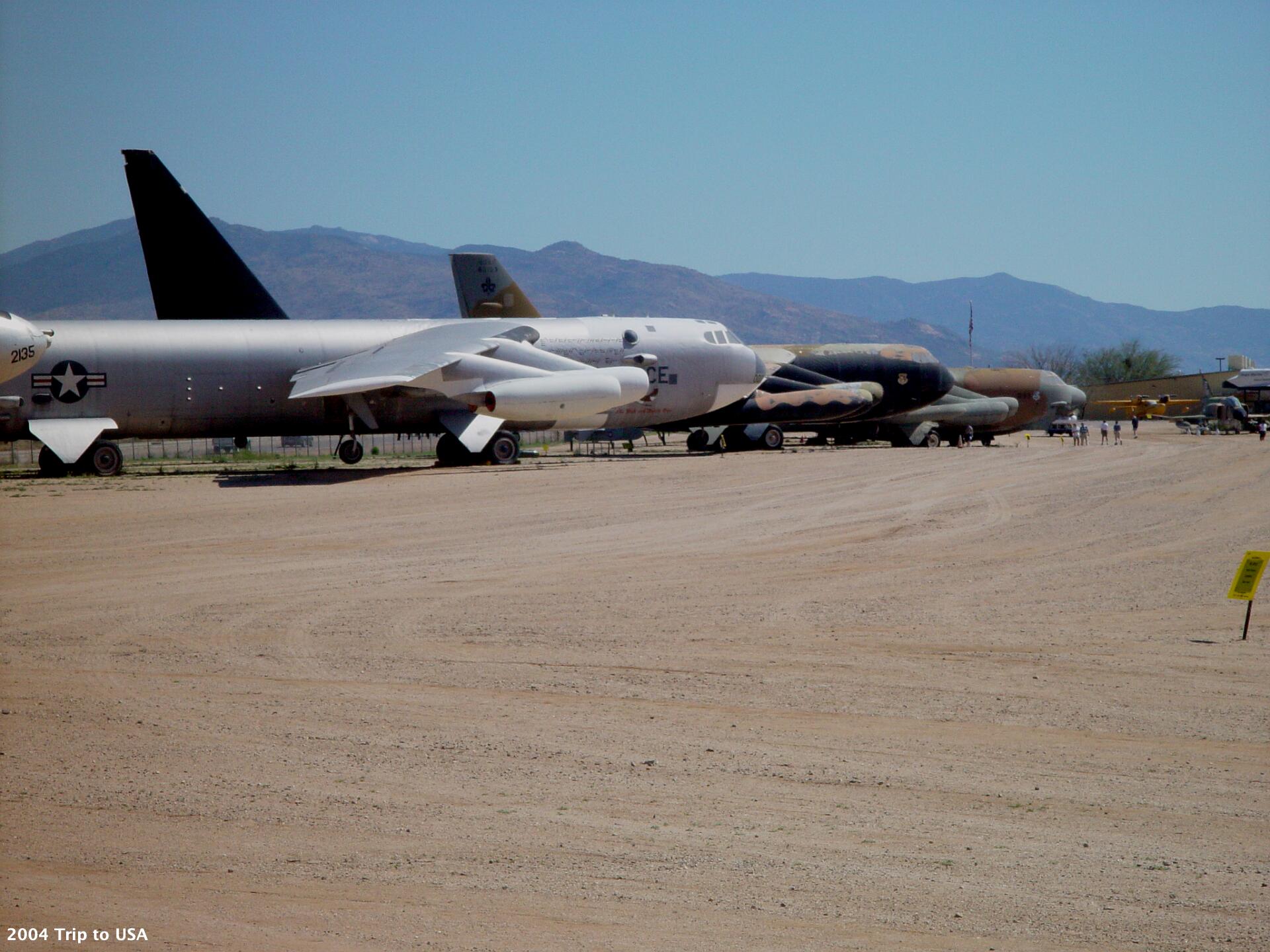 Tuesday 2004-03-16 Pima Air & Space Museum A Boeing NB-52A Stratofortress, followed by the D and G models. The B-52G was introduced in 1958 and was the first of the "short tail" versions. It participated in the Gulf war in 1991 with 74 aircraft engaged in what were then the longest combat missions ever. |
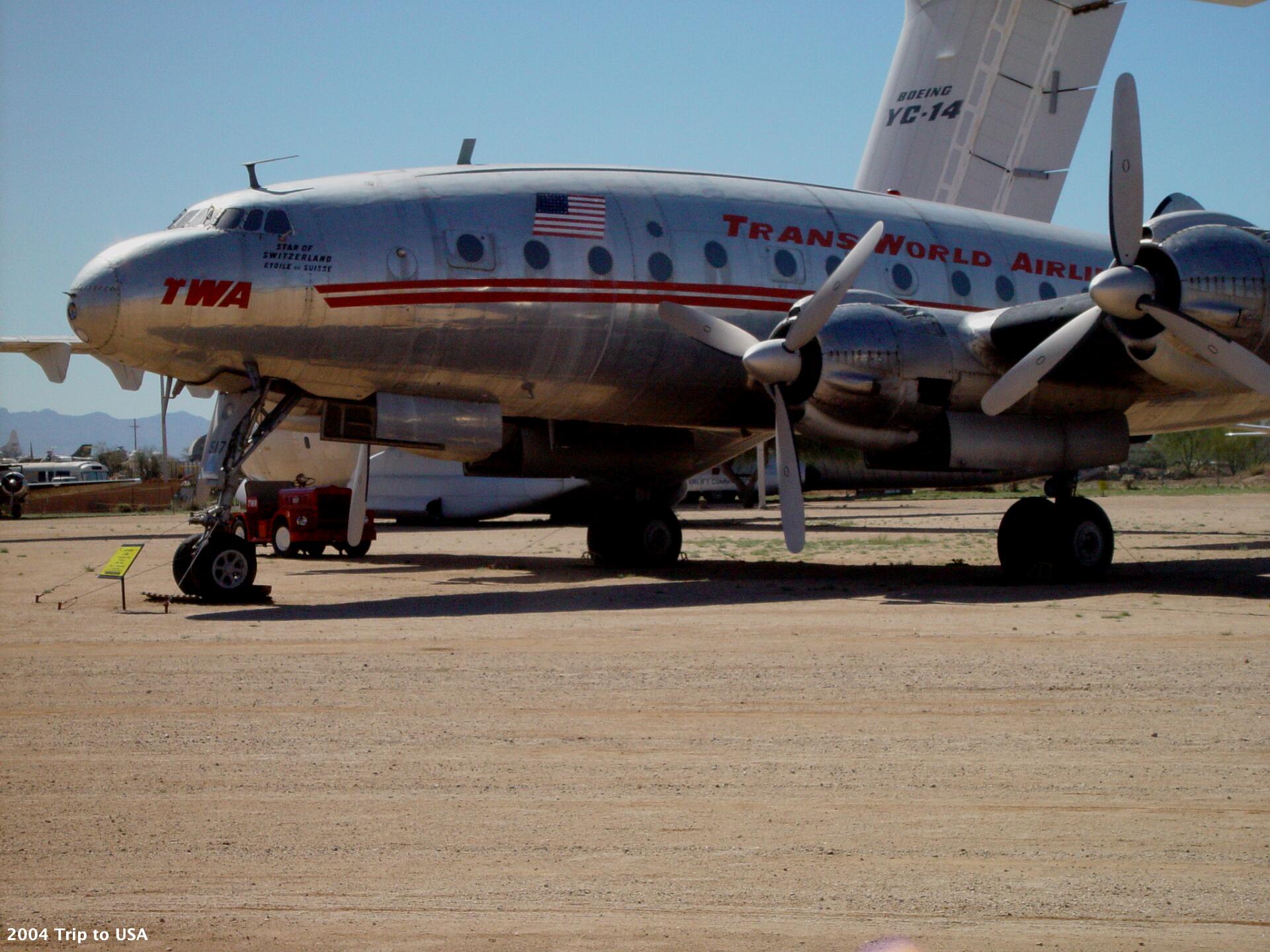 Tuesday 2004-03-16 Pima Air & Space Museum The Lockheed L-049 Constellation was originally designed for TWA but the first planes were taken by the Army Air Forces during World War II and returned to the airlines after the war. Over 800 Constellations saw service with most of the world's major airlines. |
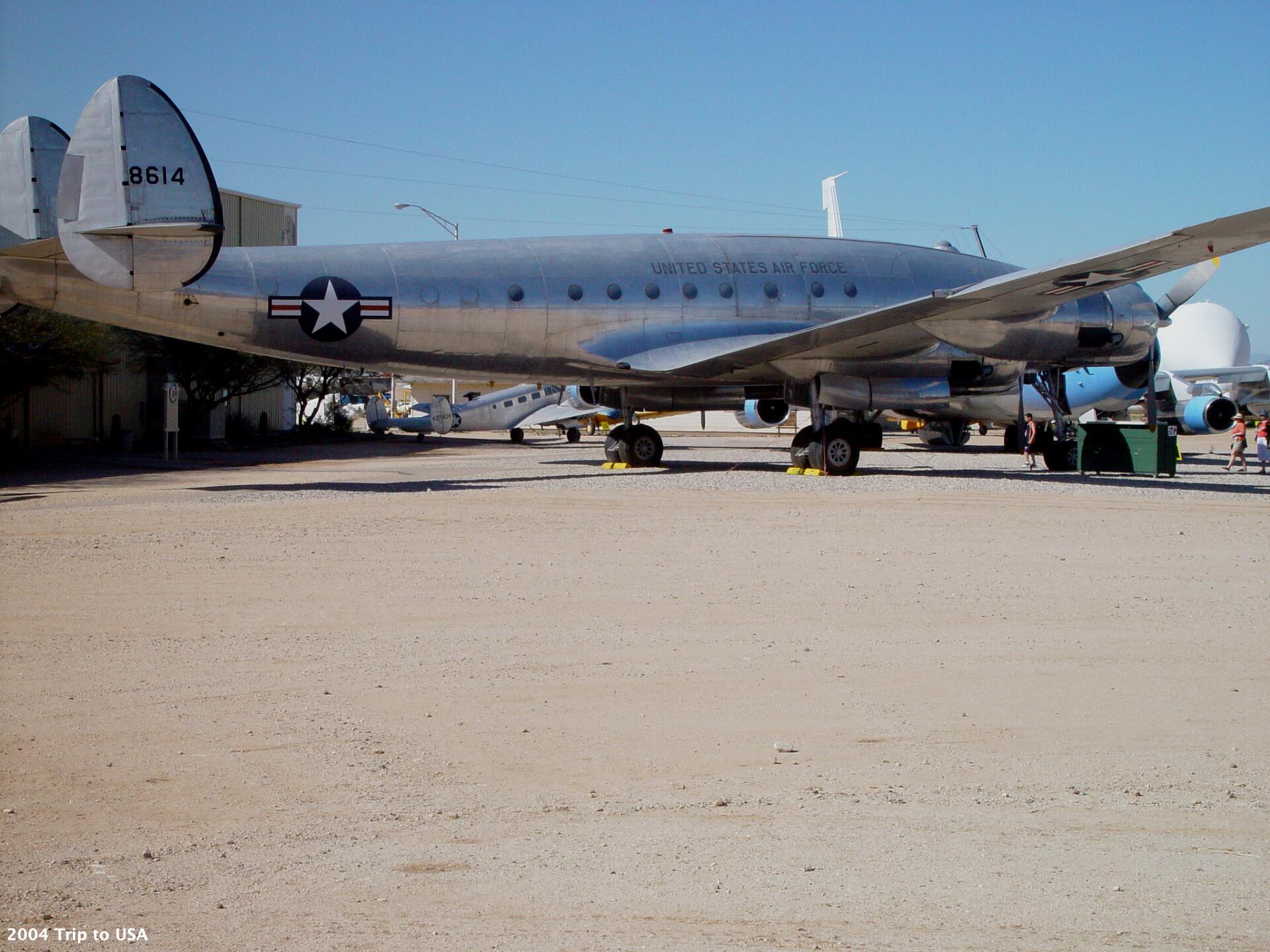 Tuesday 2004-03-16 Pima Air & Space Museum A LLockheed C-121A Constellation. Dwight D. Eisenhower had two different VC-121As assigned as his personal transports and this aircraft was the first. Eisenhower called all of his aircraft "Columbine" after the state flower of Colorado. |
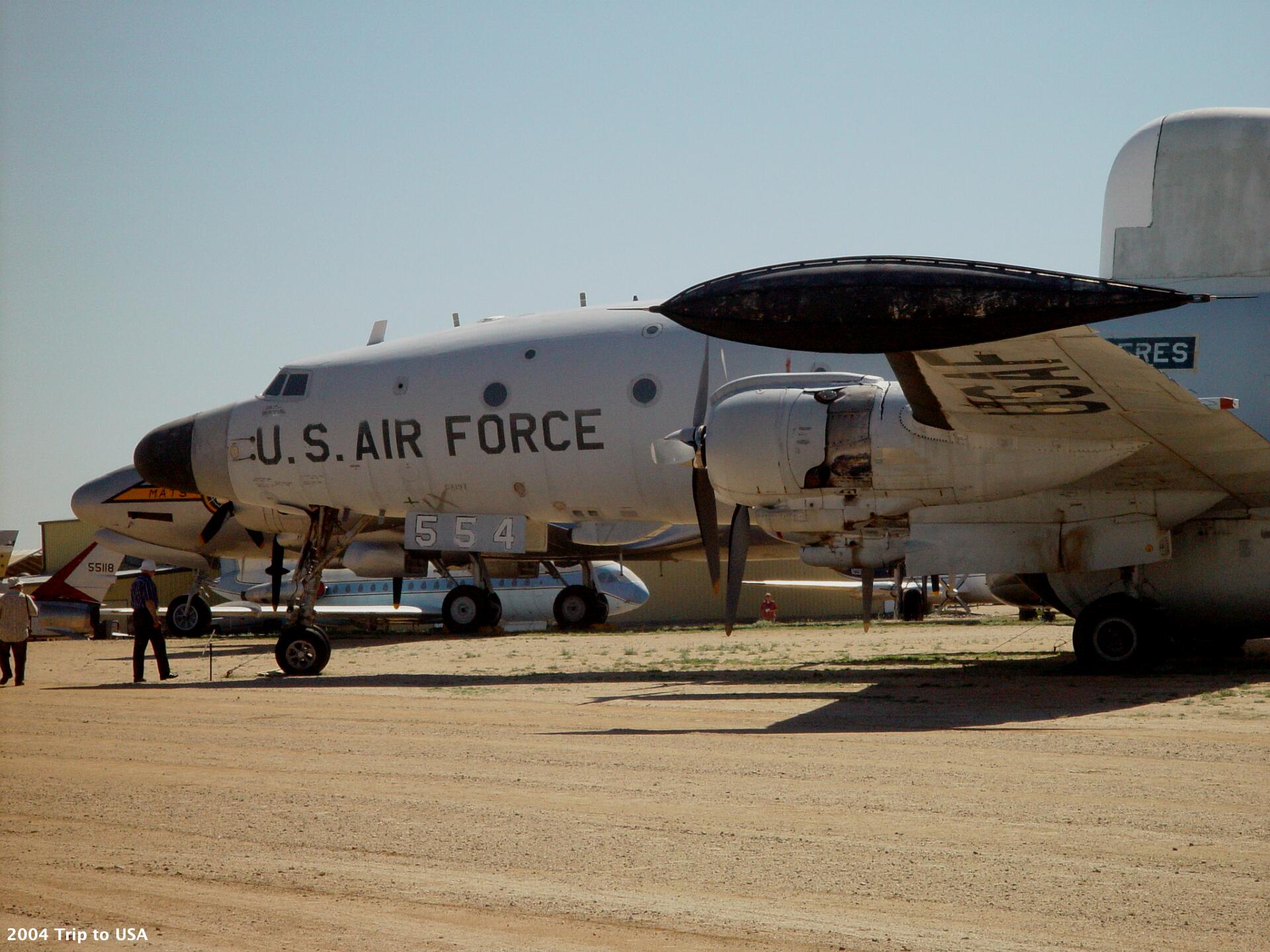 Tuesday 2004-03-16 Pima Air & Space Museum The Lockheed EC-121T Constellation. The Model 1049 Constellation is what I worked on at Qantas as an apprentice. The RC-121D (upgraded to EC-121T) version was built for the Air Force as an airborne radar aircraft and entered service in 1953. |
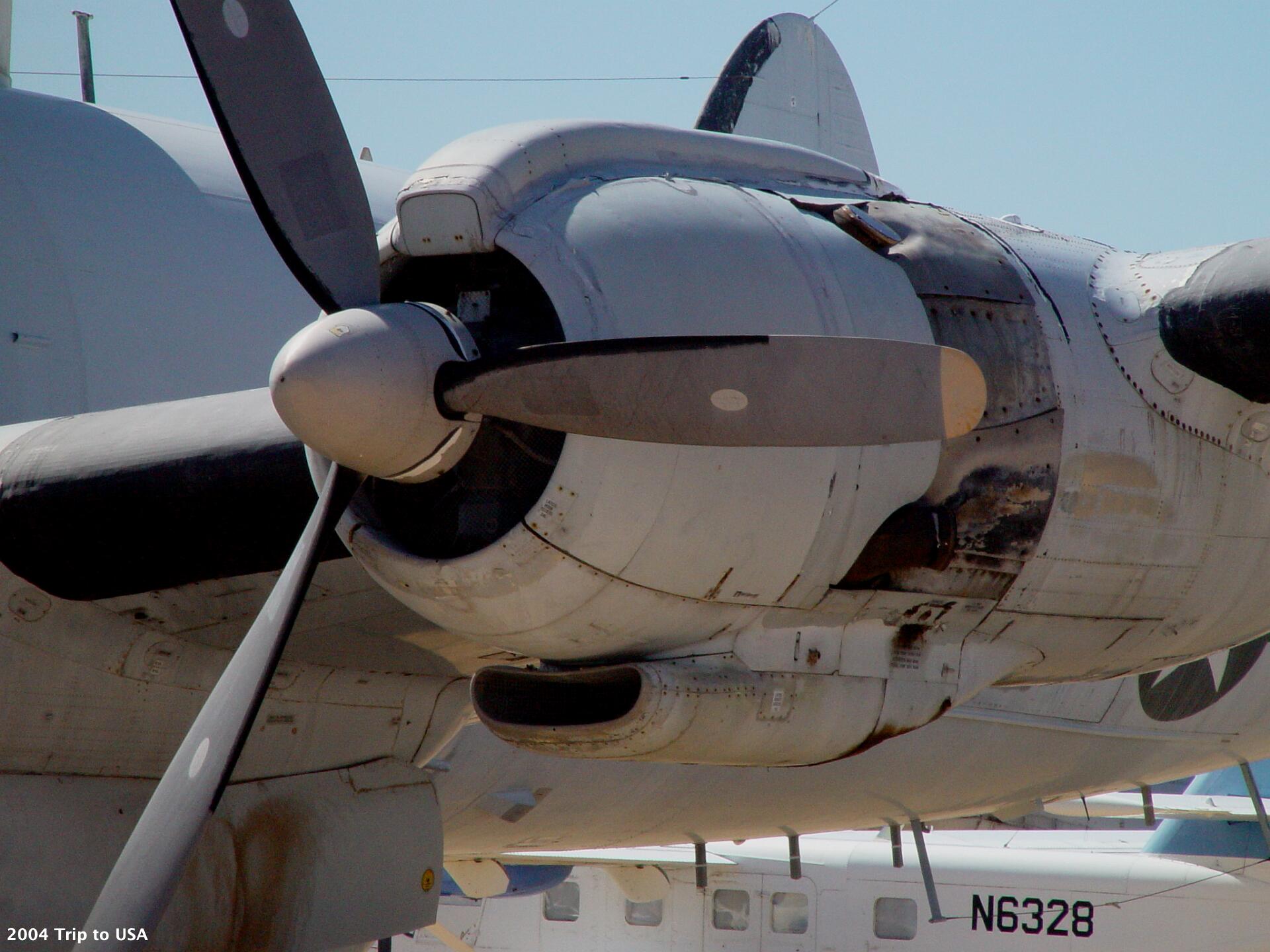 Tuesday 2004-03-16 Pima Air & Space Museum As an apprentice, I enjoyed working on the engines (Wright R3350-34 radial engines of 3,400 hp each) more than other areas. The engine had three turbo chargers that converted exhaust pressure directly to the crankshaft via fluid coupling. |
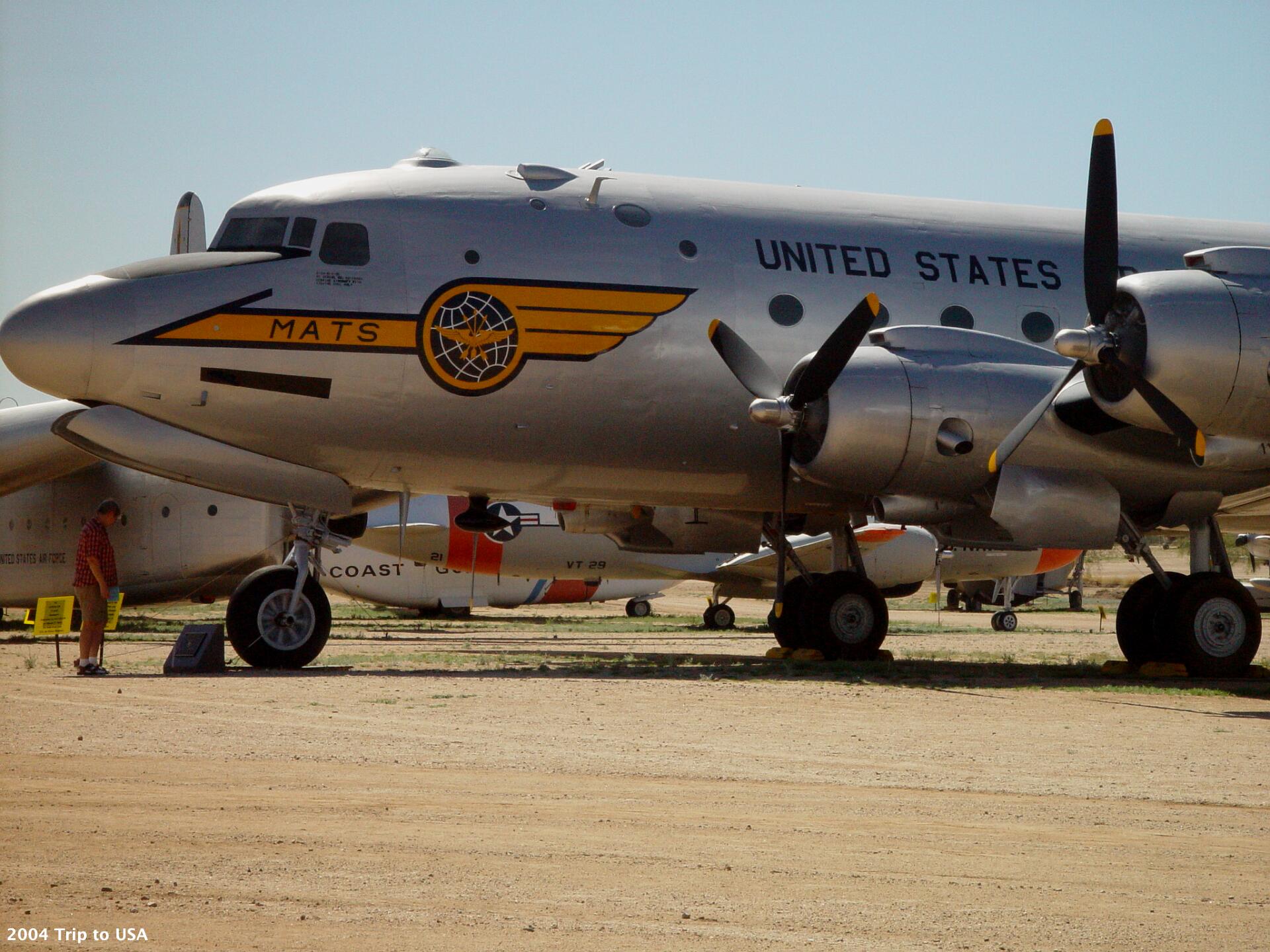 Tuesday 2004-03-16 Pima Air & Space Museum The Douglas C-54D Skymaster is a military version of the DC-4 airliner. The first 24 Skymasters started service as passenger aircraft and were commandeered by the Army in 1942. The C-54 is best known for its role in the Berlin Airlift during 1948 and 1949. |
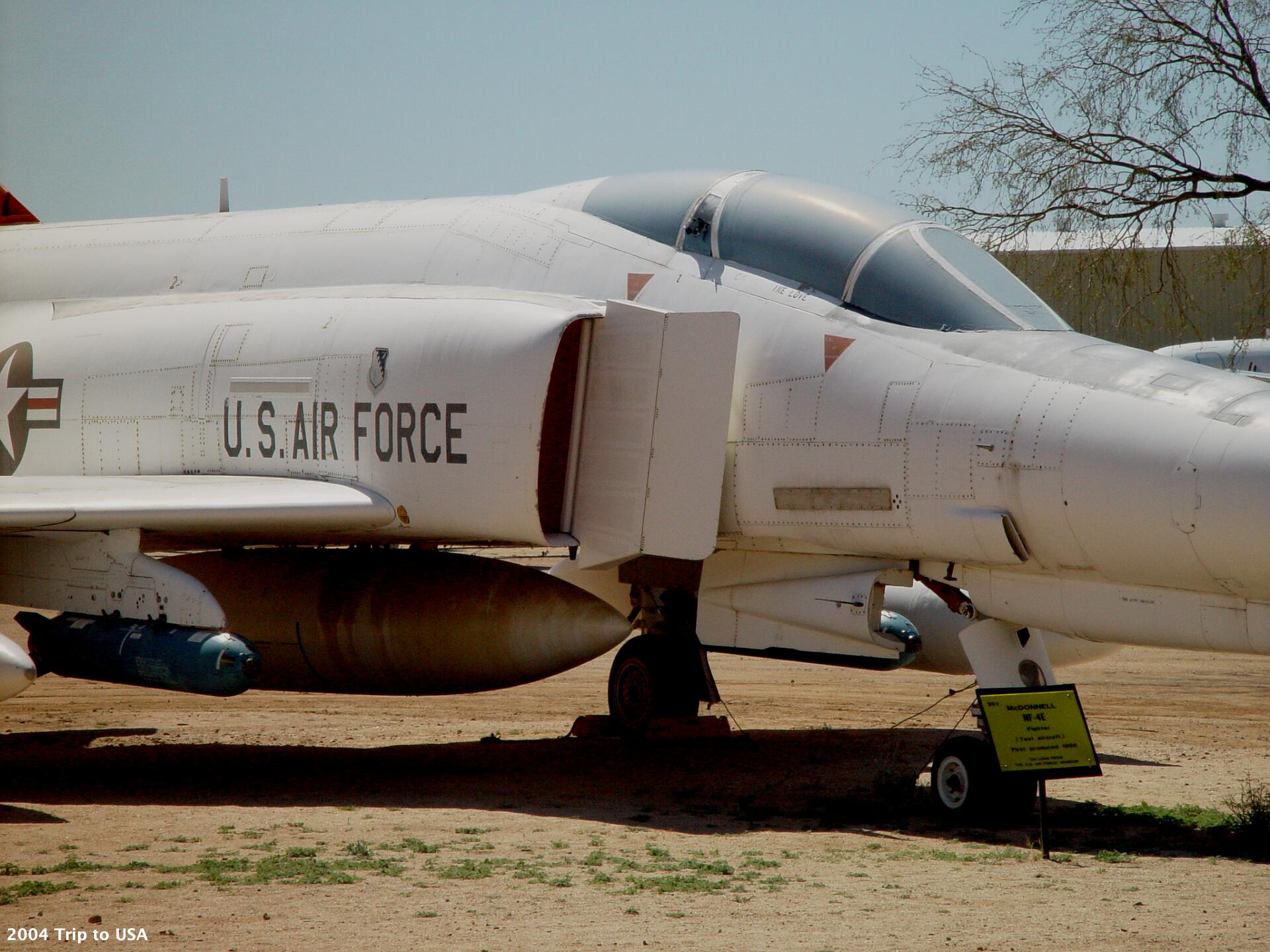 Tuesday 2004-03-16 Pima Air & Space Museum The McDonnell Douglas NF-4E Phantom II was designed as a missile-armed fleet defense fighter for the US Navy. In 1962, the US Air Force selected the F-4 for use as a fighter/fighter-bomber. In all 1,387 F-4E's were built. |
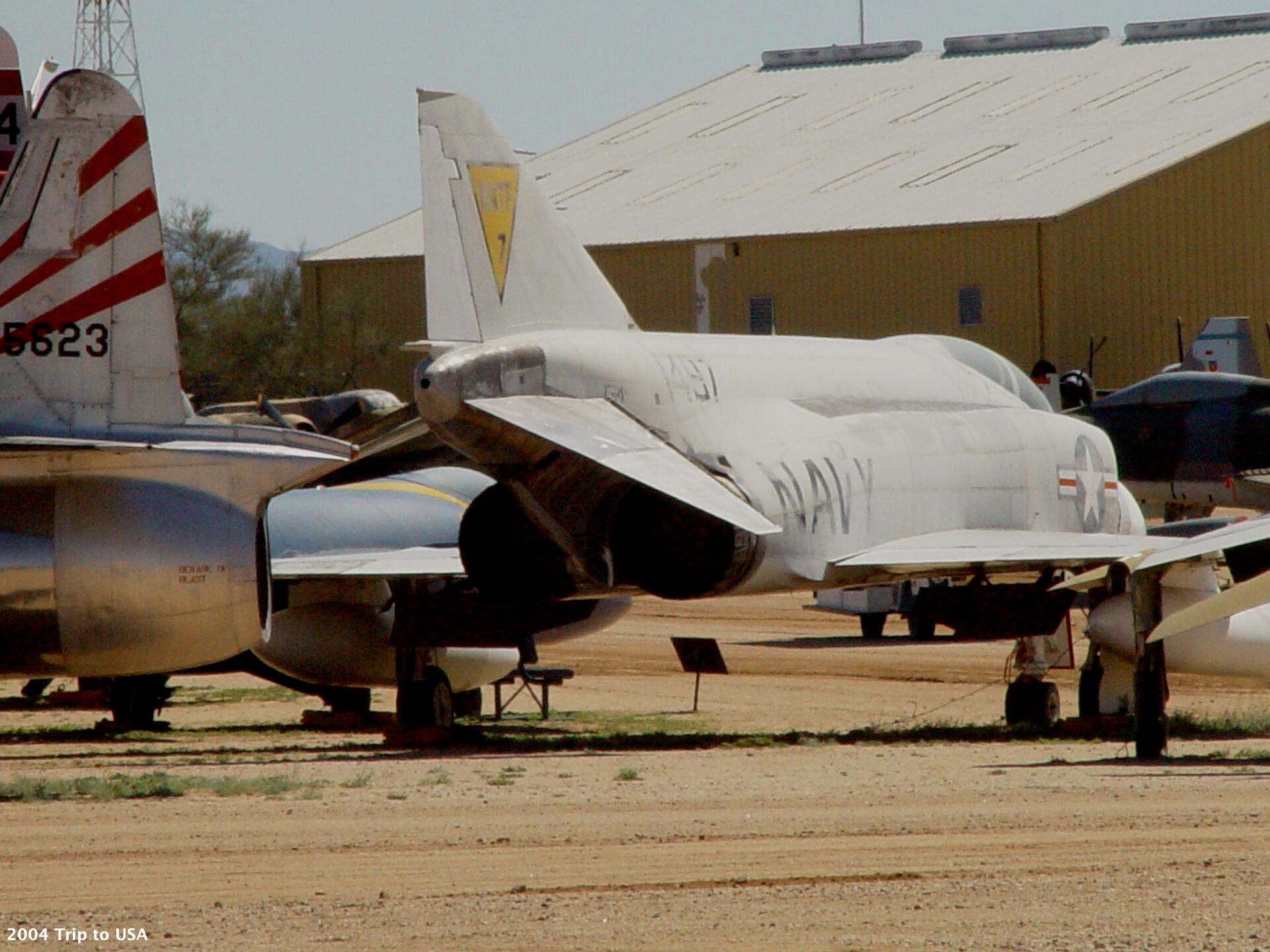 Tuesday 2004-03-16 Pima Air & Space Museum The F-4E Phantom is a greatly improved version of the Phantom with numerous improvements to the engines and electronic systems. The most recognizable change is the addition of an internally mounted gun for air-to-air combat. |
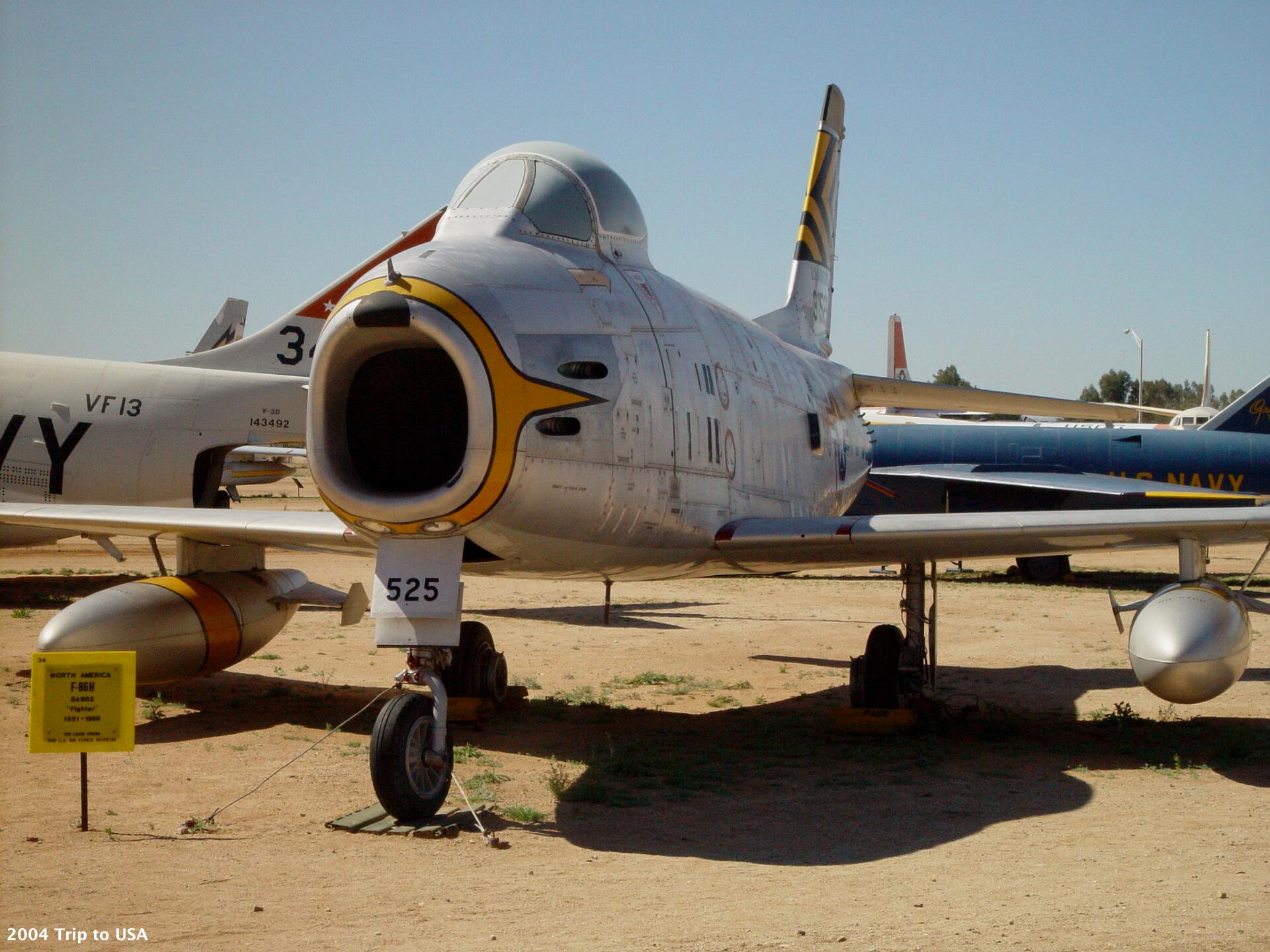 Tuesday 2004-03-16 Pima Air & Space Museum The North American F-86H Sabre was the last of the non-radar equipped, day-fighter Sabres. It was intended for use as a fighter-bomber capable of dropping nuclear weapons. |
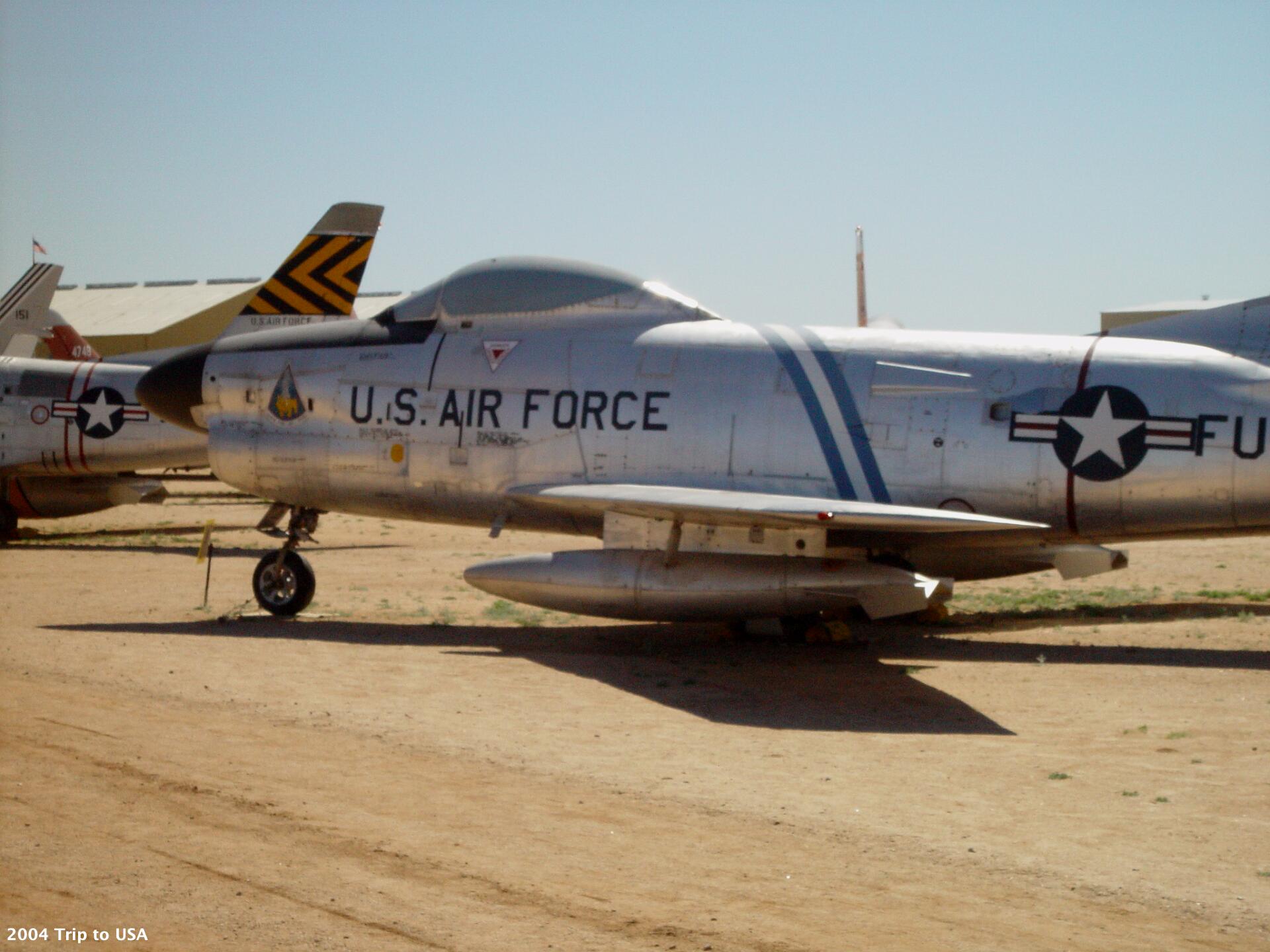 Tuesday 2004-03-16 Pima Air & Space Museum The North American F-86L Sabre is the radar equipped all-weather interceptor version of the Sabre. The F-86L was equipped with an afterburning engine and it eliminated the gun armament in favor of a retractable tray containing 24 2¾" air-to-air rockets. |
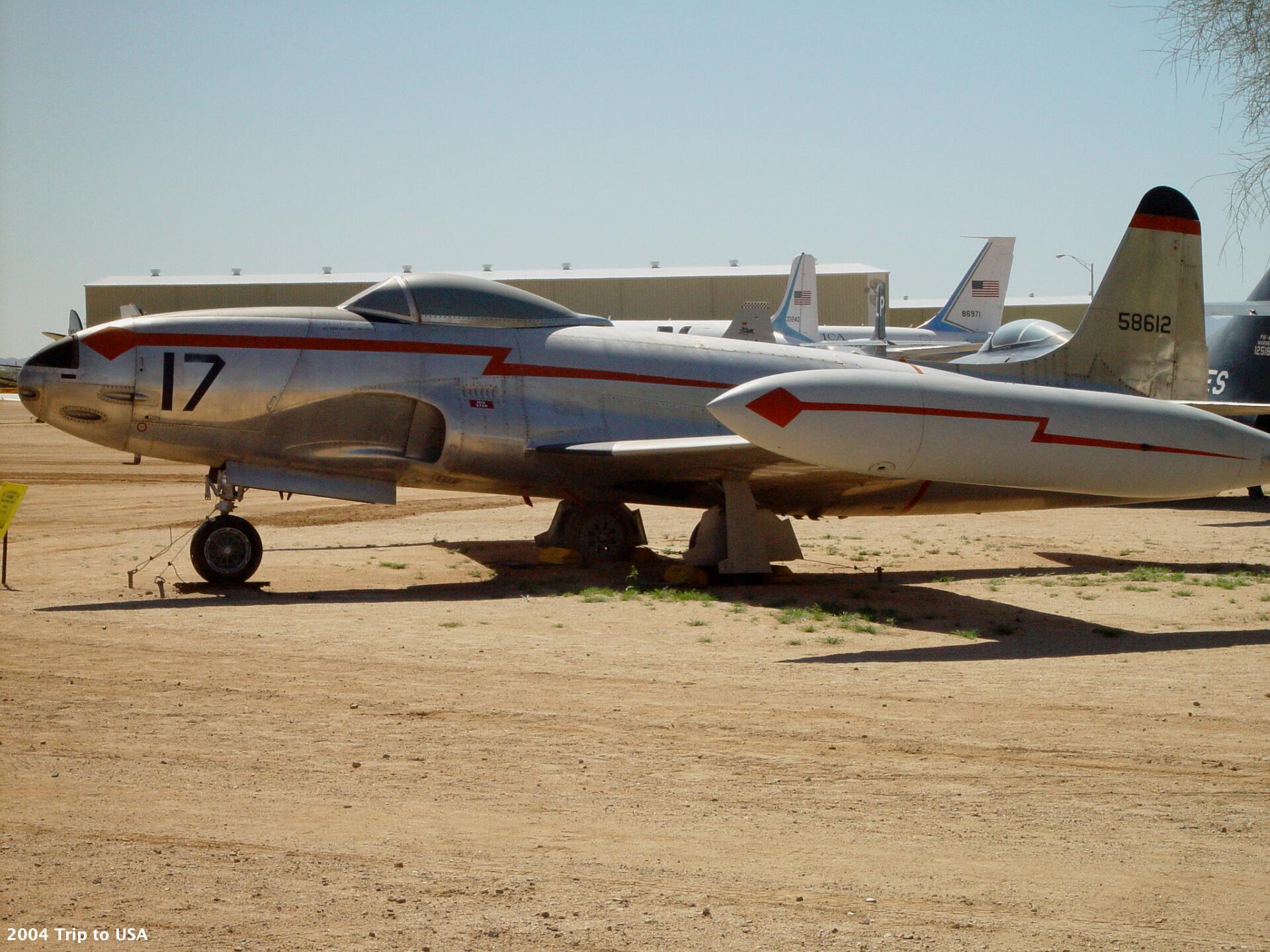 Tuesday 2004-03-16 Pima Air & Space Museum The Lockheed P-80B Shooting Star first flew in 1944 and became the first mass produced jet fighter in the US Air Force inventory. F-80s served in training and Air National Guard units until the late 1950s when they were retired. A total of 1,731 F-80s were built. |
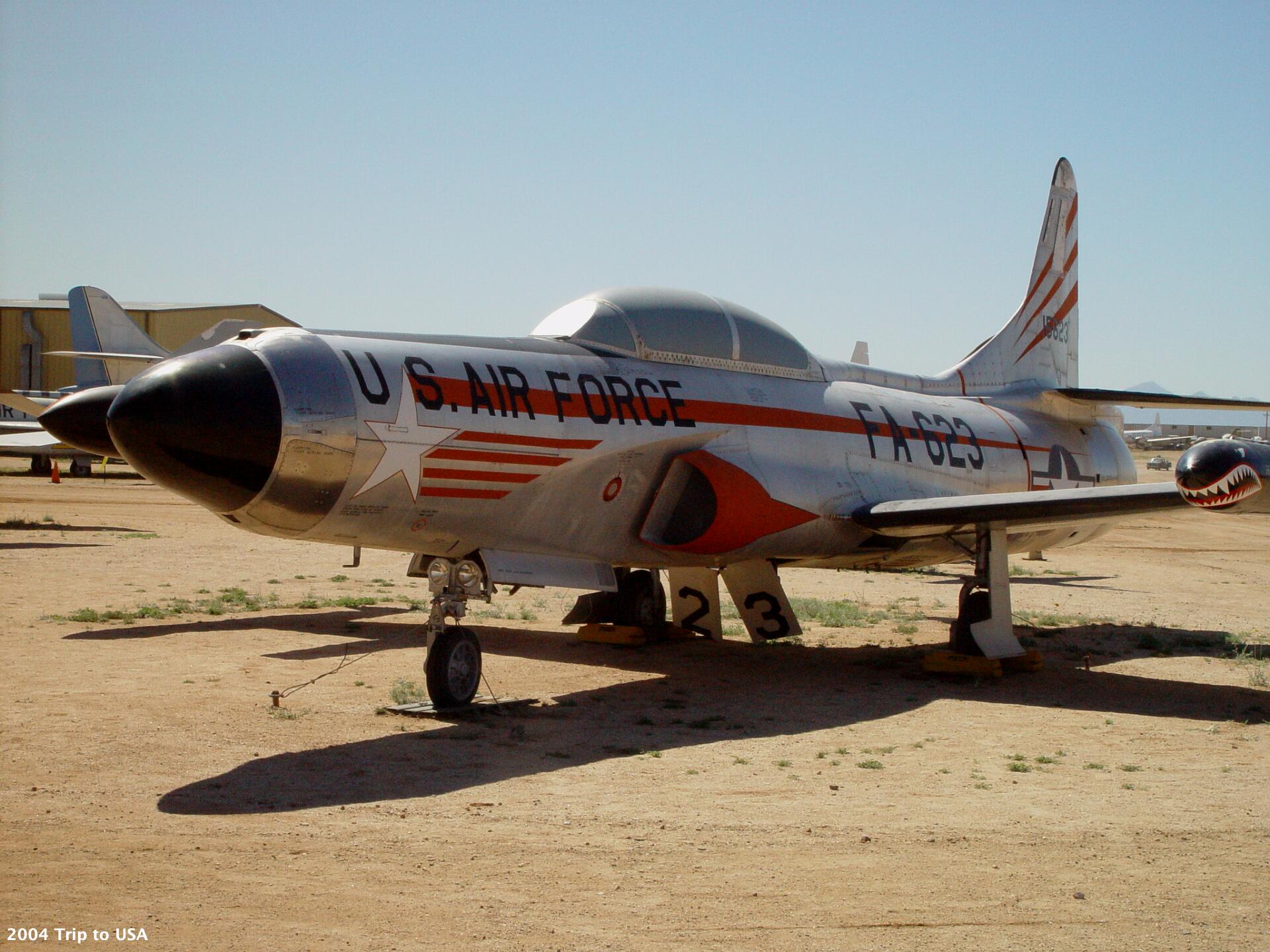 Tuesday 2004-03-16 Pima Air & Space Museum The Lockheed F-94C Starfire is a highly modified development of the T-33 trainer, incorporating radar and guns. The F-94C featured a new wing and armament consisting entirely of unguided 2¾" rockets housed in the nose. Large-scale deliveries began in 1950. |
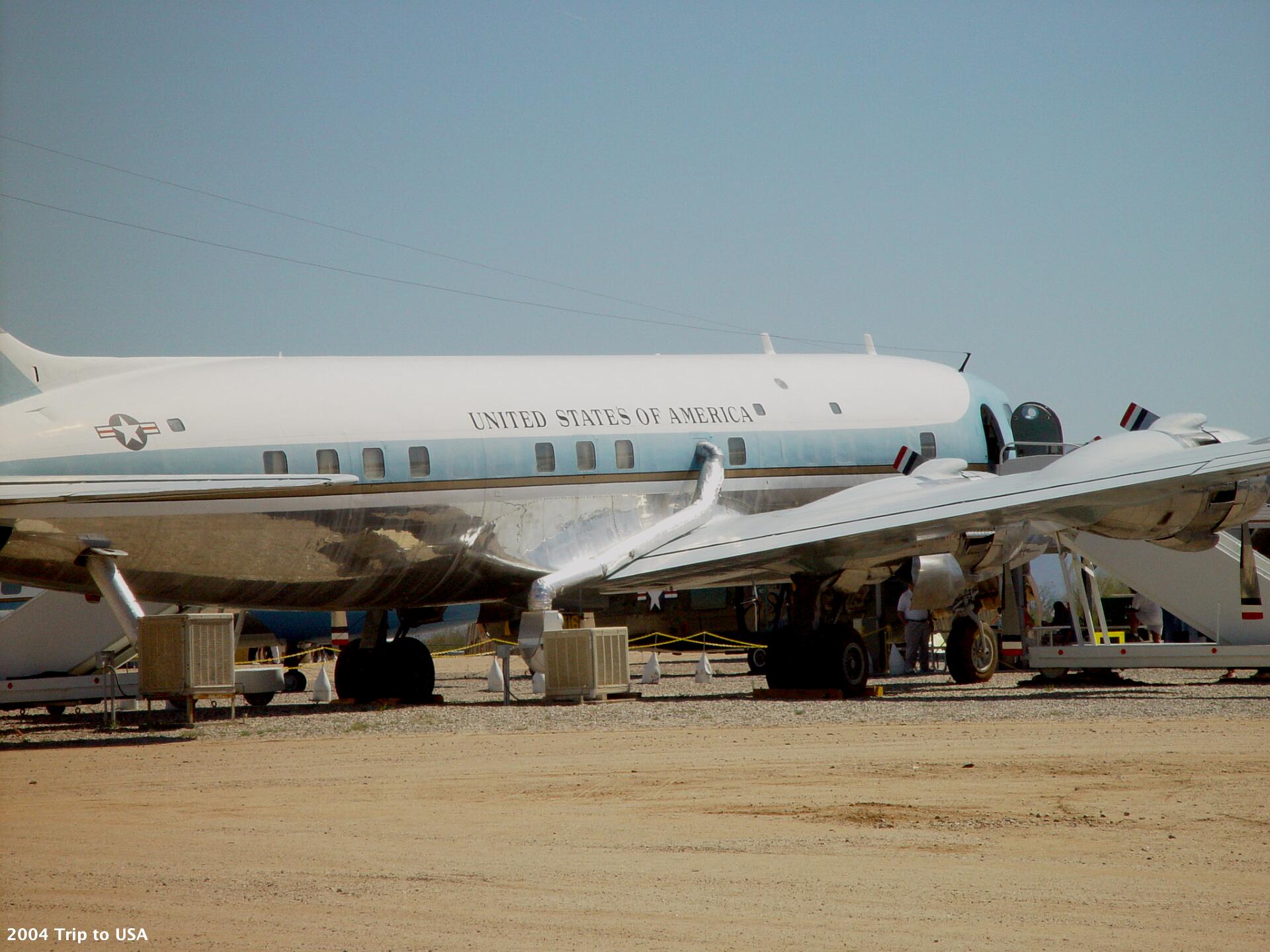 Tuesday 2004-03-16 Pima Air & Space Museum The Douglas VC-118A Liftmaster is a militarized version of the Douglas DC-6 airliner. This aircraft served as Air Force One for Presidents Kennedy and Johnson. It was the last propeller driven aircraft to be designated as the primary Presidential transport. |
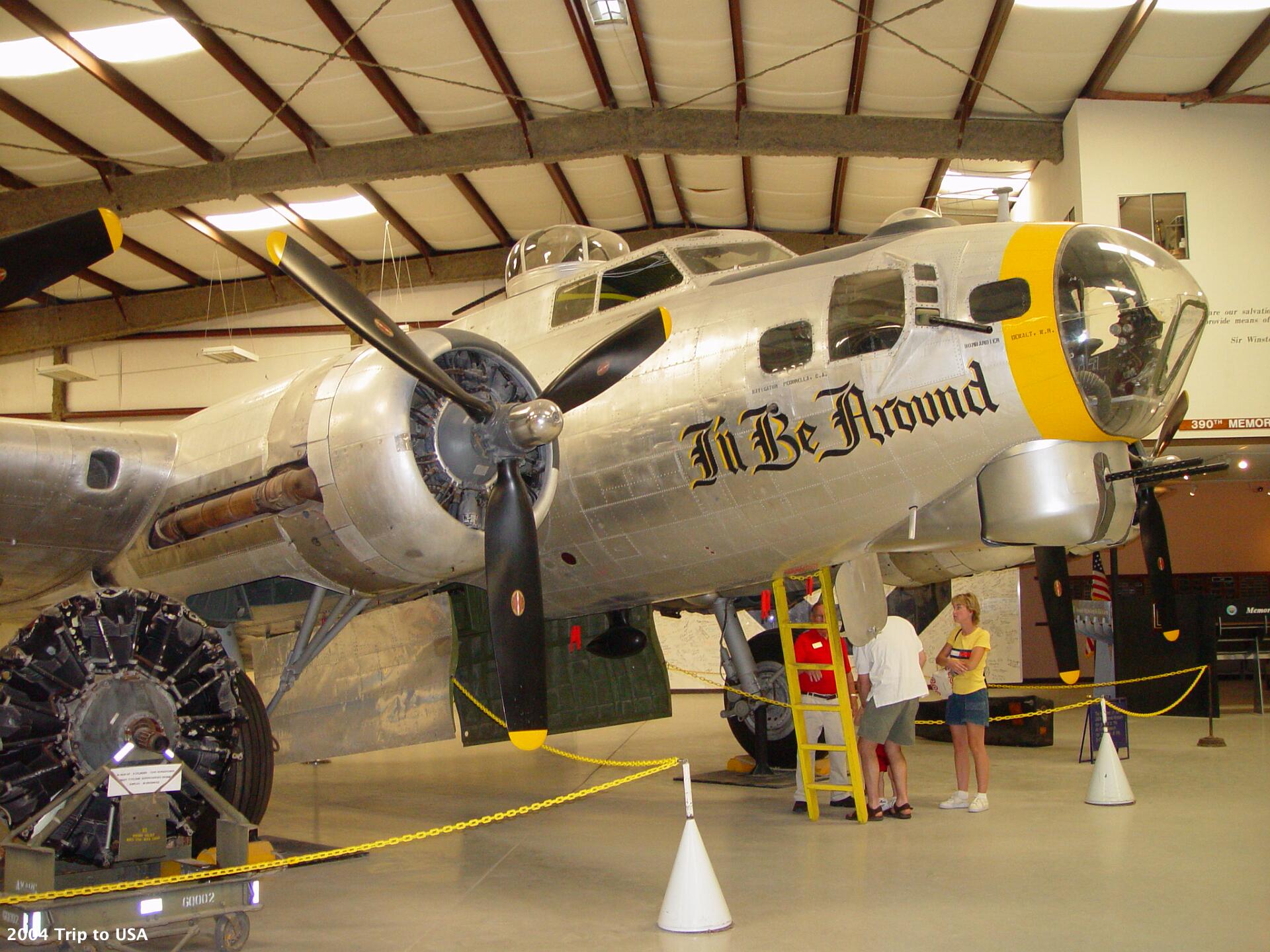 Tuesday 2004-03-16 Pima Air & Space Museum The Boeing B-17G Flying Fortress entered large-scale service and production in 1942. The B-17G was the most produced version of the Flying Fortress with 4,035 being built. |
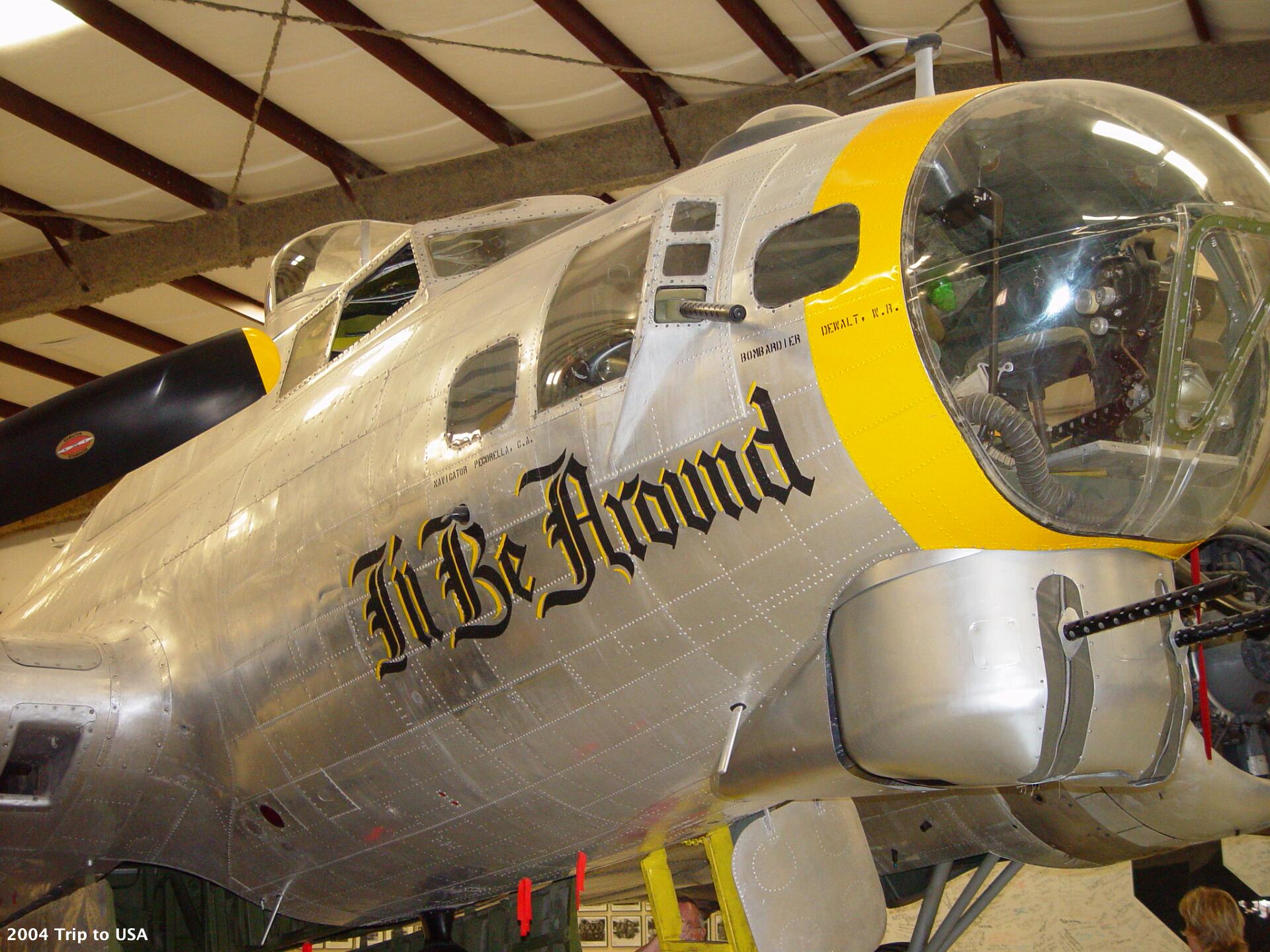 Tuesday 2004-03-16 Pima Air & Space Museum A total of 12,677 Flying Fortresses were built during the war but by 1946 only a few hundred remained in service with the Strategic Air Command. |
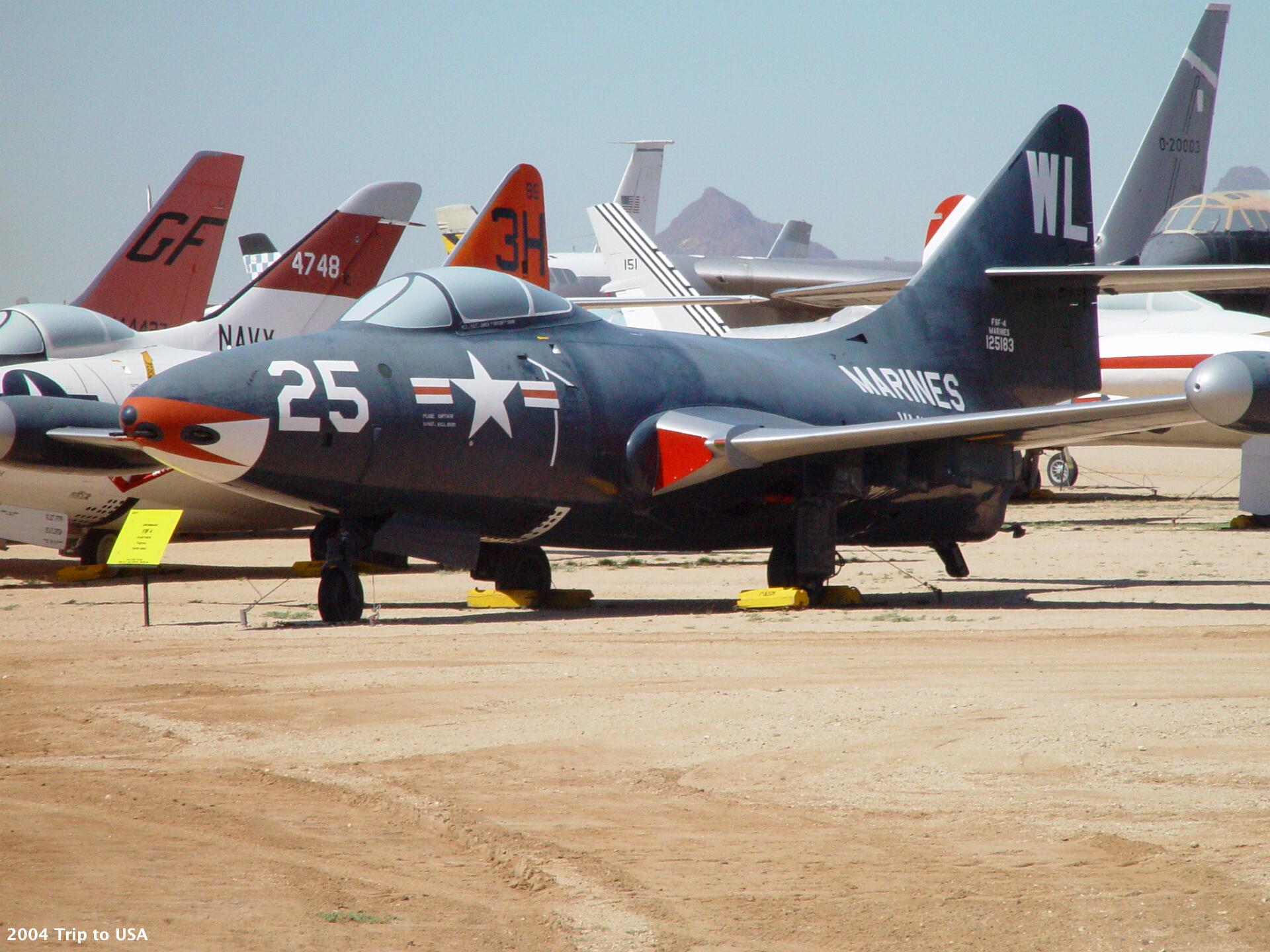 Tuesday 2004-03-16 Pima Air & Space Museum This is the F9F Panther built by Grumman. As a kid, I loved its sleek shark-like shape. All these years later it still appeals to me - a bit like a 64 Corvette. |
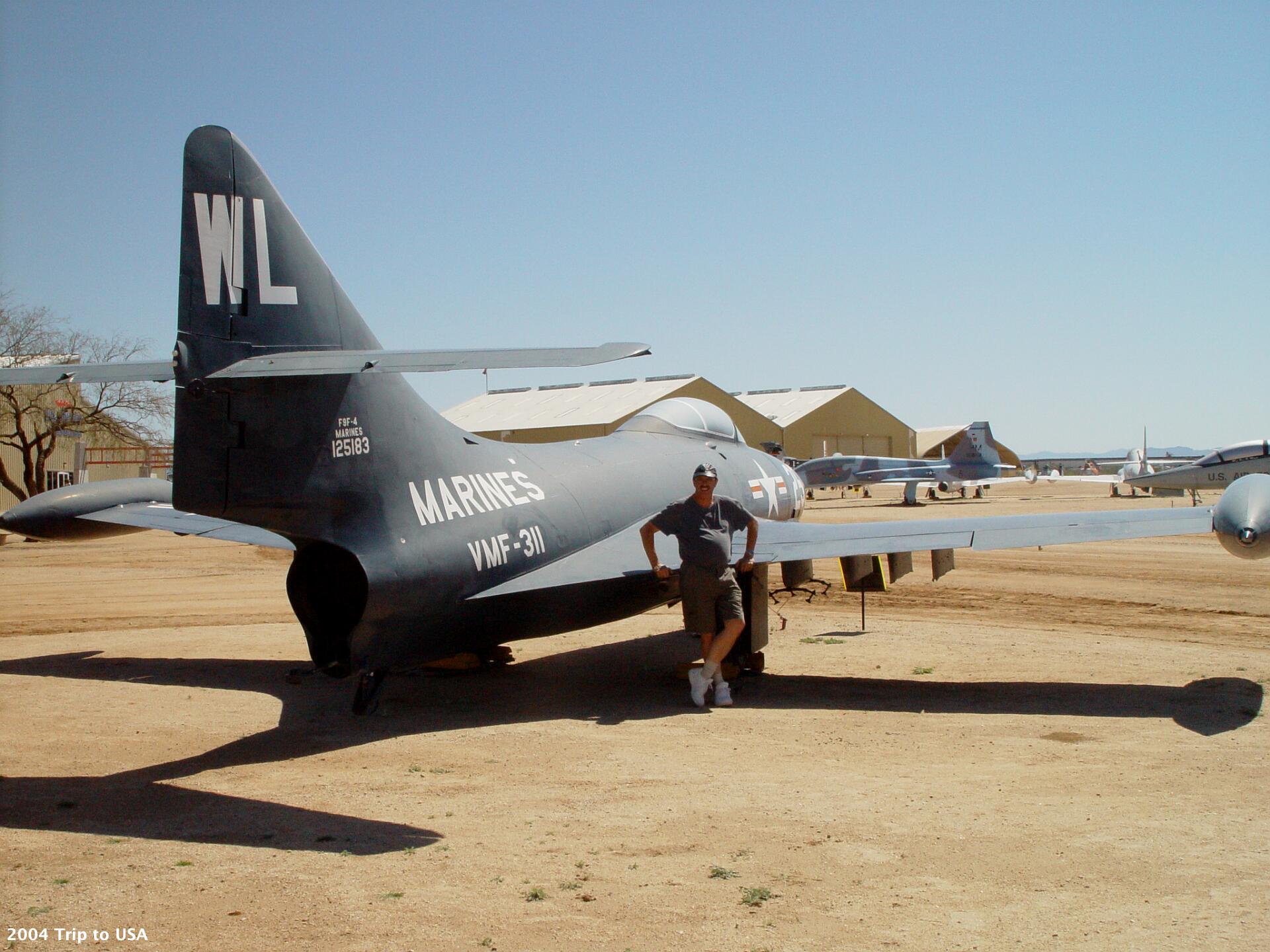 Tuesday 2004-03-16 Pima Air & Space Museum The first F9F did not fly until November 1947, but after some initial problems with instability, the Navy found the Panther to be well worth the wait. |
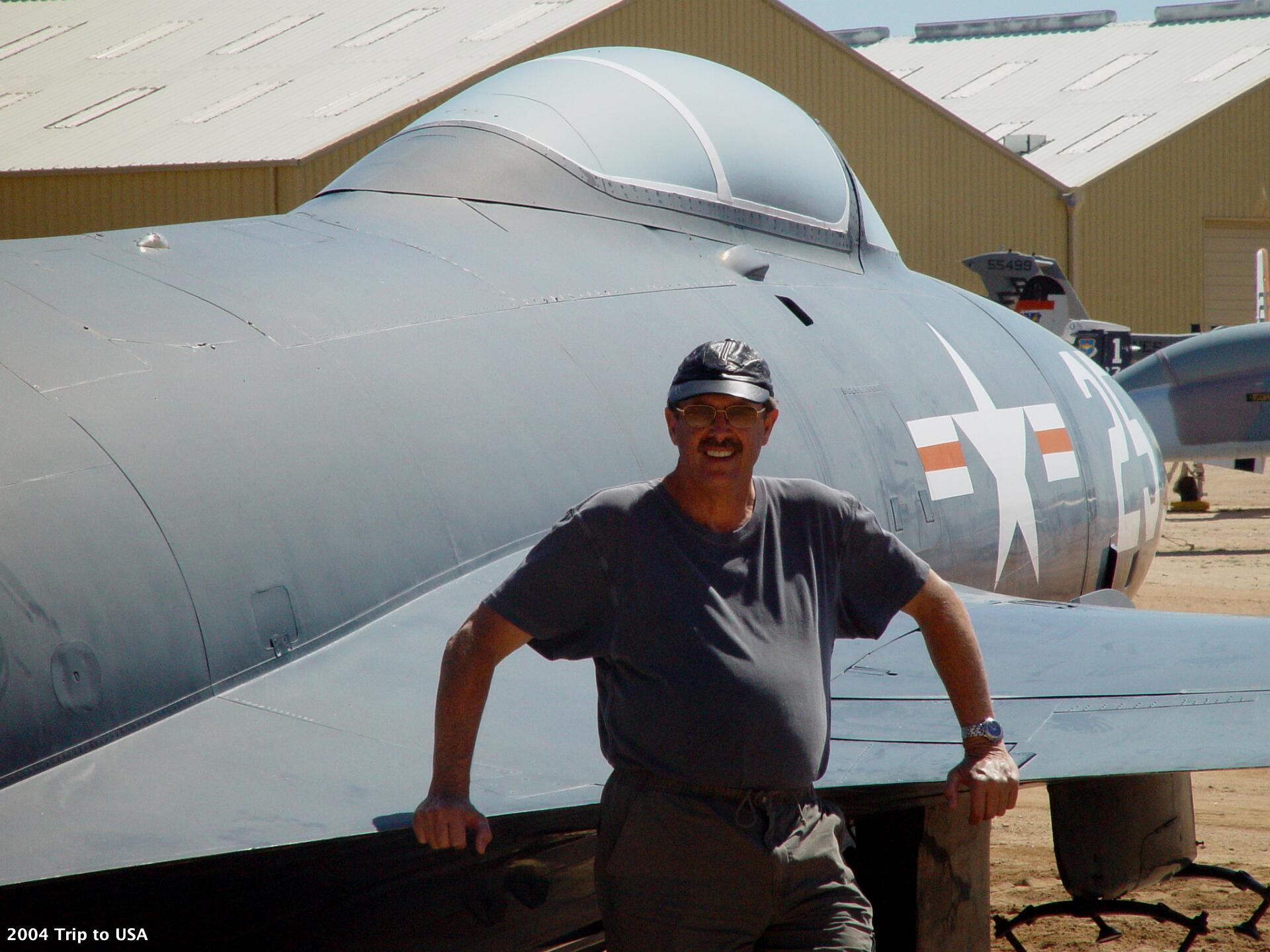 Tuesday 2004-03-16 Pima Air & Space Museum The Panther and its swept-wing sibling the Cougar were by far the best of the Navy's first generation jet fighters. In Korea the Panther proved itself to be capable in both ground attack and air-to-air combat roles. |
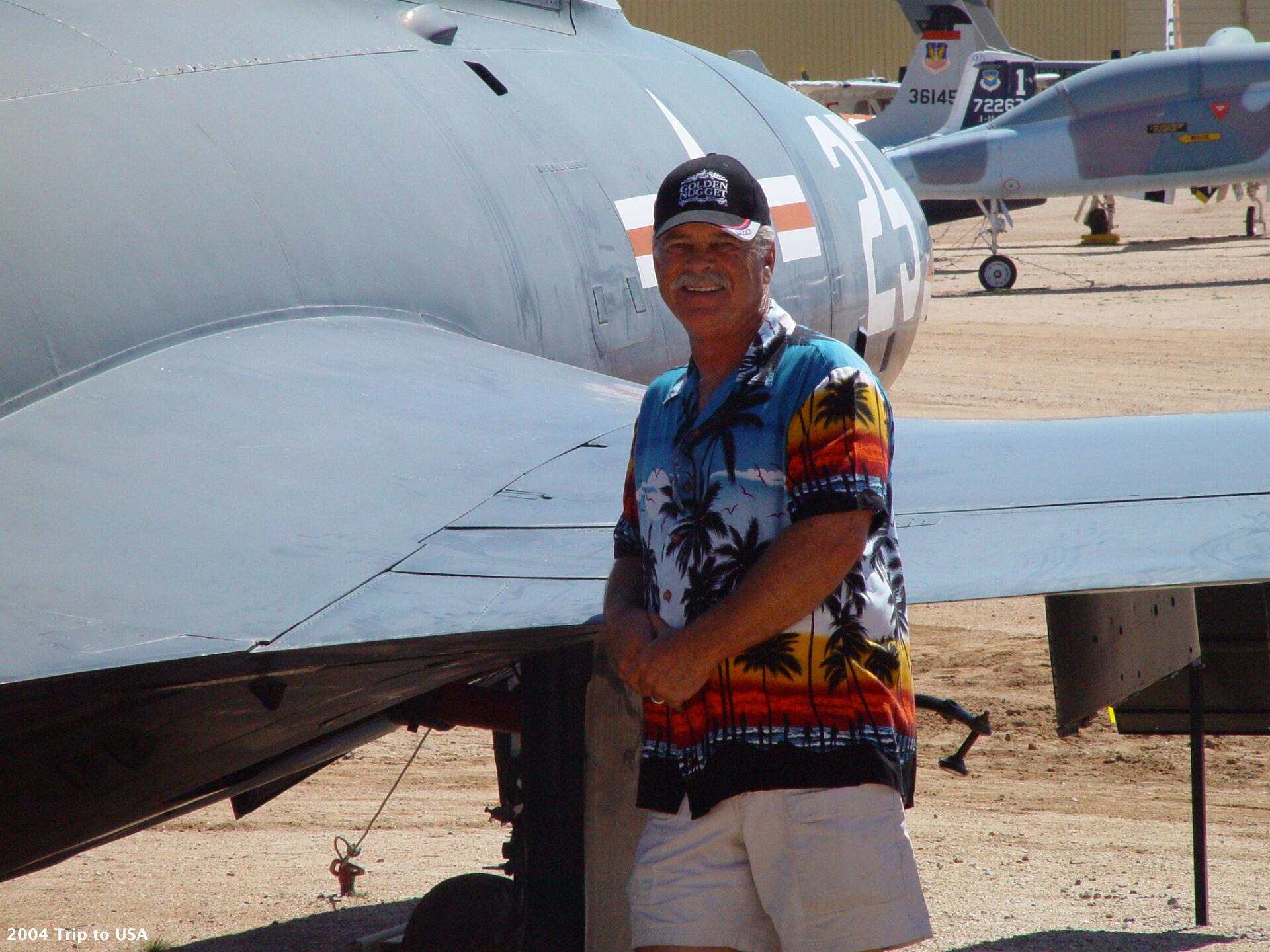 Tuesday 2004-03-16 Pima Air & Space Museum A Panther scored the Navy's first jet-to-jet kill on November 9, 1950 shooting down a North Korean MiG-15. F9F pilots downed a total of five MiGs during the war with no Panthers lost to enemy fighters. |
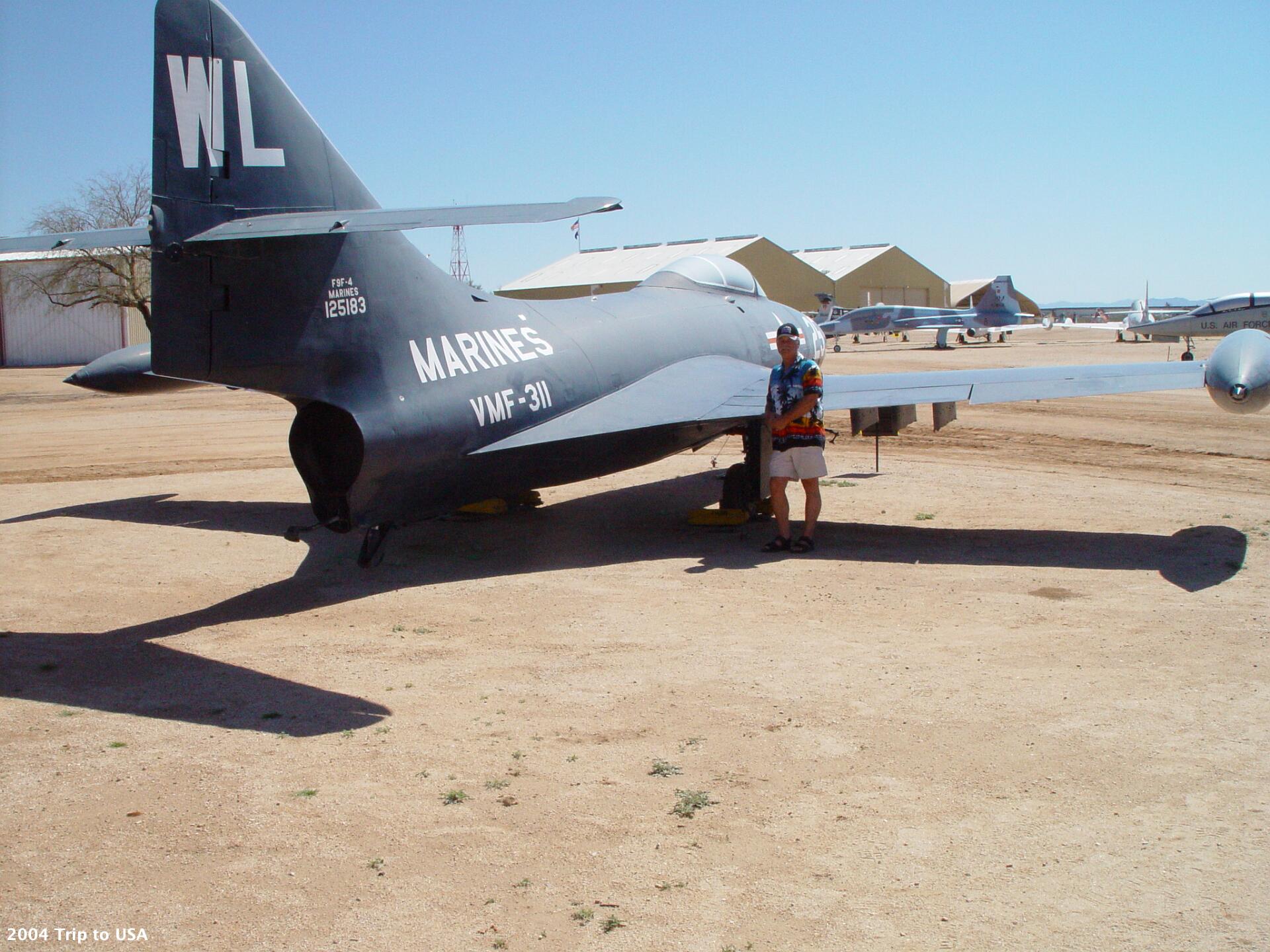 Tuesday 2004-03-16 Pima Air & Space Museum The F9F-4 model was slightly larger than earlier models with a taller tail and a slightly lengthened fuselage. Most of this version served with Marine Corps fighter squadrons with many of them seeing combat in Korea. |
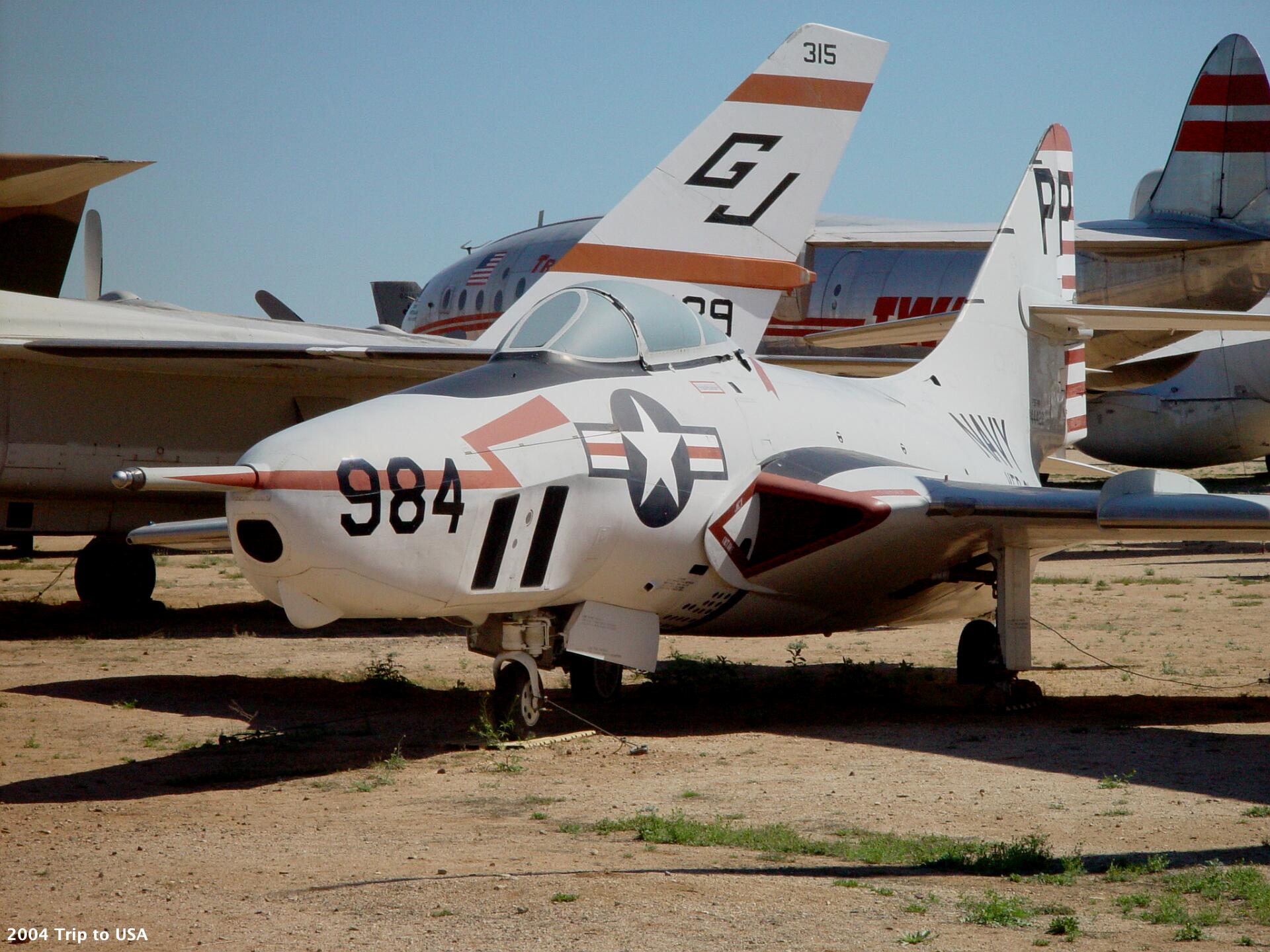 Tuesday 2004-03-16 Pima Air & Space Museum Even before the Panther entered service, the Navy and Grumman were studying a swept-wing version of the aircraft. The appearance of the Soviet MiG-15 over Korea spurred on the process and the prototype made its first flight in September 1951. |
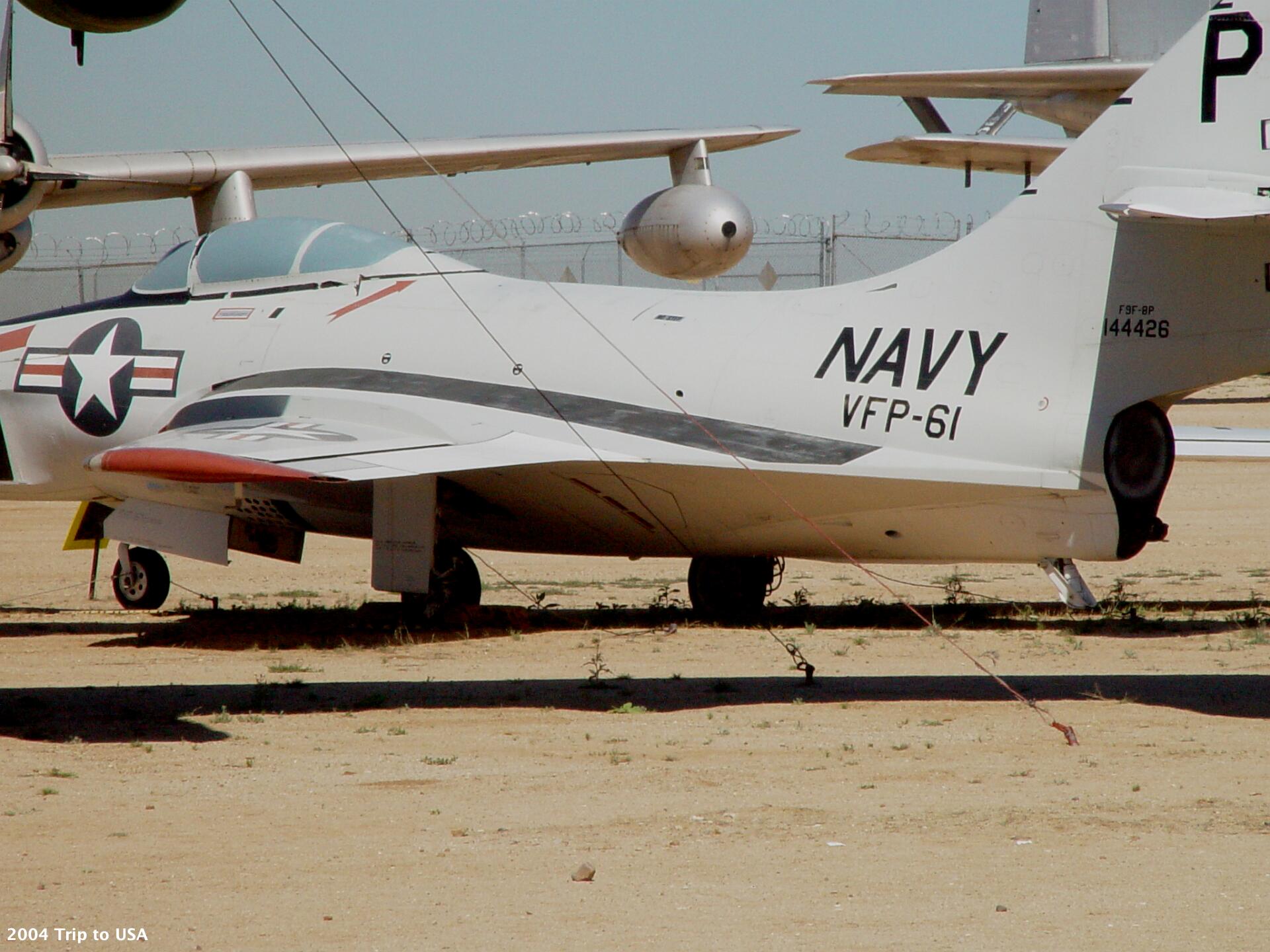 Tuesday 2004-03-16 Pima Air & Space Museum The Grumman RF-9J Cougar is the Light Photographic Reconnaissance version. This one belonged to Squadron 61 (VFP-61), Miramar Naval Air Station, circa. 1961 (right opposite where I used to work at Scripps Ranch). |
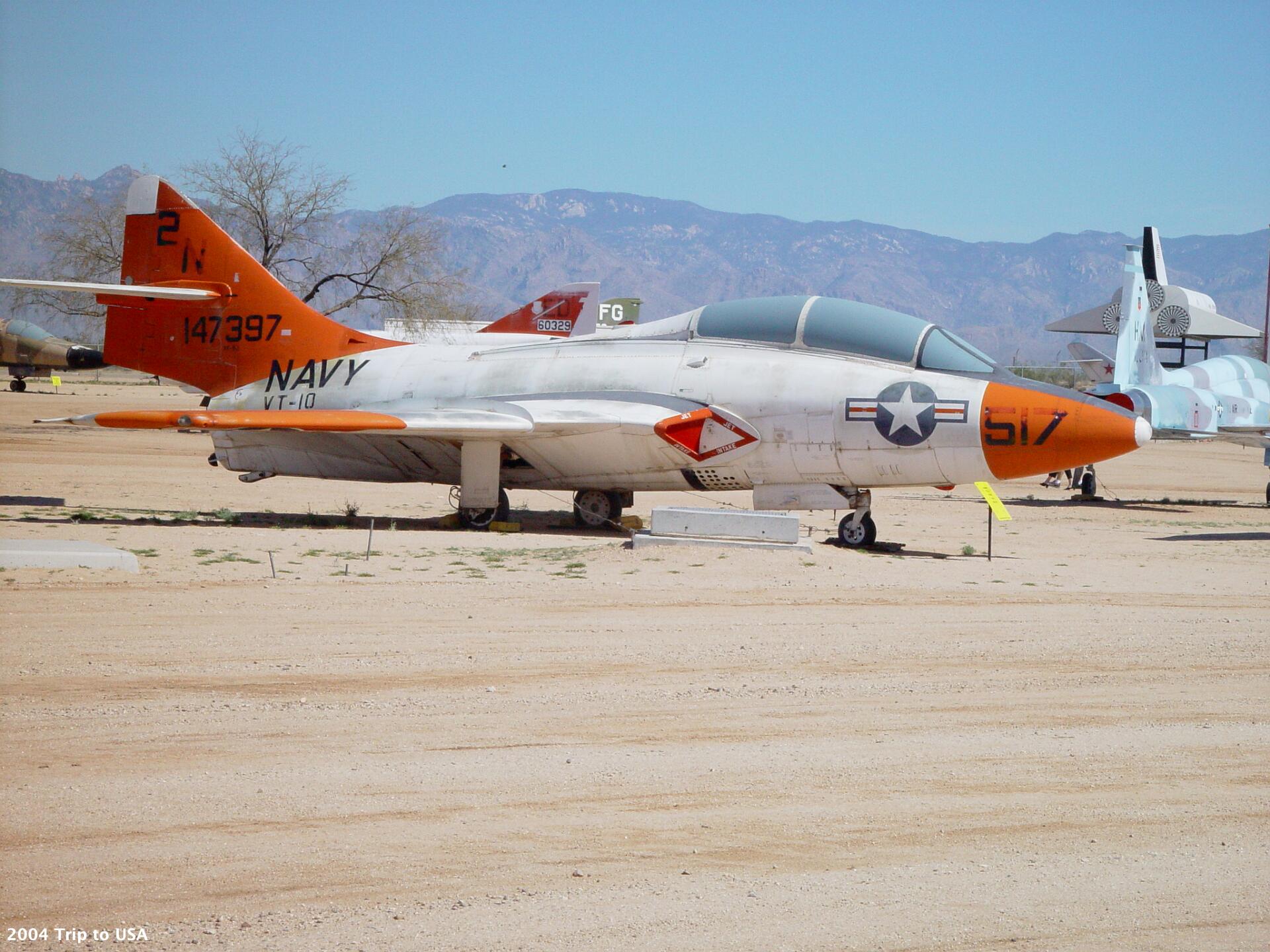 Tuesday 2004-03-16 Pima Air & Space Museum The Grumman TF-9J Cougar was a two-seat trainer version. The Marine Corps used several TF-9Js in Vietnam as forward air control aircraft and, ironically, this was the only version of the Cougar to see combat. |
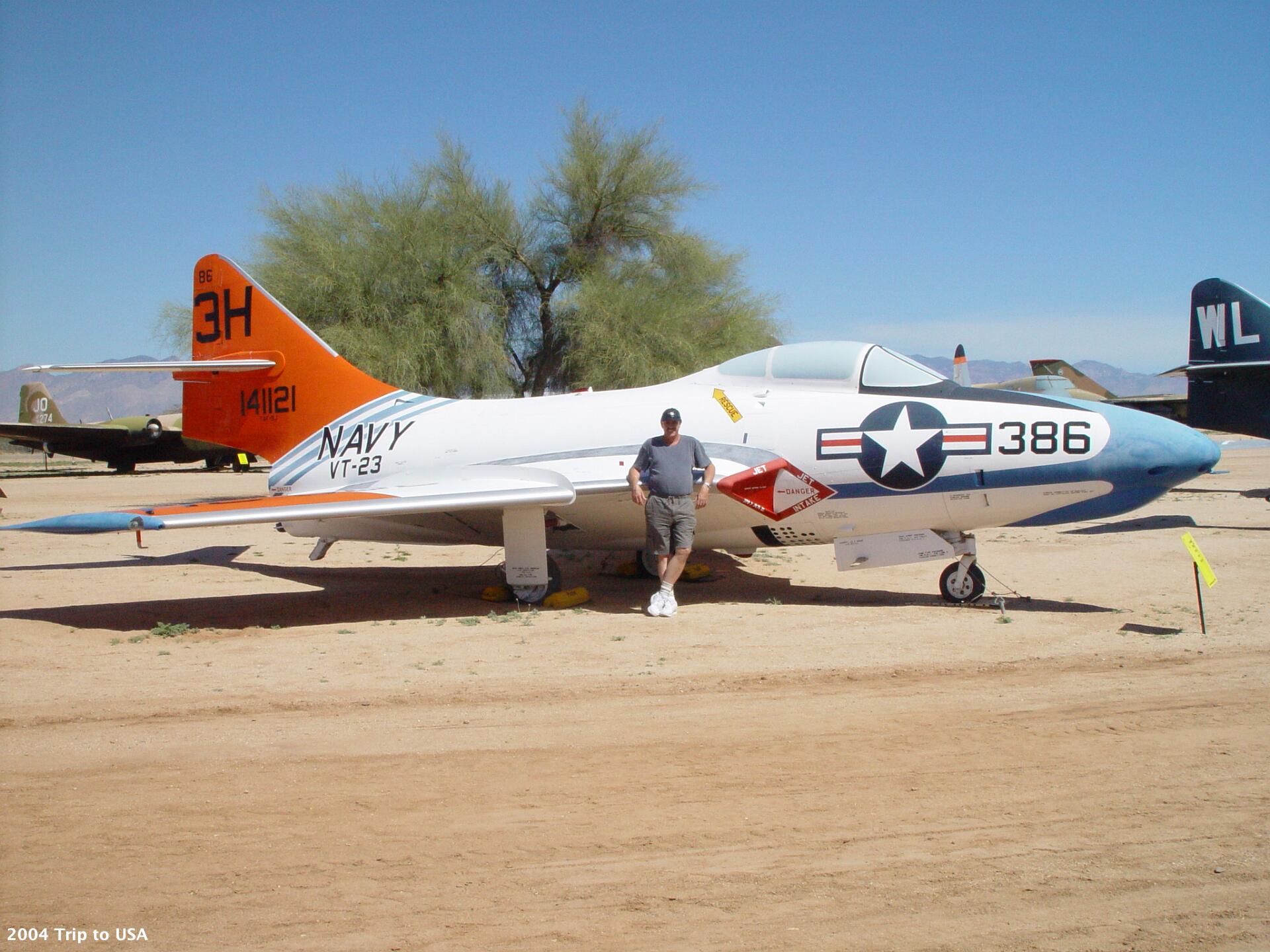 Tuesday 2004-03-16 Pima Air & Space Museum While the Cougar retained the Panther's F9F designation, it was an almost entirely new design. This is the Grumman TAF-9J Cougar, originally based at Training Squadron 23 (VT-23), Kingsville NAS, Texas, circa 1969. |
 Tuesday 2004-03-16 Pima Air & Space Museum Eventually nearly 2,000 Cougars of all types were built and some remained is service until 1974. To me, it is still the most beautiful aircraft ever made and to see three of them in the metal was a real thrill. |
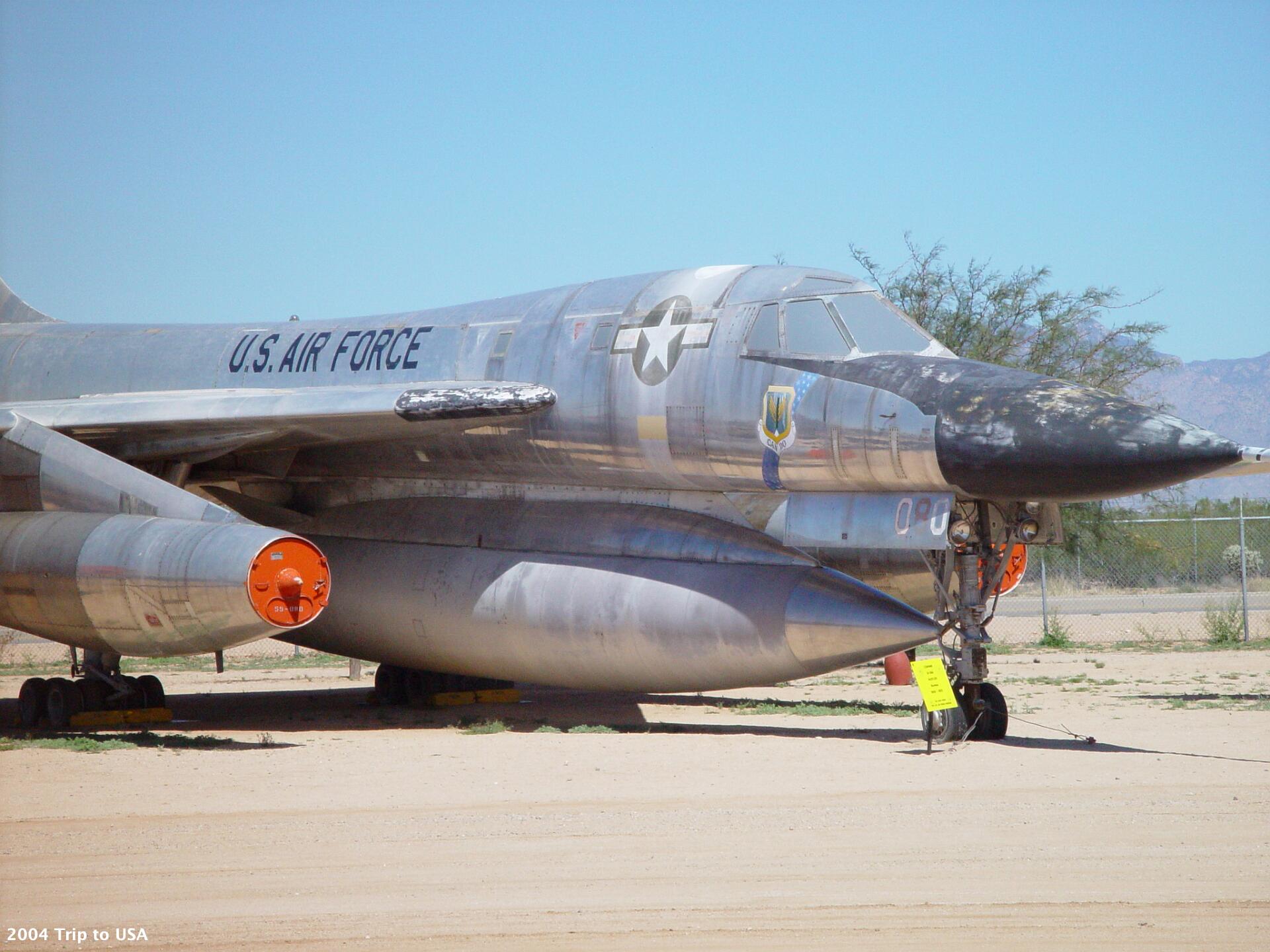 Tuesday 2004-03-16 Pima Air & Space Museum The Convair B-58A Hustler is the world's first supersonic bomber. During its career it set 19 different speed, altitude, and payload world records. Only 116 were built and they were removed from service in 1970, after less than 10 years of operational service. |
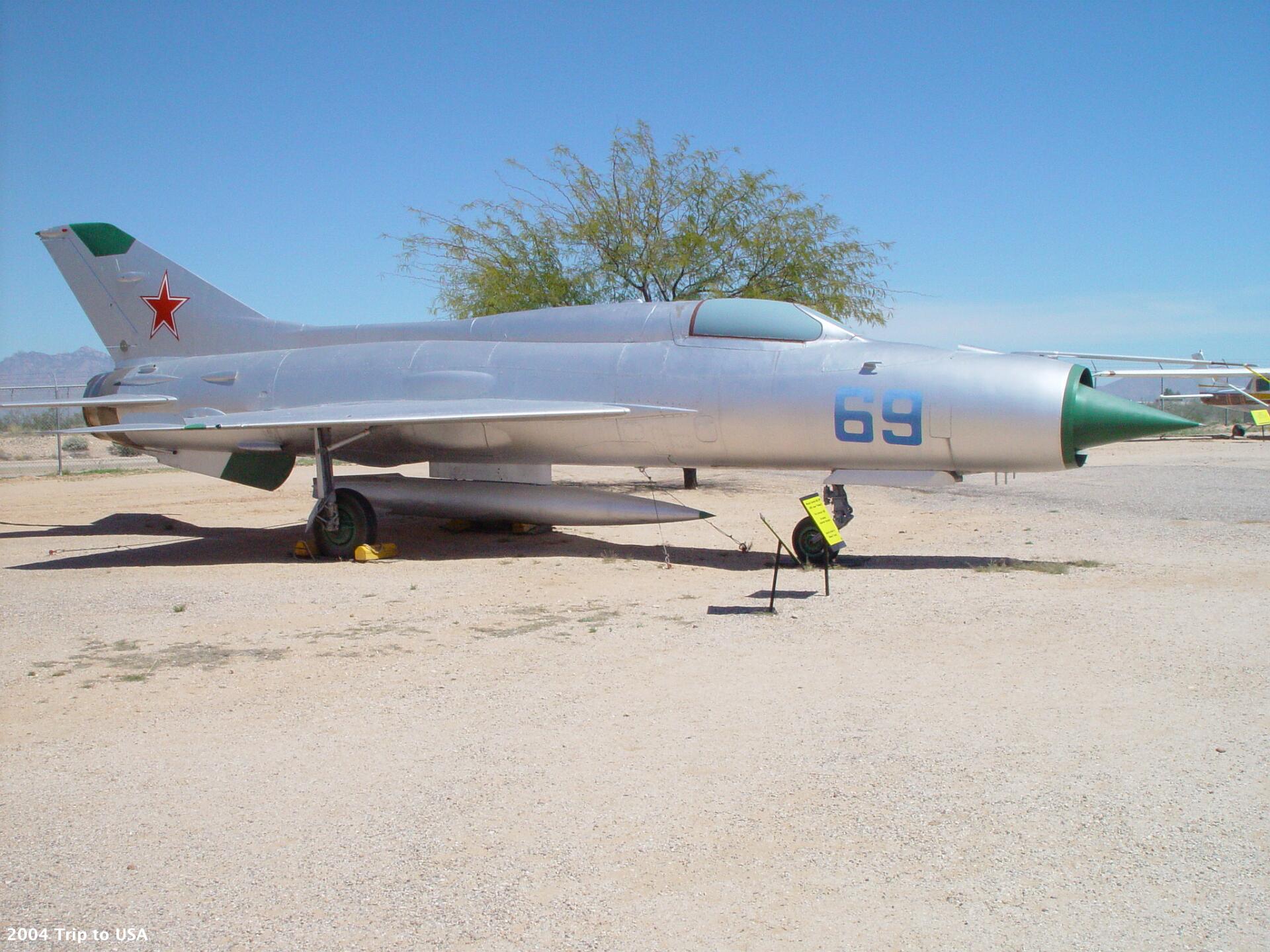 Tuesday 2004-03-16 Pima Air & Space Museum The Mikoyan-Gurevich MiG-21PF Fishbed is the most widely produced and used supersonic fighter ever with over 10,000 built since 1955. The MiG-21 does not have an internal gun and relies on missiles for air-to-air combat. |
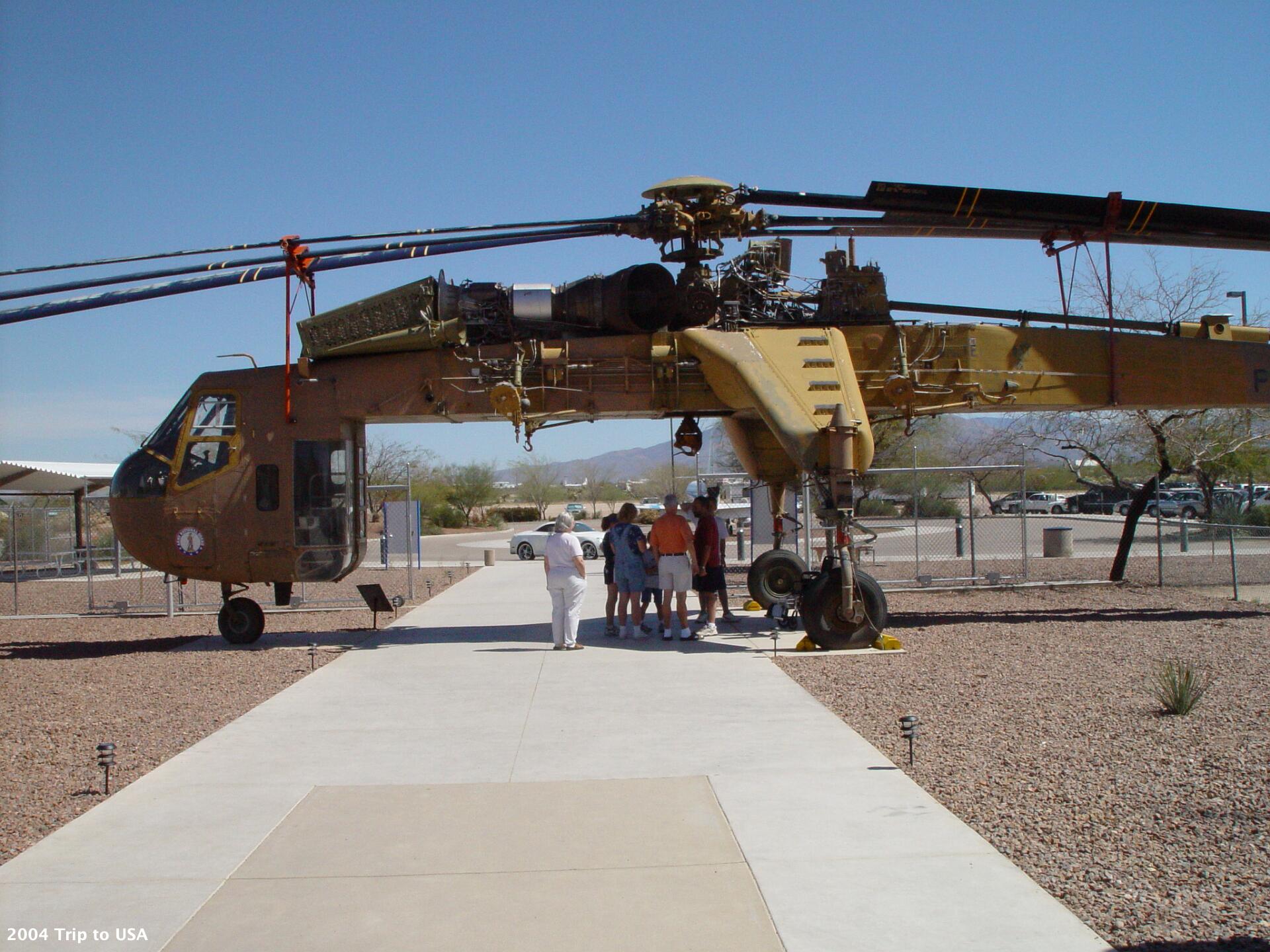 Tuesday 2004-03-16 Pima Air & Space Museum The Sikorsky CH-54A Tarhe or Skycrane served through the last years of the Vietnam War and finally left military service in the early 1990s. Many surplus Skycranes have found new uses in civilian hands and is widely used for fighting forest fires. |
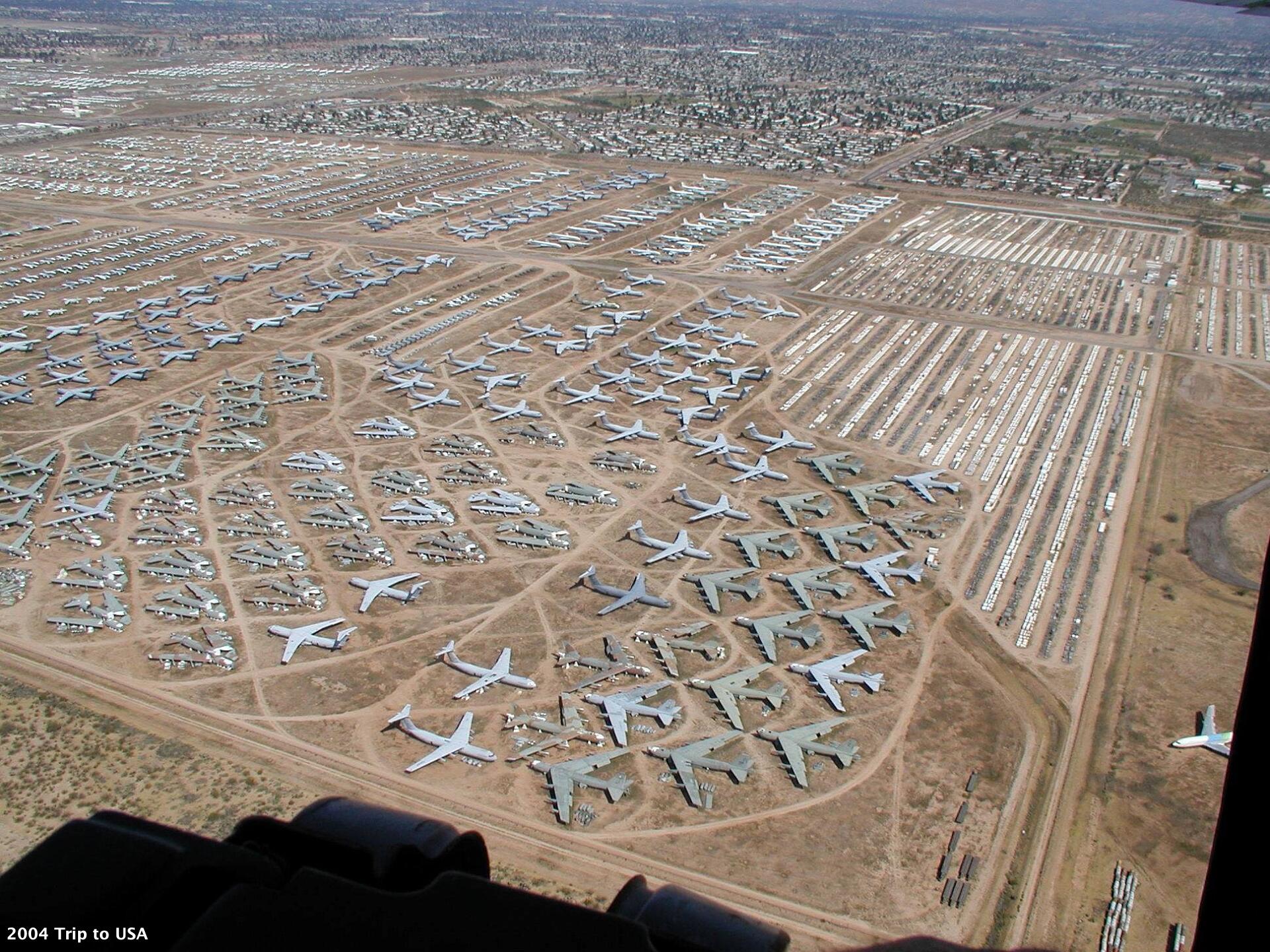 Tuesday 2004-03-16 Aircraft Maintenance & Regeneration Group (AMARG) Bob and I take a bus tour of this amazing facility: the 309th Aerospace Maintenance and Regeneration Group (AMARG) often called The Boneyard. |
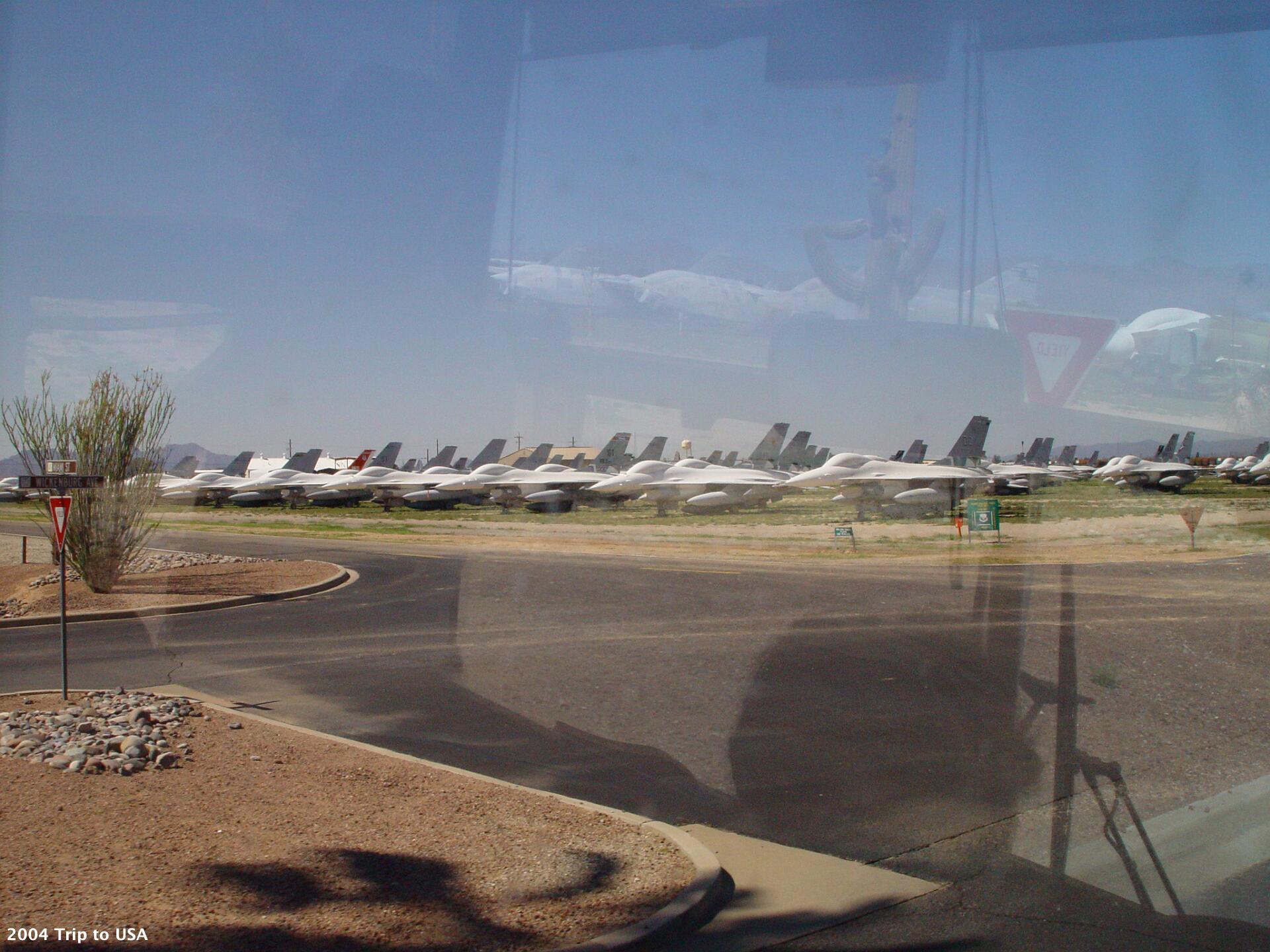 Tuesday 2004-03-16 Aircraft Maintenance & Regeneration Group (AMARG) AMARG is a US Air Force aircraft storage and maintenance facility located on Davis-Monthan Air Force Base in Tucson. These are F16's. |
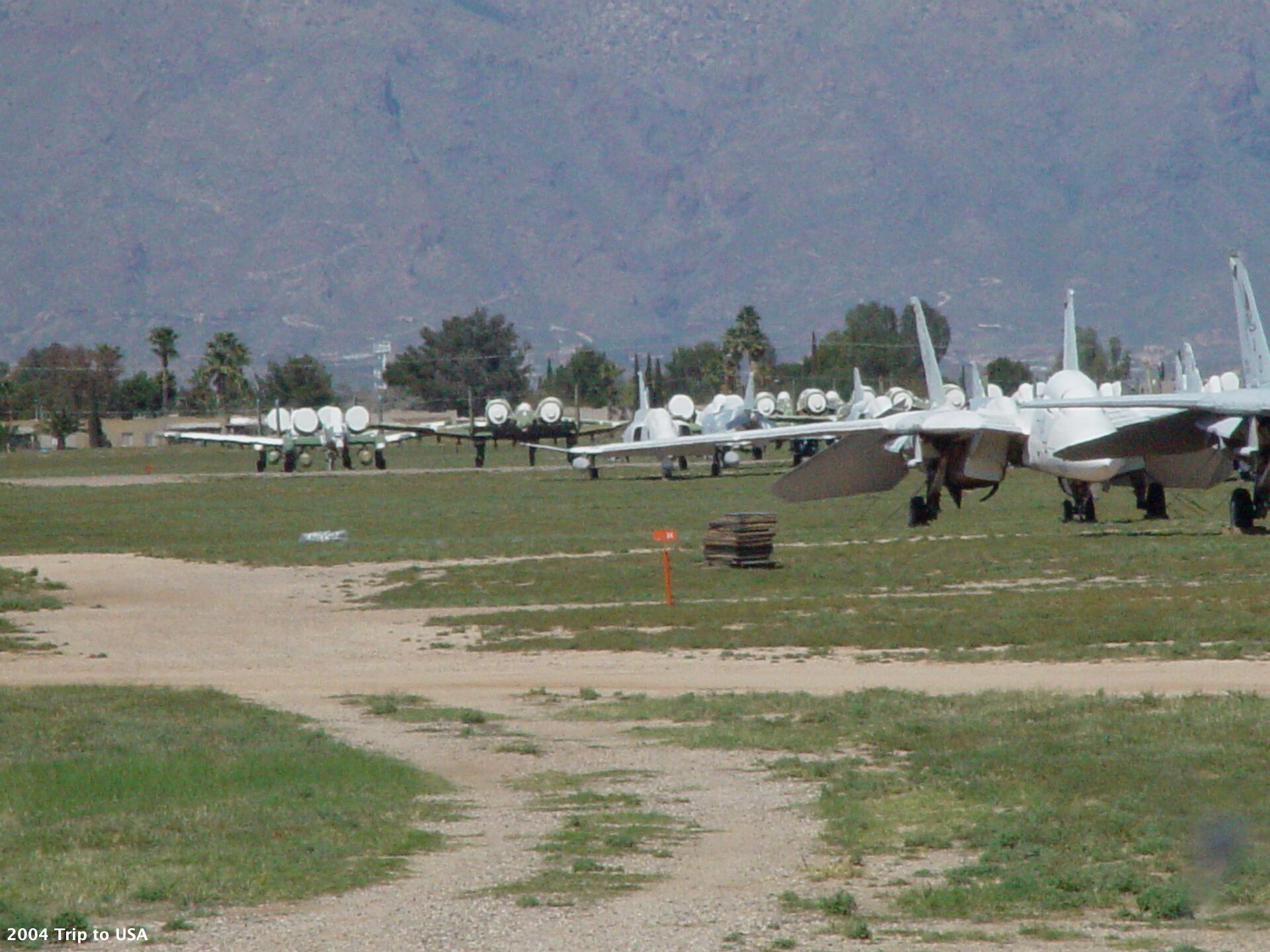 Tuesday 2004-03-16 Aircraft Maintenance & Regeneration Group (AMARG) AMARG was established in 1946 as the 4105th Army Air Force Unit to house B-29 and C-47 aircraft. F14 Tomcats, F4 Phantoms and A10 Warthogs in storage. |
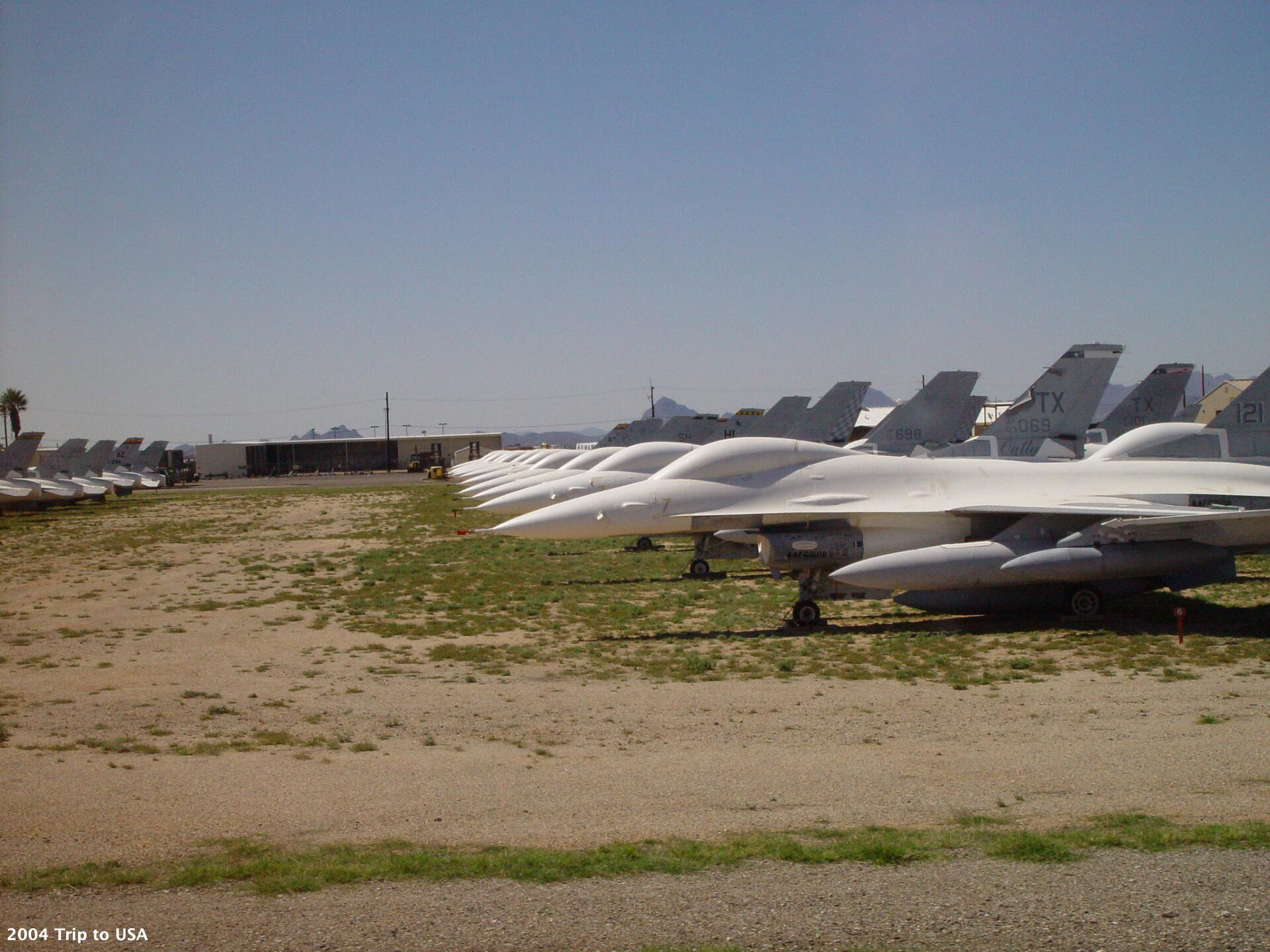 Tuesday 2004-03-16 Aircraft Maintenance & Regeneration Group (AMARG) Davis-Monthan Air Force Base was chosen because of Tucson's low humidity, infrequent rainfall, and alkaline soil. The hard soil makes it possible to move aircraft around without having to pave the storage areas. More F16's in storage. |
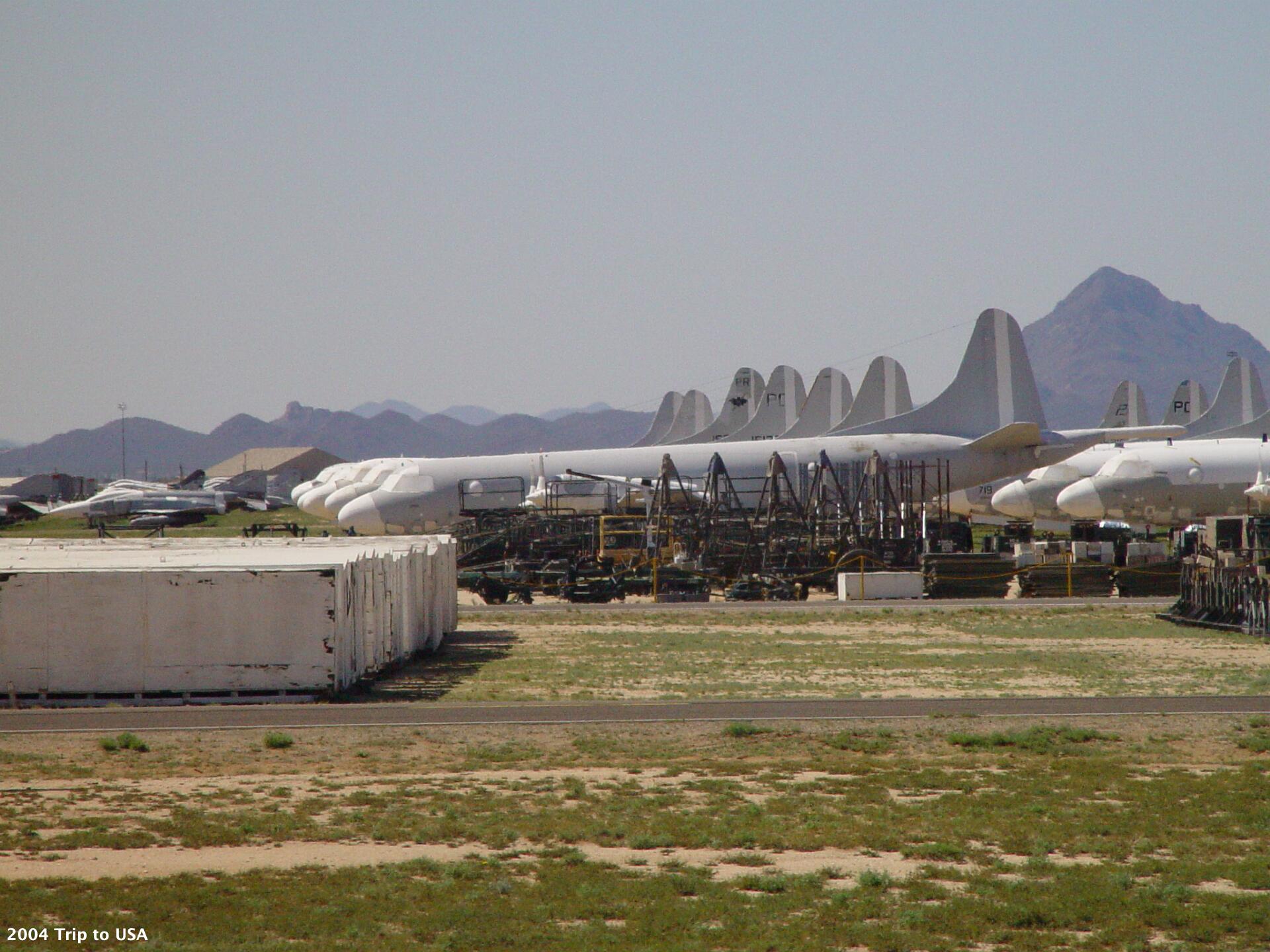 Tuesday 2004-03-16 Aircraft Maintenance & Regeneration Group (AMARG) There are four categories of storage: Long Term - kept intact for future use , Parts Reclamation, Flying Hold - kept intact for shorter stays than Long Term, Excess of DoD needs - Aircraft are sold off whole or in parts. These are Lockheed PS-3 Orions. |
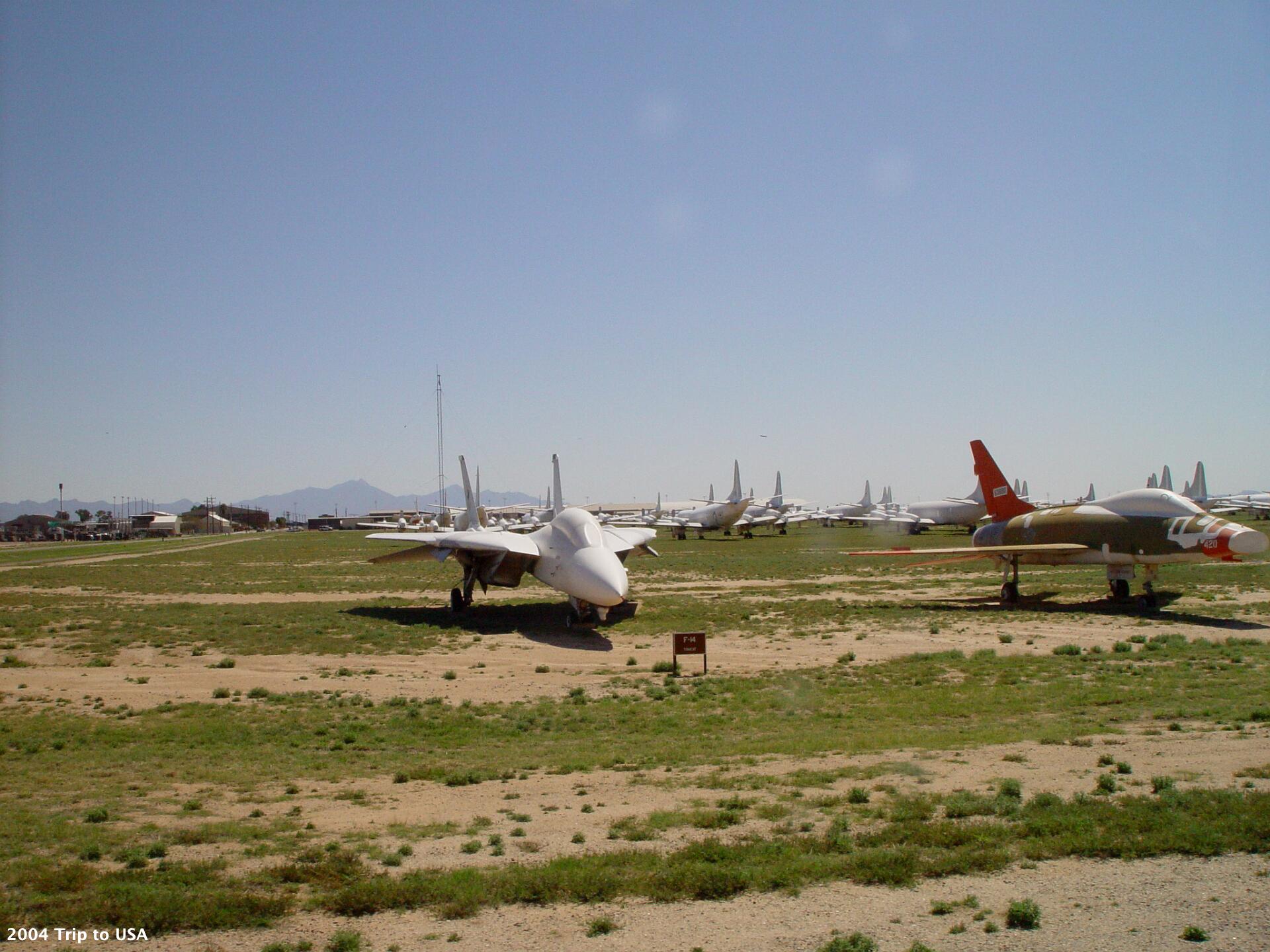 Tuesday 2004-03-16 Aircraft Maintenance & Regeneration Group (AMARG) For an aircraft going into storage, all guns, ejection seat charges and classified hardware are removed. The fuel system is protected against corrosion and the aircraft is sealed from dust, sunlight, and high temperatures. |
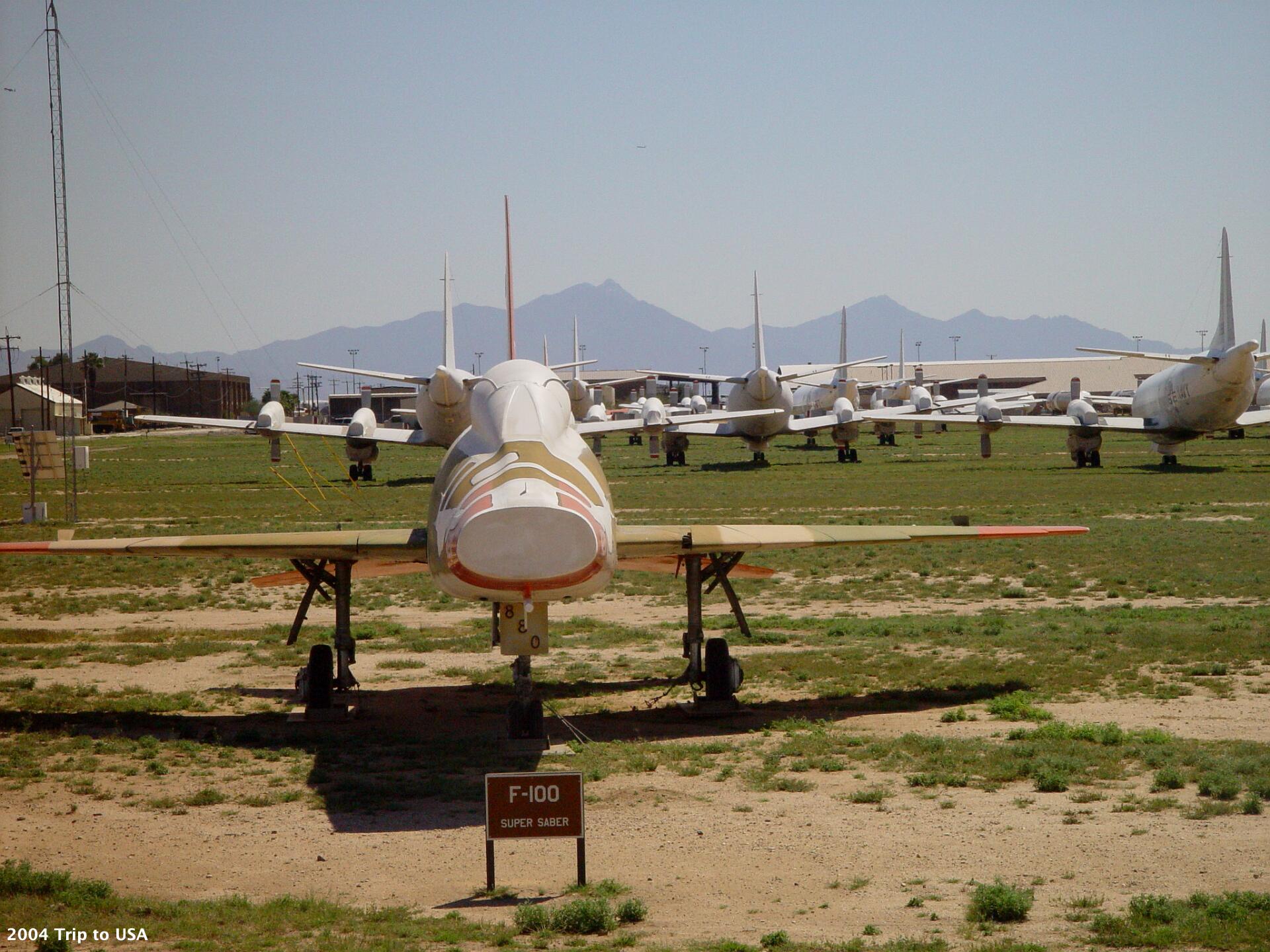 Tuesday 2004-03-16 Aircraft Maintenance & Regeneration Group (AMARG) In the 1980s, the center began processing ICBMs for dismantling or reuse in satellite launches, and was renamed the Aerospace Maintenance and Regeneration Center (AMARC) to reflect the expanded focus on all aerospace assets |
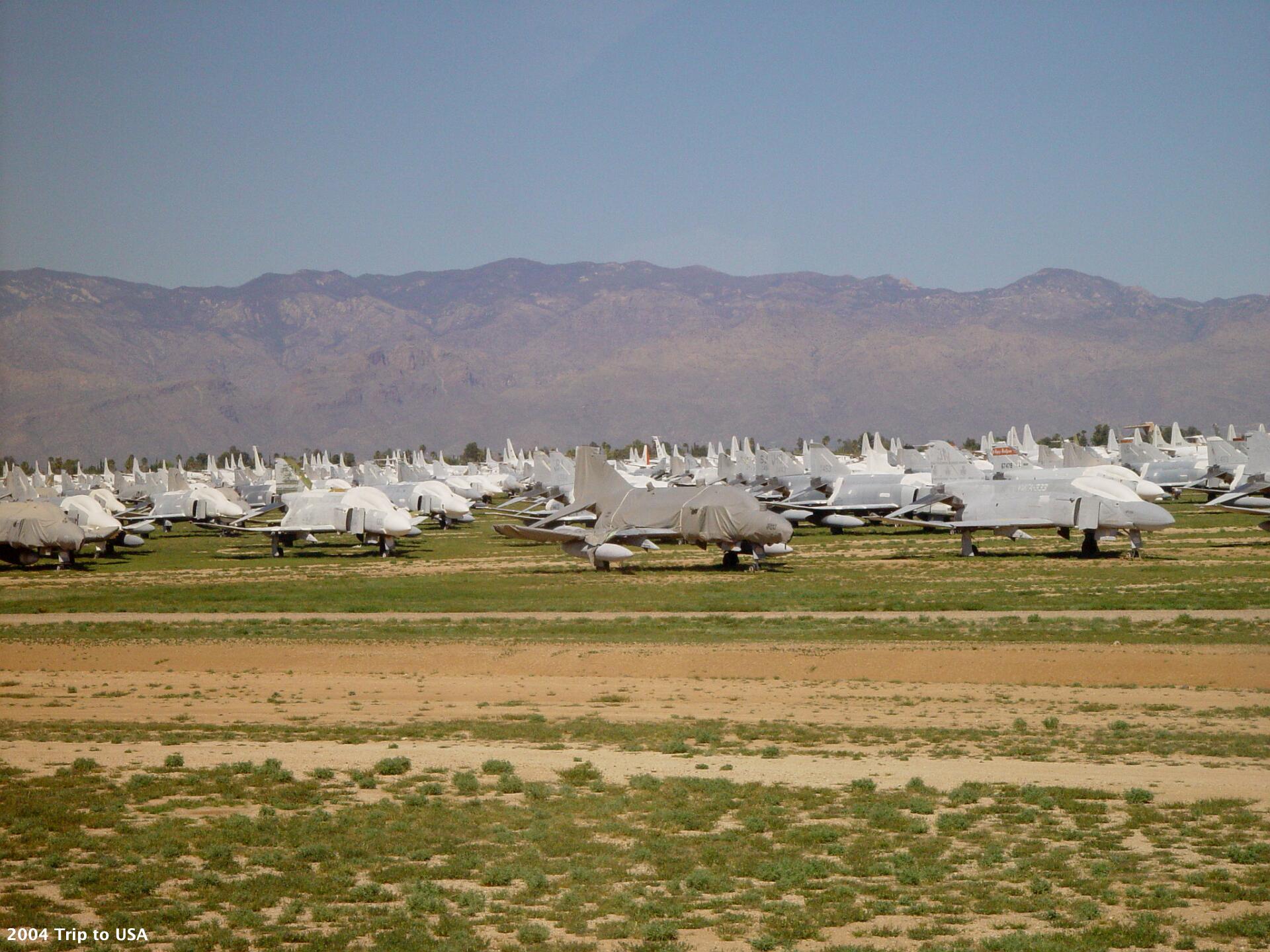 Tuesday 2004-03-16 Aircraft Maintenance & Regeneration Group (AMARG) AMARG takes care of more than 4,400 aircraft, including 700 F-4 Phantom IIs, whose total original purchase price is estimated at $27 billion |
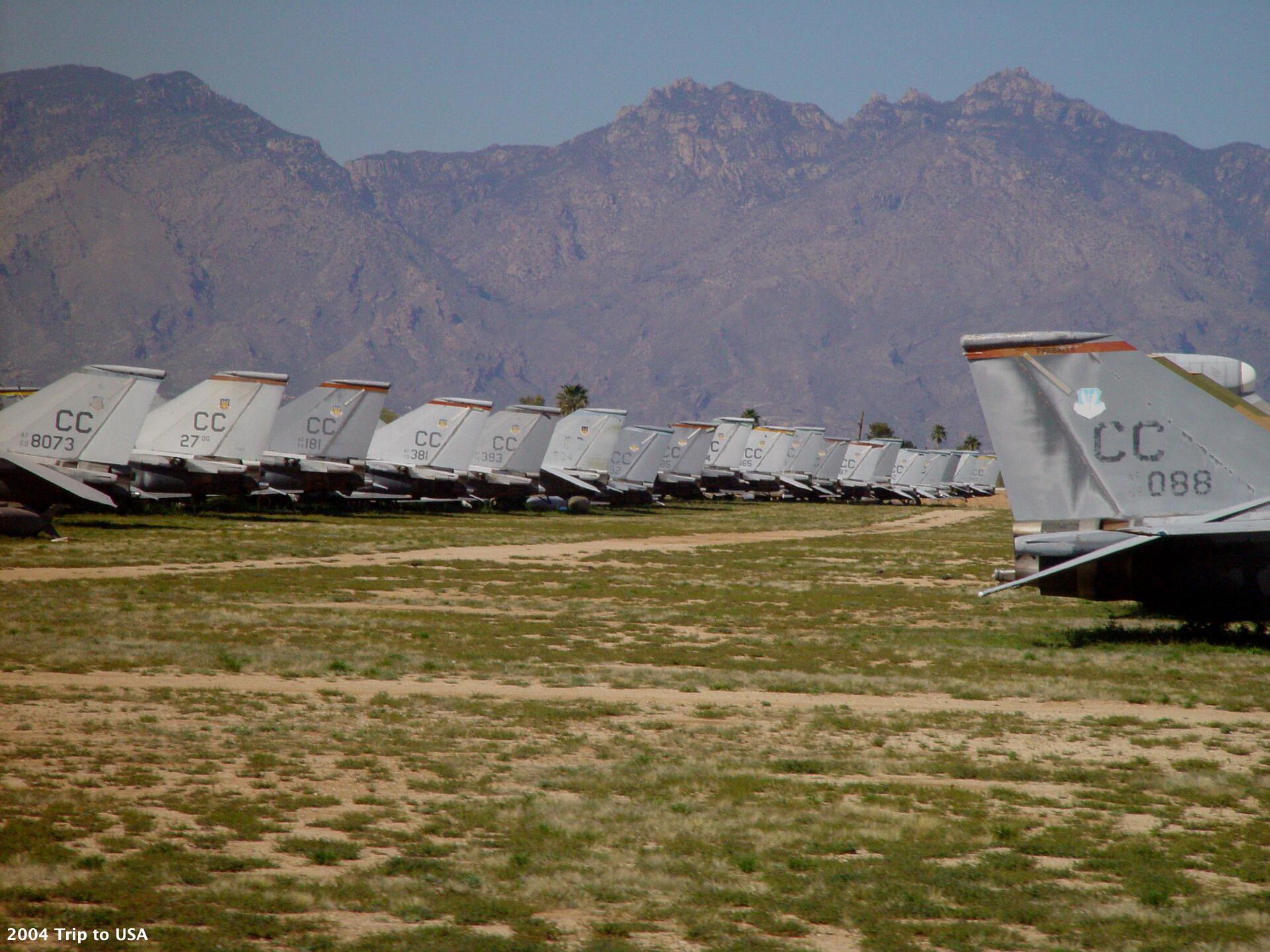 Tuesday 2004-03-16 Aircraft Maintenance & Regeneration Group (AMARG) According to our tour guide, Australia is the only country using F111's and these aircraft are often stripped to keep RAAF F111's flying. |
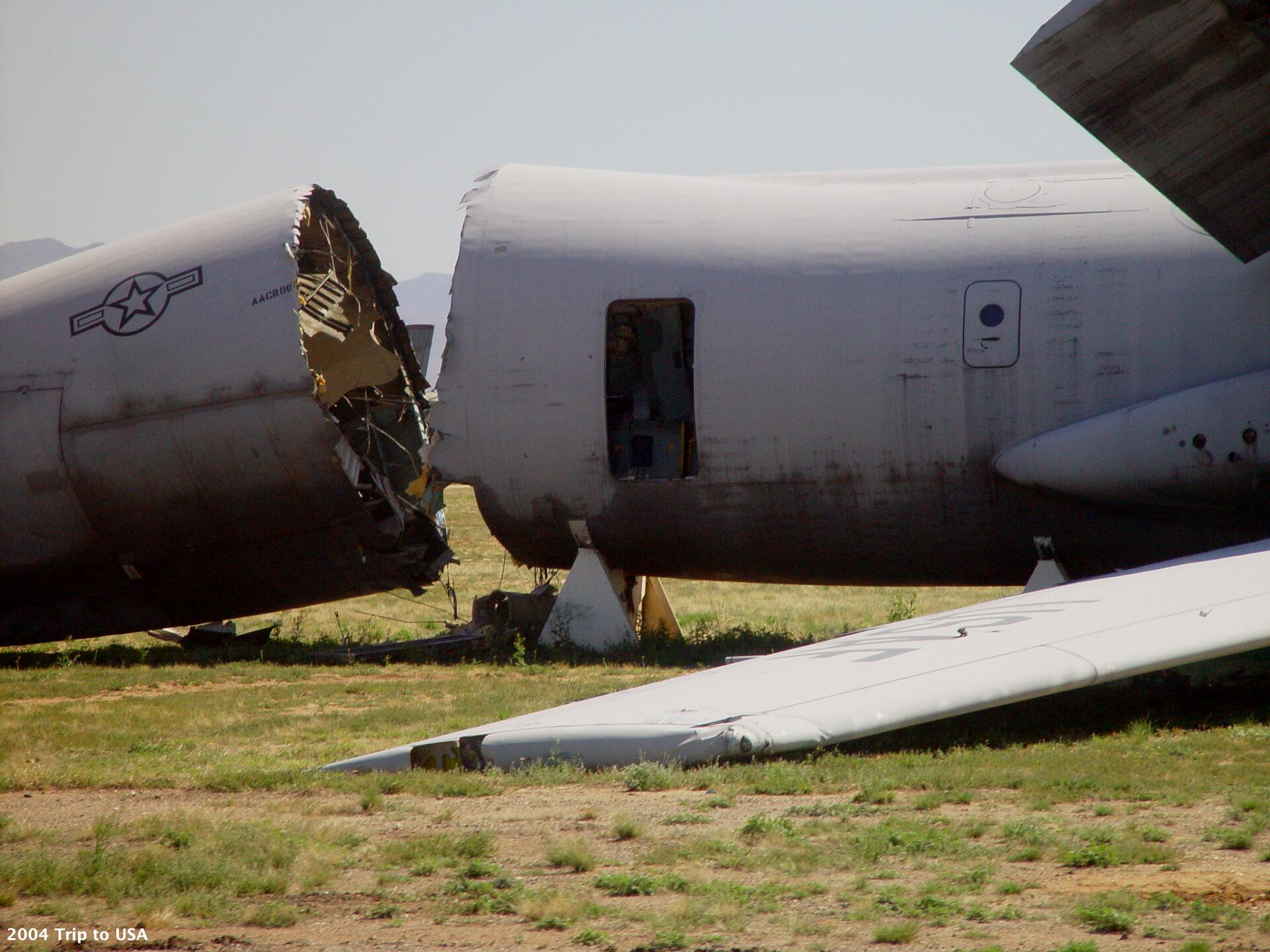 Tuesday 2004-03-16 Aircraft Maintenance & Regeneration Group (AMARG) In the 1990s, in accordance with the START I treaty, AMARG was tasked with eliminating 365 B-52 bombers. The progress of this task was to be verified by Russia via satellite and first-person inspection at the AMARG facility. These C131's met with the same fate. |
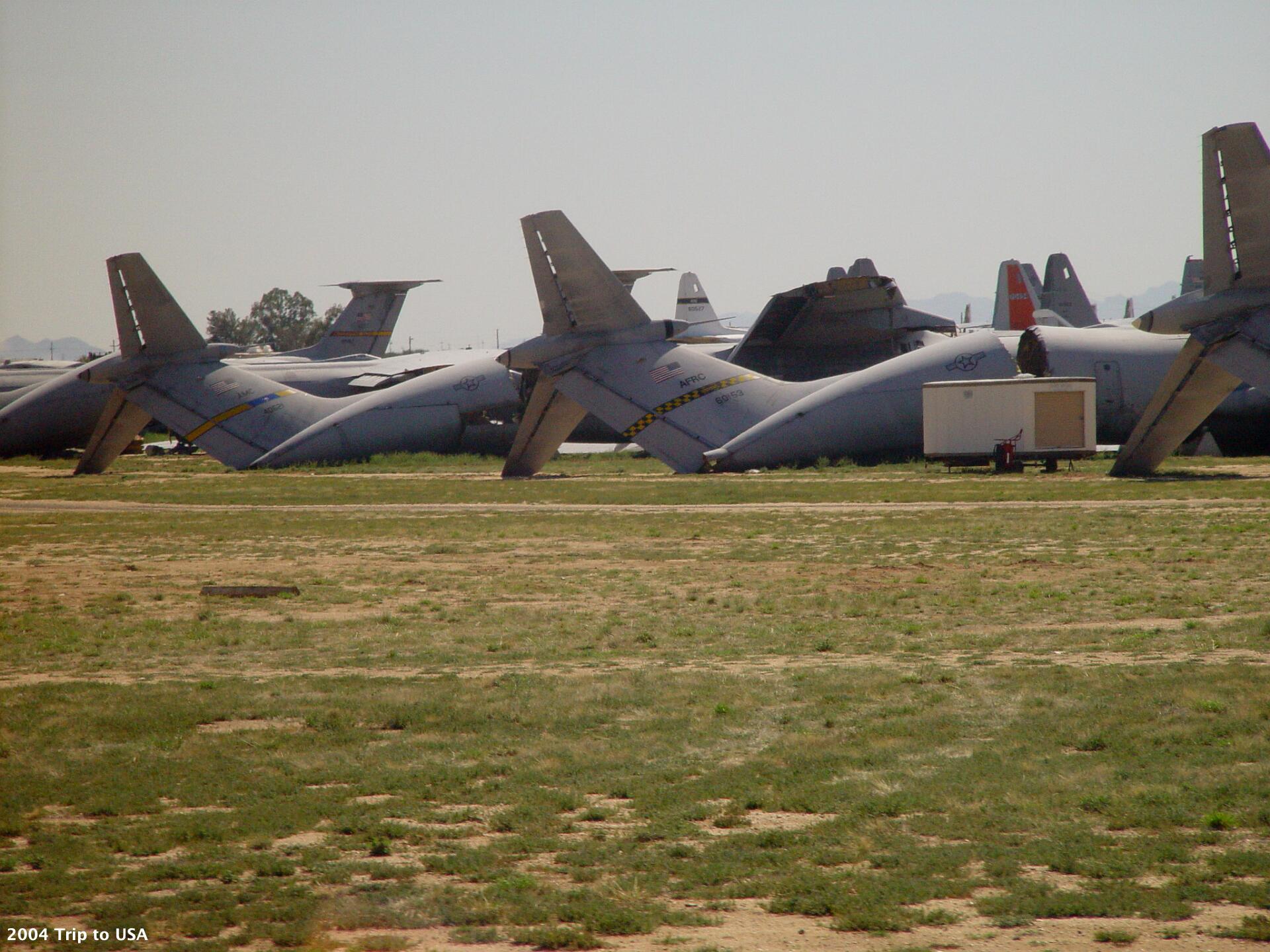 Tuesday 2004-03-16 Aircraft Maintenance & Regeneration Group (AMARG) Initially, the B-52s were chopped into pieces with a 13,000-pound guillotine. Later on, the tool of choice became K-12 rescue saws. This more precise technique afforded AMARG with salvageable spare parts. |
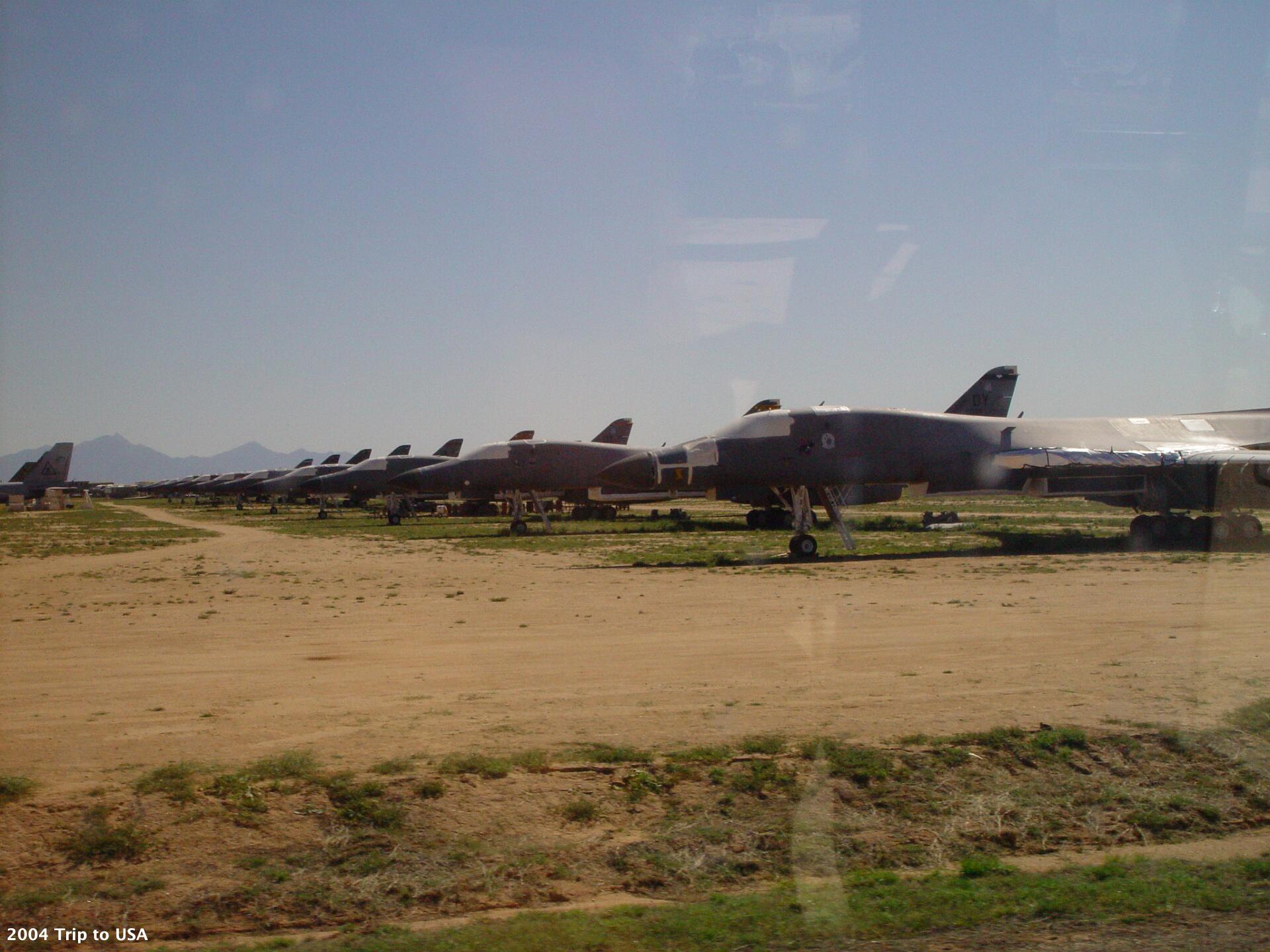 Tuesday 2004-03-16 Aircraft Maintenance & Regeneration Group (AMARG) B1's in storage. This is amazing for an aircraft introduced only in 1986. At a cost of $US283.1 million each, 100 were produced. My god, what a waste! |
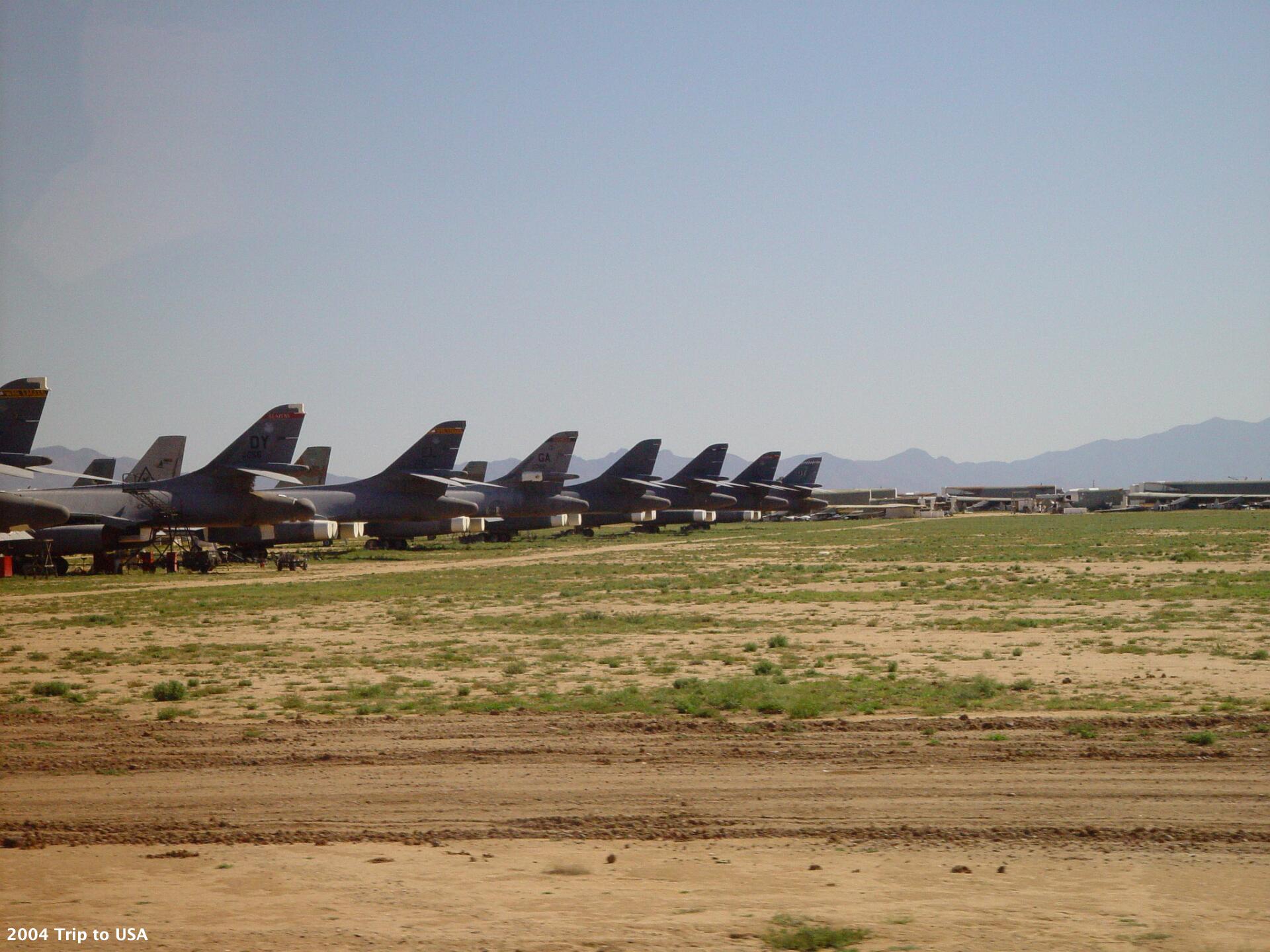 Tuesday 2004-03-16 Aircraft Maintenance & Regeneration Group (AMARG) The B1 was first envisioned in the 1960s as a supersonic bomber to replace the B-52. Its development was stopped and restarted multiple times as theories changed from flexible response to mutually assured destruction and back again. Next folder: Nogales on the US Mexican border |